


Church Calls for Prayer and Fasting as Only Response to Escalating Middle East Violence

A senior Catholic voice has called for a renewed spiritual response to the escalating conflict in the Middle East, urging believers to reject violence and instead turn to prayer and fasting as the only acceptable path forward. Speaking from Jordan, Father Francesco Patton warned that the region is increasingly consumed by a cycle of war that continues to produce devastating humanitarian consequences. He described a growing sense that force is being seen as the primary solution to conflict, while the suffering of civilians remains widespread and deeply concerning for those witnessing the crisis from within affected communities.
Drawing on years of experience in the region, Father Patton highlighted the severe impact of the conflict on local populations, particularly in Lebanon and Gaza. He noted that religious communities are now directly involved in humanitarian efforts, with convents being transformed into shelters for displaced people and Church institutions struggling to meet urgent needs. In Lebanon alone, large scale displacement has placed immense pressure on already fragile systems, while in Gaza, conditions have deteriorated to the point where access to basic necessities such as food, medicine, and security has become increasingly limited.
He also raised concerns about the long term consequences of unresolved conflicts, warning that military approaches often lead to the emergence of new forms of instability. Past conflicts in the region, he explained, have frequently resulted in the rise of extremist groups and prolonged insecurity, particularly when political solutions are not pursued. The current situation, he suggested, risks following a similar pattern, where the absence of dialogue and reconciliation could create further divisions and deepen existing tensions across societies already under strain.
The situation in Palestinian territories was described as especially critical, with continued displacement, restrictions, and violence affecting daily life. Father Patton pointed to both physical destruction and legal pressures that are contributing to uncertainty about the future of local communities. He stressed that beyond immediate humanitarian concerns, there is a broader issue of dignity and fundamental rights, which are increasingly difficult to safeguard in the current environment. The economic impact of the conflict has also extended beyond the immediate areas of violence, affecting neighboring countries such as Jordan through the collapse of pilgrimage based income.
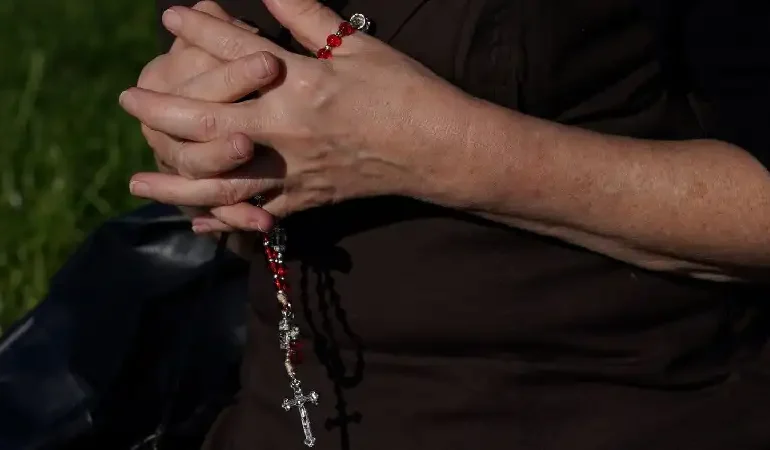
Amid these challenges, the Church is emphasizing a response rooted in spiritual solidarity rather than political or military action. Father Patton called for a global gathering of believers from different faiths, united in prayer and fasting for peace, echoing similar initiatives led by past popes during times of crisis. He described this approach as a powerful means of raising awareness and fostering unity, even if it appears modest compared to the scale of the conflict. For the Church, such acts are seen as essential expressions of faith and hope in the face of widespread suffering.
The appeal also reflects a broader message from Church leadership that peace must be pursued through nonviolent means and sustained commitment. By encouraging believers to focus on spiritual practices, the Church seeks to promote a vision of peace that is grounded in humility and perseverance. The call to prayer and fasting is presented not only as a religious obligation but as a collective act that can bring attention to the human cost of war and inspire efforts toward reconciliation in a region that continues to experience profound instability.