
Faith Based Protest Movement in US Immigration Debate Raises Questions on Longevity
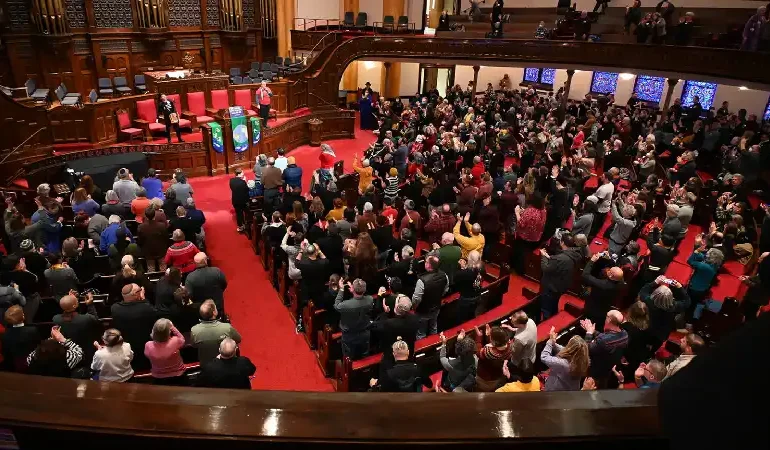

A growing wave of faith based activism across the United States has brought renewed visibility to religious leaders engaging in public protest against immigration enforcement policies. Over the past year, clergy from multiple traditions have taken part in demonstrations outside detention centers and enforcement sites, framing immigration as a moral and spiritual issue rather than solely a political one. The movement has drawn participation from pastors, rabbis and lay leaders who say their involvement reflects long standing commitments to justice and human dignity. The scale and intensity of these actions mark a notable shift in how religious communities are engaging with public policy debates.
Many of those involved describe a transformation in their roles, moving from traditional forms of advocacy to direct and often high risk participation in protests. Clergy have adopted organized strategies that include nonviolent resistance, coordinated communication and rapid response networks to monitor enforcement activity. These efforts have been supported by both faith based and secular organizations, creating a broad coalition that shares tactics and resources. The use of modern technology has enabled decentralized coordination, allowing local groups to respond quickly to developments while maintaining a shared sense of purpose across different cities.
The current movement draws on a long history of faith driven activism in the United States, including civil rights campaigns and earlier social justice efforts. Participants often reference these historical precedents as a source of guidance and legitimacy, while also adapting strategies to contemporary conditions. Collaboration across religious and cultural lines has been a defining feature, with diverse communities working together despite differing theological perspectives. This interfaith dimension has strengthened the movement’s reach, but it has also introduced challenges related to maintaining unity on complex and sensitive issues.
At the same time, the decentralized nature of the movement has created both flexibility and uncertainty. Without a central leadership structure, local initiatives have been able to operate independently and respond to immediate concerns. However, this structure raises questions about long term sustainability and the ability to maintain momentum once the immediate pressures of immigration enforcement shift. Differences that were temporarily set aside during periods of intense activity may reemerge, particularly on issues where perspectives vary among participating groups.
As the movement continues to evolve, observers are examining whether it can transition from reactive protest to sustained advocacy. The visibility gained through recent demonstrations has increased public awareness and brought moral language into policy discussions, but the long term impact remains uncertain. The ability of faith based coalitions to remain cohesive and effective will likely depend on how they navigate internal differences while continuing to address broader social concerns. The developments reflect a wider moment in which religious communities are redefining their role within public life and civic engagement.