


Israel signals expanded control in southern Lebanon as conflict intensifies and diplomacy falters

Israel has announced plans to take control of a significant area in southern Lebanon, marking a sharp escalation in an already volatile regional conflict. Defence officials indicated that military operations would extend northward to the Litani River, creating what they describe as a security buffer aimed at preventing further attacks. The development comes amid ongoing exchanges of fire between Israeli forces and Hezbollah, raising fears of a broader confrontation. As tensions rise, civilians on both sides of the border continue to face growing uncertainty, displacement, and the threat of sustained violence.
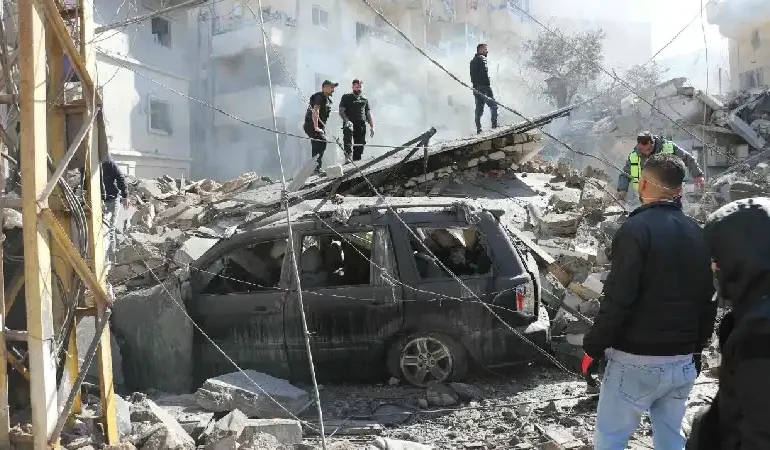
According to Israeli authorities, the proposed security zone is intended to reduce the risk of cross border attacks and ensure the safety of communities in northern Israel. Officials stated that displaced residents would not be allowed to return until conditions are deemed secure, signaling a potentially prolonged military presence in the region. Recent strikes have targeted infrastructure believed to be used for weapons transport, including the destruction of key bridges. At the same time, reports from southern Lebanon describe airstrikes impacting populated areas, with visible damage and rising concern among local populations already affected by previous waves of conflict.
The escalation follows renewed hostilities triggered by rocket fire into northern Israel and a broader cycle of retaliation that has intensified in recent weeks. The situation has been further complicated by developments involving Iran, adding a wider geopolitical dimension to the crisis. Observers note that the current phase of the conflict reflects deep rooted tensions that have repeatedly surfaced despite previous ceasefire efforts. The breakdown of earlier agreements has contributed to a fragile environment where military actions are increasingly shaping the course of events rather than diplomatic engagement.
Efforts to de escalate the situation through diplomacy remain uncertain, with conflicting signals emerging from various actors. While some leaders have suggested that communication channels remain open, others have denied that meaningful negotiations are underway. Reports indicate that several countries are attempting to mediate and create space for dialogue, though no clear framework has been established. The absence of coordinated diplomatic progress has raised concerns among international observers, who warn that continued escalation could lead to wider instability across the region.
As the conflict continues to unfold, the humanitarian impact is becoming more pronounced, with communities facing displacement, infrastructure damage, and heightened insecurity. The possibility of further military expansion and retaliatory actions has increased anxiety about the direction of the crisis. Religious and humanitarian voices have continued to call for restraint, dialogue, and a renewed commitment to peace. In the absence of immediate breakthroughs, the situation remains fluid, with developments on the ground likely to shape the next phase of this complex and deeply rooted conflict.