



Papal Meeting Highlights
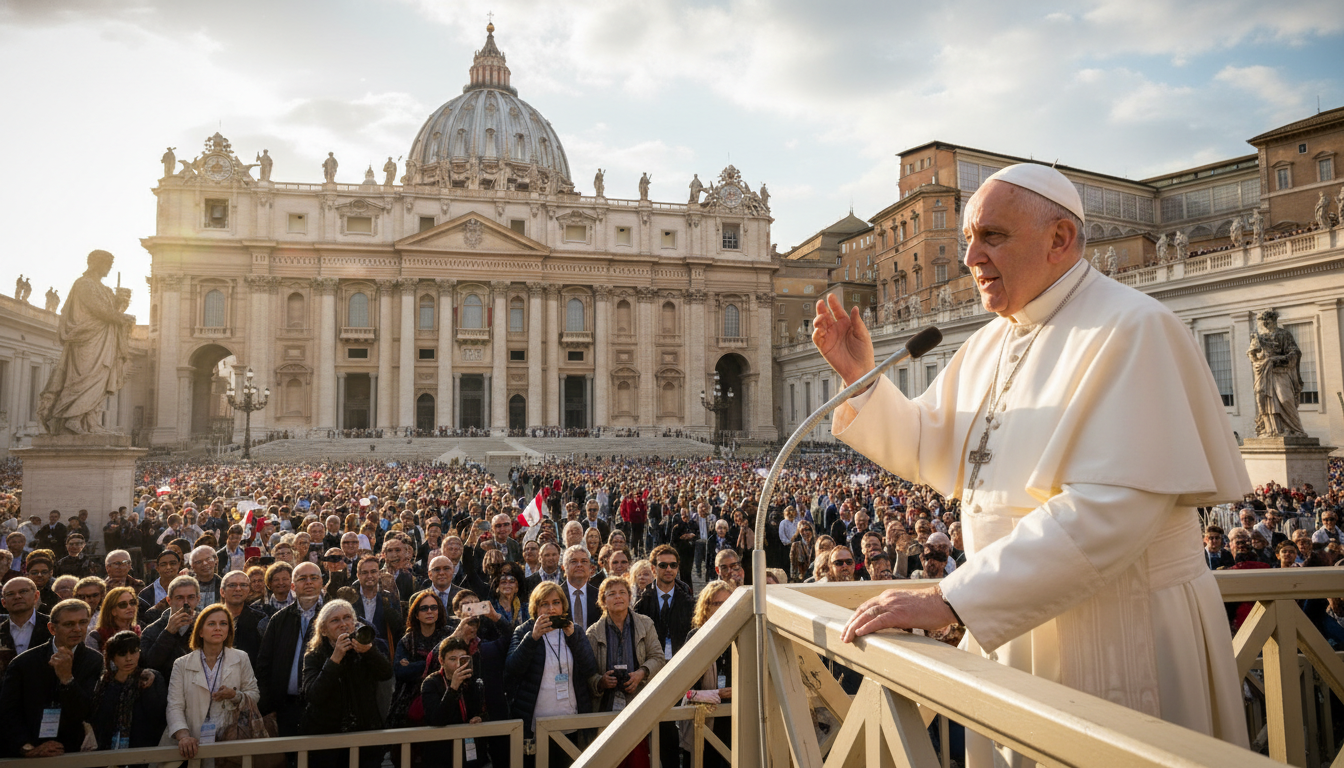
Rome’s ecumenical calendar turned sharply outward Today as Pope Leo XIV received Tawadros II for talks framed by war and displacement. Vatican News quoted the Pope telling the Coptic Orthodox leader that Christians should offer a shared witness when societies fracture, and officials described the encounter as warm and focused on pastoral cooperation. In the session, Christian unity was raised as a practical duty for communities serving migrants, prisoners, and families under pressure. Live cameras captured the two leaders greeting delegations and exchanging gifts, while aides confirmed an agreed plan to keep contacts regular at the level of commissions and charitable agencies. The meeting ended with a short prayer, and aides stressed that follow through would be measured in concrete steps.
The Role of Christian Unity
Diplomats following the Vatican’s ecumenical brief described the conversation as an Update on how churches can model reconciliation without papering over doctrine. The Pope’s staff highlighted that relief work in conflict zones often puts Catholic and Coptic teams side by side, making coordination a test of credibility in front of civilians. For context on the Vatican’s wider peace oriented ecumenical approach, readers have tracked Pope Leo XIV Backs Ecumenical Push for Peace in recent weeks, and a Live readout from the Holy See emphasized that Christian unity is not treated as a slogan, but as a discipline that shapes shared messaging on civilian protection, hostages, and humanitarian corridors. Today, aides said both leaders want joint formation exchanges for clergy working in diaspora parishes.
Historical Context of Relations
In Coptic-Catholic relations, officials say the current tone is shaped by decades of structured dialogue, and Vatican offices treat the latest visit as a continuation rather than a reset. The Holy See’s ecumenical desk cited prior theological work as the reason conversations can pivot quickly to pastoral problems like mixed families and youth catechesis. In a related Vatican briefing on the global climate of war, the Holy See’s diplomatic view was outlined in Vatican News interview with Archbishop Visvaldas Kulbokas, which described how sustained attacks undermine prospects for negotiations. That context has sharpened expectations for what Christian unity should look like in public advocacy. Live tracking by church media is focusing on whether dialogue commissions can produce shared catechetical resources over the next cycle.
Challenges to Unity Today
Observers inside the Curia argue that the hardest obstacles are operational, not ceremonial, because churches must coordinate across languages, legal regimes, and security constraints. Humanitarian leaders say an Update of joint statements matters most when it is paired with synchronized aid distribution, especially where Christian minorities feel exposed. Vatican officials have pointed to public health crises as a parallel test of solidarity, referencing coverage such as Vatican News reporting on Gaza’s health emergency to illustrate how quickly basic services can collapse. Today, insiders noted that social media disinformation also complicates cooperation, since local communities can misread contacts as political alignment. Live coordination between communications offices is being treated as essential to prevent misunderstandings while still speaking clearly about civilians.
Future Prospects for Collaboration
Staff close to the talks described the next phase as a set of practical deliverables, including seminary exchanges, coordinated feast day greetings, and shared training for chaplains serving migrants. The Pope’s team wants these steps evaluated on a timetable, with an Update expected after the next commission meeting and a separate review of shared charitable projects. Vatican diplomats also signaled interest in cultural and educational partnerships that can reduce prejudice in diaspora settings and keep young people engaged. Today, aides for Tawadros II stressed that cooperation will remain pastorally grounded and attentive to local bishops who carry the daily burden. Live coverage will watch whether the two churches can align their advocacy for civilian protection while preserving their distinct liturgical and canonical traditions. Officials said the measure of success will be sustained coordination, not headlines.