European Church Leaders Highlight Updated Charta Oecumenica as Instrument for Peace and Christian Unity

Leaders of Europe’s Christian Churches have described the updated Charta Oecumenica as a vital expression of unity and shared witness in a time of growing division and conflict. The Presidents of the Council of European Bishops’ Conferences (CCEE) and the Conference of European Churches (CEC) spoke following the document’s signing ceremony and their meeting with Pope Leo XIV, emphasizing its role as a tool for cooperation, peace, and renewed evangelization across the continent.
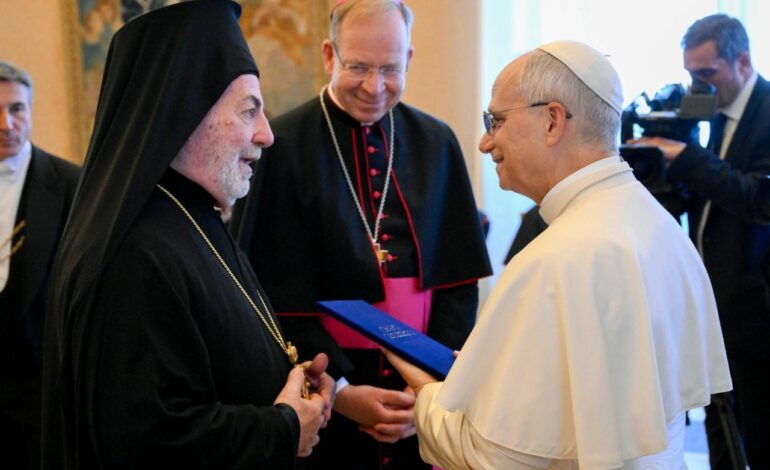
The Joint Committee of CCEE and CEC met in Rome from 4 to 6 November 2025, culminating in the signing of the revised Charta at the Abbey of the Three Fountains, in the Church of the Martyrdom of Saint Paul. The symbolic location, tied to Saint Paul’s witness in Europe, underscored the document’s spirit of shared mission. Pope Leo received the committee in audience the following morning, commending their collaboration as an example of how Churches can work together to build peace.
Originally signed in 2001, the Charta Oecumenica has long served as a framework for dialogue and cooperation among Europe’s Christian denominations. The updated version, developed through consultations beginning in 2022, reflects new realities in European society from migration and climate concerns to technological change and the challenges facing younger generations of believers.
Archbishop Gintaras Grušas, President of the CCEE and Archbishop of Vilnius, said the renewed text responds to a transformed Europe. “It is not a theological declaration, but a joint statement of how we as Christians can bear common witness to Christ and address the pressing issues of today,” he said. He highlighted migration, the safeguarding of creation, and the ethical implications of artificial intelligence as key areas of shared concern.
Archbishop Grušas also noted signs of hope, pointing to the growing participation of young people in Church life across several European countries. “There are new challenges,” he said, “but also new opportunities for witness.” He explained that the updated Charta encourages Churches to continue proclaiming the Gospel amid suffering and war, echoing the message of Pope Leo, who urged them to persevere in acts of mercy and unity.
Archbishop Nikitas of Thyateira and Great Britain, President of the CEC, described presenting the Charta to the Pope as “an honor and a blessing.” He said it was a sign that “the walls of separation have come tumbling down,” showing that Christian leaders can now “speak the same language, the language of Christ, the language of love.”
Archbishop Nikitas also called for a renewed moral vision in global affairs, urging nations to spend less on weapons and more on addressing the needs of humanity. “We must invest in curing diseases, feeding people, and healing creation,” he said. Reflecting on global conflicts from the Holy Land to Jamaica and the Philippines, he affirmed that Christians are called to offer hope through compassion and service.
Both leaders said the updated Charta Oecumenica fulfills Pope Leo’s call to make Christian unity a living instrument for peace, reminding Europe that faith must be expressed not in division, but in shared action for the good of humanity.