
Catholic Leaders Call for Just and Equal Africa–Europe Partnership Ahead of Luanda Summit
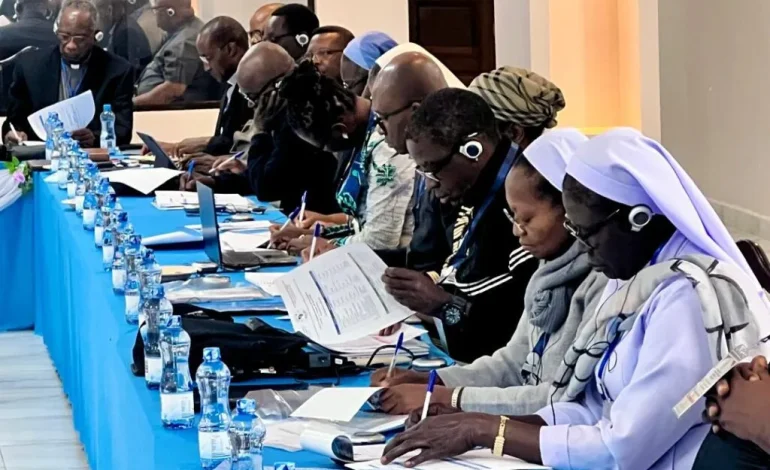

As European and African leaders prepare to gather in Luanda, Angola, for the 7th EU–African Union Partnership Summit, major Catholic and development organizations have issued a joint appeal for a new kind of cooperation between the two continents, one based on fairness, sustainability, and respect for human dignity rather than extraction and exploitation.
In a joint statement released on November 10, the groups including the Commission of the Bishops’ Conferences of the European Union (COMECE), the Symposium of Episcopal Conferences of Africa and Madagascar (SECAM), Caritas Africa, Caritas Middle East and North Africa, Caritas Europa, and CIDSE urged both continents to move away from exploitative economic practices that have long deprived Africa of the true value of its natural wealth.
“For far too long, Africa has been stripped of resources that could have transformed the lives of millions,” the statement said, highlighting how the renewed scramble for critical raw minerals risks repeating historical injustices. The organizations warned that current extractive systems still prioritize profit over people and treat essential natural assets like land, water, and minerals as commodities rather than shared goods to be responsibly managed for the common good.
The Catholic groups emphasized that many African countries are now seeking to reverse this pattern by processing and adding value to their own raw materials domestically, aiming to retain more benefits from their resources. “This requires a different industrial partnership between European and African countries,” the statement said, cautioning against a protectionist “Europe first” mindset that would undermine collaboration.
Such policies, they noted, could harm trade relations, weaken Europe’s role as a development partner, and contradict shared climate and environmental goals. They called on European policymakers to recognize that securing supply chains must not come at Africa’s expense. Instead, a genuine partnership should align with African countries’ own industrialization and value addition ambitions.
The groups also criticized the imbalance between the non-binding cooperation agreements that Europe promotes for investment in African raw materials and the legally binding trade deals that restrict African nations’ ability to manage their own mineral wealth. “If the EU wants to be a true partner, it must translate its declarations of support into concrete action,” the statement said. This includes defining what “value addition” means, sharing technology and knowledge, and establishing mechanisms to monitor and enforce fair agreements.
Turning to the continent’s debt crisis, the organizations described Africa’s situation as “the worst in history,” with more than 40 countries spending up to 30 percent of their government revenue on debt repayments. Father Stan Muyebe, Director of the Justice and Peace Commission for the Catholic Bishops of Southern Africa, called the situation “a moral failure.” He said that when African nations are forced to pay excessive interest rates or spend more on debt than on health and education, “it reveals a system that prioritizes financial gain over human life.”
The Church organizations argued that the debt burden has pushed many African countries to overexploit their natural resources to meet repayment demands, often at the expense of the environment and domestic development. They noted that much of this debt stems from colonial and postcolonial injustices, with many former colonies even paying compensation to European powers for the “loss” of enslaved labor.
They called on African governments to stop accepting loans that perpetuate poverty and on European countries to acknowledge that much of Africa’s current debt is “illegitimate, unjust, and unsustainable.” The groups urged the EU to provide debt cancellation and relief without imposing restrictive conditions. They also supported the establishment of an African Credit Rating Agency and a United Nations debt resolution mechanism to reform the global financial system.
“Ending the debt trap is not an act of charity,” the statement concluded. “It is a matter of justice and true partnership, a strategic choice to build global stability based on equality and mutual respect.”