
Bishop Dolan Highlights Love as Central to Church Mental Health Ministry
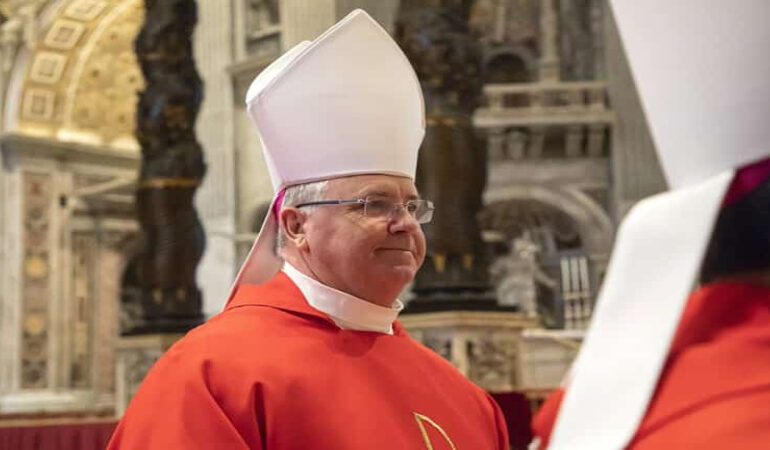

Bishop John P. Dolan of Phoenix addressed the global Catholic forum on mental health in Rome, emphasizing that love must be at the heart of the Church’s ministry in this area. Drawing on his personal experience of losing family members to suicide, Bishop Dolan spoke about the importance of compassion, presence, and understanding in responding to mental health challenges. He highlighted the work of the Diocese of Phoenix in establishing an Office for Mental Health Ministry founded on education, accompaniment, and advocacy. This initiative trains clergy and lay leaders to integrate psychological awareness with theological understanding, forming leaders capable of guiding communities with both empathy and ethical clarity. Bishop Dolan emphasized that effective ministry does not rely solely on diagnosis or treatment but on creating spaces where people feel seen, valued, and supported in their struggles, reflecting the Church’s commitment to holistic care.
The bishop shared that the Ministry of Hope Conference, held under the patronage of the Vatican’s Pontifical Academy for Life, brought together mental health ministers, clinicians, and experts for prayer, reflection, and dialogue. Bishop Dolan described how early personal losses shaped his understanding of grief and the human mind, noting that encounters with the Church community offered comfort through prayer and presence. He underscored that education within the ministry extends to forming seminarians and clergy to recognize the unity of body, mind, and spirit, ensuring that spiritual guidance complements emotional and psychological support. Accompaniment efforts include Well Sessions in parishes and schools, providing safe environments for individuals to speak openly about grief, anxiety, and loss, while advocacy initiatives engage local and national authorities to promote mental health education and resources in wider society.
Bishop Dolan stressed that the Church’s ministry transforms personal sorrow into solidarity, offering hope and practical support for those affected by mental health struggles. He recounted that despite profound personal tragedy, including the loss of his sister, the work of the diocesan ministry continued as a sign of grace and resilience. The program’s structure enables clergy and lay ministers to participate in training that blends theological and psychological principles, ensuring an informed and empathetic response to human suffering. Bishop Dolan highlighted the broader mission of the Church to address mental health needs not only pastorally but ethically, emphasizing human dignity, the value of community, and the cultivation of compassion. Through education, accompaniment, and advocacy, the Church seeks to create a culture where mental health is understood and supported as part of its moral and spiritual responsibility.