


Ghana’s Bishops Renew Focus on Justice, Education and Ethical Stewardship
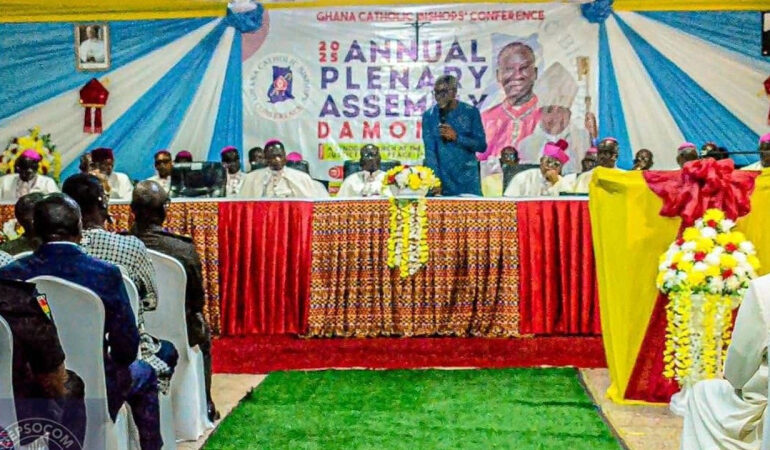

The recent gathering of Ghana’s Catholic Bishops presented a detailed assessment of national priorities, reflecting a Church increasingly attentive to issues of governance, community well-being and ethical leadership. Their discussions highlighted a renewed commitment to synodality, a model of shared responsibility within Church life that emphasizes participatory decision-making and informed reflection. The bishops stressed that strengthening pastoral councils, finance committees and youth structures is essential for ensuring responsible stewardship at parish and diocesan levels. They noted that broadening formation in leadership, conflict mediation and social analysis would equip clergy and lay leaders to respond more effectively to emerging challenges. This approach resonates with the wider global Church effort to ground pastoral action in transparent processes and balanced governance, particularly in regions where social cohesion and institutional trust remain fragile.
Their concerns extended to the national climate, where rising inflammatory rhetoric was identified as a significant threat to social unity. The bishops referenced ongoing tensions and conflict-prone areas, calling for deeper collaboration among traditional leaders, state agencies and civil society groups. Their emphasis on sustained dialogue reflects the Church’s longstanding role as a mediator in complex social environments, especially where faith communities intersect with contested political spaces. They also cautioned against political exclusion, encouraging leaders to resist zero-sum approaches and prioritize inclusive systems that advance the common good. Education emerged as another core theme, with the bishops advocating for a structured partnership between government authorities and Catholic schools to safeguard the ethical and spiritual foundations that define the nation’s mission-based institutions.
Environmental responsibility formed a decisive part of the bishops’ appeal, as they raised alarms over extensive ecological destruction caused by unregulated mining practices. They urged authorities to consider firmer national interventions in the most affected regions, including possible emergency measures and consistent prosecution of violators without regard for political ties. The bishops stressed the need for accurate reporting on environmental indicators and acknowledged communities and traditional leaders who have defended their lands against exploitative activities. Their call aligns with a global push toward ethical stewardship, highlighting how environmental justice increasingly intersects with moral teaching, economic policy and long-term national stability. Through this multi-layered reflection, Ghana’s bishops underscored an evolving pastoral vision that integrates governance, ethics, education and ecological care into a coherent framework for national renewal.