



Pope Leo Calls for Renewed Commitment to Voices in Need
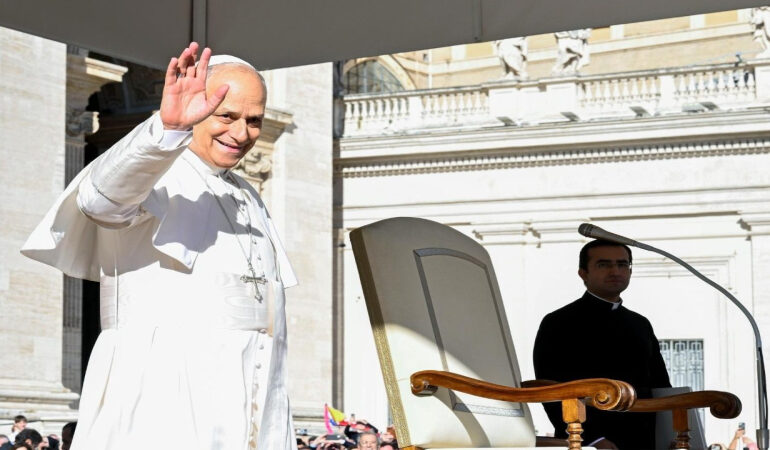

During his General Audience in St. Peter’s Square, Pope Leo XIV offered a reflection centered on the spiritual and ethical responsibilities that accompany Christian hope, inviting the faithful to reconsider how they engage with the struggles of the world. His remarks emphasized that the transformation brought about by the Resurrection is not an abstract historical event but a living force capable of reshaping the way individuals relate to God, one another and the environment. By linking this spiritual orientation to contemporary responsibilities, he underscored that faith has concrete implications for the ecological, social and human challenges that define the global landscape. Drawing on the scriptural image of Mary Magdalene encountering the Risen Christ, he suggested that every believer is called to undergo a similar turning of heart, one that reorients daily choices and deepens attentiveness to those who lack representation or protection.
Pope Leo placed particular attention on the difficulty many people have in recognizing Christ’s presence in their surroundings, noting that the Gospels themselves describe this struggle with honesty. The moment in which Mary Magdalene mistakes Jesus for a gardener becomes, in his teaching, a symbol of how divine renewal can unfold within ordinary circumstances. He highlighted that this scene points toward a wider spiritual task, one that requires ongoing conversions that shape personal and collective history. The Pope referenced past teachings on integral ecology to illustrate that believers cannot separate spiritual growth from responsibility toward creation. Faith, as he described, must be rooted in a vision that acknowledges the interconnectedness of human and environmental wellbeing, allowing Christian hope to contribute meaningfully to the safeguarding of communities and ecosystems that remain vulnerable to exploitation or neglect.
Reflecting on the broader implications of this teaching, Pope Leo explained that genuine conversion activates forms of solidarity that protect those who cannot defend themselves, echoing an ethic centered on dignity, stewardship and compassion. He noted that young generations have shown a growing sensitivity to the cries of the poor and the earth, often approaching environmental and humanitarian concerns with a sense of urgency shaped by their experiences of social instability and ecological degradation. The Pope encouraged the faithful to join these efforts with a renewed interior openness that allows the Spirit to cultivate attentive listening, reminding the crowd that spiritual receptivity has practical consequences for how societies distribute resources and respond to those at risk of being overlooked. He concluded by expressing hope that such listening would allow believers to perceive the promise of a renewed creation, a garden revived through human cooperation with the task entrusted to them.