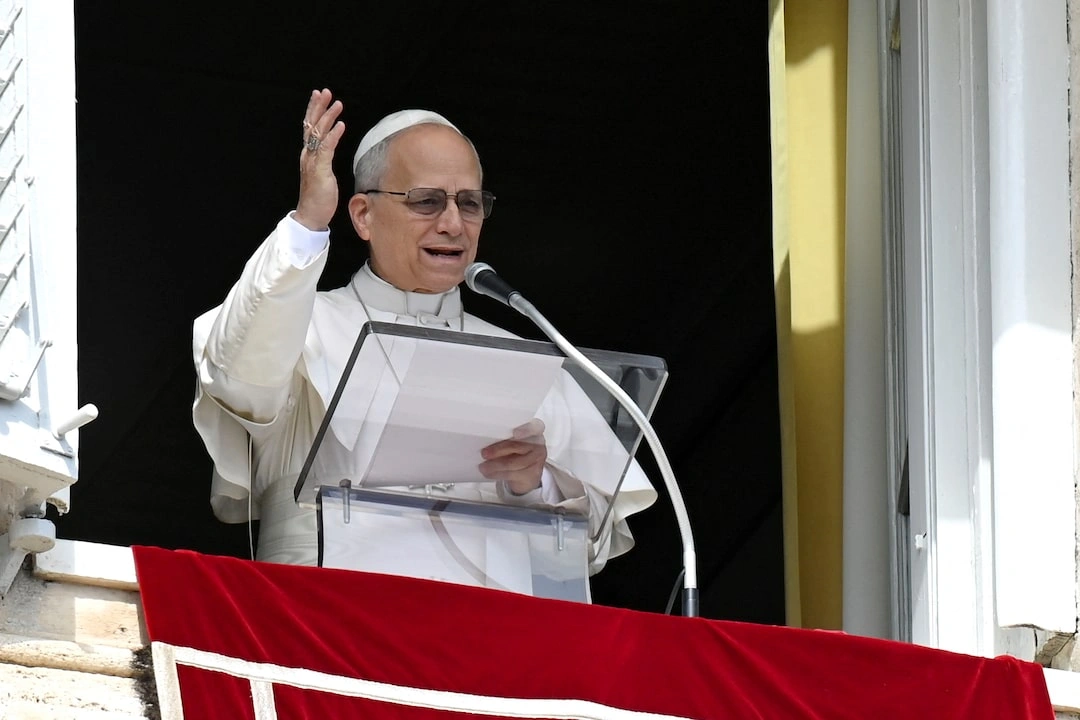

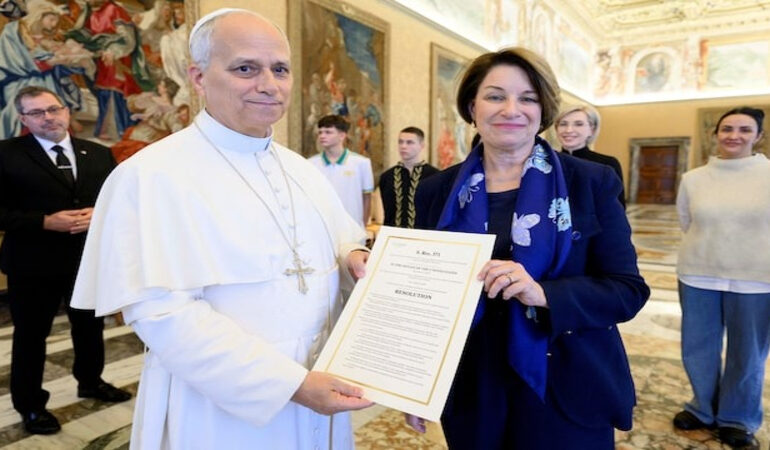

Pope Leo met with United States Senator Amy Klobuchar at the Vatican on Friday, where he was presented with a copy of a Senate resolution honoring victims of the tragic shooting at a Minnesota Catholic parish and school earlier this year. The document commemorates the two children who lost their lives and the eighteen teachers and students wounded during the attack at Annunciation Catholic School in late August. In an image released from the meeting, the pope is shown holding the resolution as he and the senator acknowledge the grief carried by the affected community and the broader conversation the incident reignited across the country. The resolution, introduced by Klobuchar and co sponsored by Senator Tina Smith, was approved unanimously, signaling a bipartisan expression of solidarity with the families and parish members who continue to navigate the aftermath of the violence. The pope’s reception of the text reflects his earlier pastoral intervention shortly after the incident, when he called publicly for a renewed commitment to ending the spread of weapons and for deeper moral reflection on the social patterns that enable such tragedies.
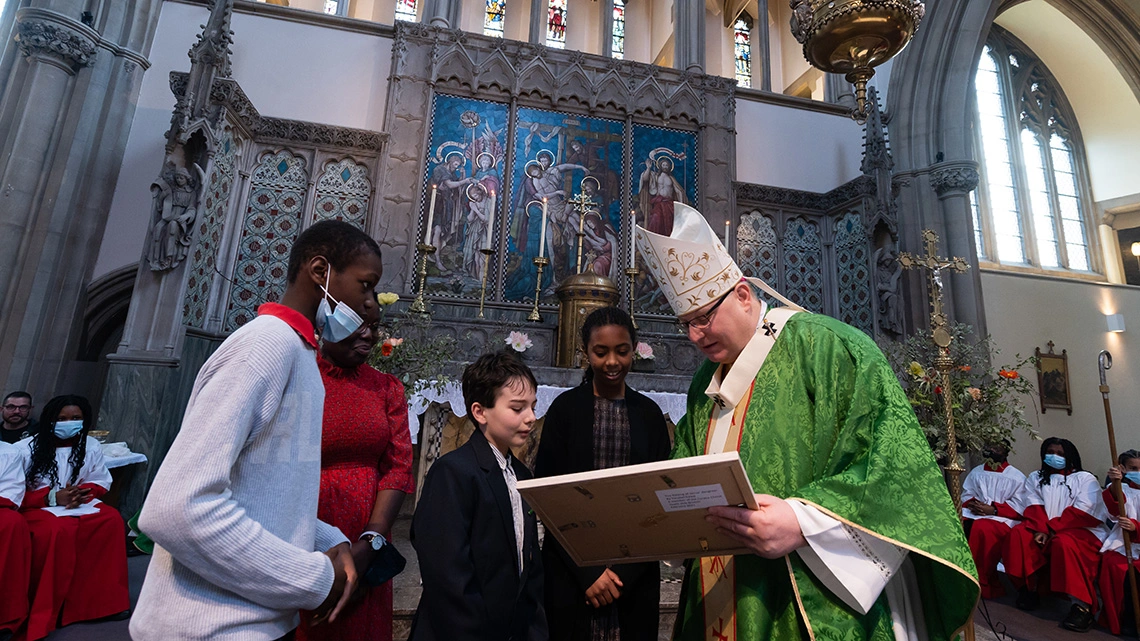
During their exchange, Senator Klobuchar also participated in a separate gathering that brought Ukrainian children to the Vatican, many of whom had been relocated or separated from their families due to the ongoing conflict in their home regions. The visit was part of a broader humanitarian initiative that has involved appeals to international actors for assistance in reunifying displaced minors with their relatives. The delegation accompanying the children conveyed a message of gratitude to Pope Leo for hosting the meeting and delivered a letter from President Volodymyr Zelenskiy requesting that the Holy See consider playing a more structured role in supporting family reunification efforts. The pope’s engagement with the group further underscores the Vatican’s commitment to humanitarian diplomacy, particularly in contexts where civilian protection and child welfare are endangered by conflict dynamics.
The convergence of these two moments during the same Vatican event highlighted the extent to which Pope Leo’s early papacy has been shaped by attention to vulnerable communities, whether affected by violence in local parishes or by displacement in international conflict zones. His reception of the Senate resolution does not reflect involvement in U.S. legislative processes but serves as a gesture of pastoral solidarity and as an acknowledgment of the moral weight such tragedies carry within the global Catholic community. The meeting also illustrated the pope’s approach to public leadership, in which pastoral concern, humanitarian outreach and moral advocacy intersect. The continuing recognition of victims, paired with ongoing dialogue about ethical responsibilities in both domestic and global contexts, remains an important dimension of the Vatican’s engagement with contemporary governance and social stability concerns.