Vatican Commission on Human Development Highlights Global Migrant Crisis in New Report
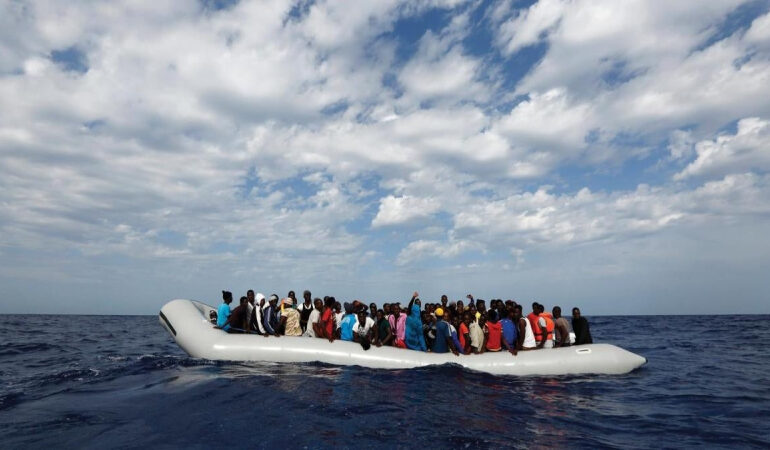

The Vatican’s Dicastery for Promoting Integral Human Development has released a new report examining the global migrant crisis, drawing attention to the increasing number of individuals forced to leave their homes because of conflict, poverty, environmental degradation, and political instability. The report outlines both the humanitarian dimensions of the crisis and the moral responsibilities of the international community. Church officials state that the document aims to support policymakers, Catholic organizations, and local churches working to address the complex realities faced by migrants and refugees.
The findings highlight a pattern of rising displacement across multiple regions, with many individuals lacking access to stable housing, medical care, or legal protection. The report underscores the importance of coordinated global responses and emphasizes the role of Catholic social teaching in guiding compassionate and practical solutions.
Key Findings on Global Displacement Trends
The commission’s report presents an overview of migration patterns observed over recent years, documenting increased movement across Africa, Asia, Latin America, and parts of the Middle East. Many migrants are fleeing violence or insecurity, while others relocate due to limited economic opportunities or environmental challenges such as droughts and flooding. The report stresses that these conditions create structural vulnerability, making stability difficult for affected families.
Data from humanitarian organizations cited in the report indicate that millions of people live in temporary or informal settlements without consistent access to essential services. Health risks, food insecurity, and lack of education remain common challenges. The Vatican highlights that these conditions require not only emergency assistance but also long-term strategies that promote dignity and self-sufficiency.
The report encourages governments and international institutions to improve legal pathways for migration, expand resettlement programs, and ensure safe working conditions for migrant laborers. By presenting data-driven insights, the commission aims to foster a deeper understanding of the global factors contributing to displacement.
Human Dignity as the Foundation of Migration Policy
A central theme of the report is the affirmation that migration must be approached through the lens of human dignity. Church officials emphasize that migrants are not abstract statistics but individuals and families seeking safety and opportunity. The report draws on Catholic social teaching to stress that every person has inherent worth and that societies have a moral obligation to protect vulnerable populations.
The document urges governments to avoid policies that risk dehumanizing migrants or limiting their basic rights. Instead, it calls for frameworks that balance national security with humanitarian responsibility. The Vatican emphasizes that supportive migration policies can reinforce social cohesion and contribute positively to receiving communities.
The report also notes the importance of pastoral care for migrants. Local churches often provide essential support through language classes, legal assistance, food distribution, and spiritual accompaniment. These services reflect the Church’s mission to uphold the dignity of every human being.
Addressing the Root Causes of Displacement
The Vatican report identifies the need to address the underlying causes that force individuals to migrate. Many regions affected by conflict or environmental degradation lack stable governance structures, economic opportunities, or sustainable infrastructure. The commission stresses that long-term solutions must include investment in education, agricultural development, and environmental resilience.
Environmental pressures, such as desertification and rising sea levels, are contributing to increased displacement in multiple parts of the world. The report calls for stronger international collaboration to mitigate these effects and support adaptation strategies. By addressing root causes, policymakers can help reduce forced migration and create conditions that allow families to remain in their home communities.
Strengthening Global and Local Responses
The commission’s findings encourage broader engagement from national governments, international organizations, and civil society. Effective responses require coordination between humanitarian agencies, faith-based organizations, and local parishes that work directly with migrant populations. The Vatican highlights that partnerships can improve resource distribution, enhance education and employment opportunities, and provide safer environments for displaced families.
The report also stresses the role of diplomatic dialogue in managing migration flows. Collaborative agreements between nations can help establish fair procedures, protect migrant workers, and support long-term integration. Through these efforts, the global community can develop sustainable approaches that respect both human dignity and national responsibility.
Conclusion
The Vatican’s new report on the global migrant crisis underscores the urgent need for coordinated action and compassionate policy. By highlighting displacement trends, affirming human dignity, addressing root causes, and promoting international cooperation, the commission offers a comprehensive framework for responding to one of the most significant humanitarian challenges of our time. The Church’s commitment to integral human development continues to guide its efforts to support migrants and advocate for justice.