
New Findings in Jerusalem Reveal Rare Section of Ancient Hasmonean Wall
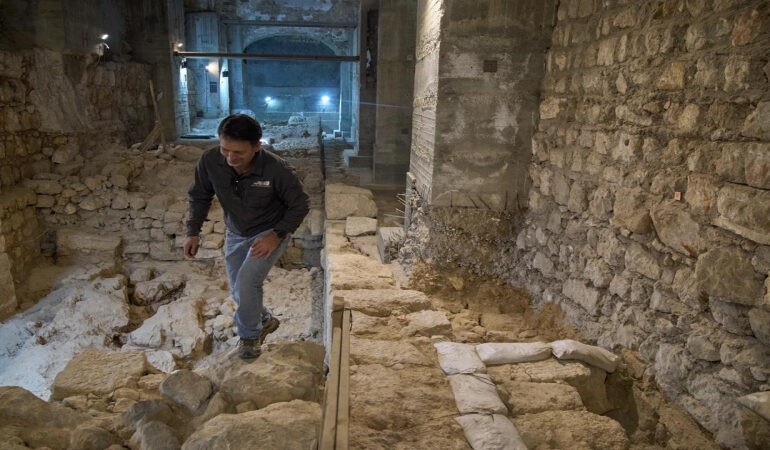

Archaeologists in Jerusalem have uncovered one of the most extensive intact sections of the Hasmonean era wall ever found, offering rare insight into the city’s political and military history during the period associated with the Hanukkah narrative. The discovery, located beneath the Tower of David Citadel Museum in an area once used as a nineteenth century military base and later as a prison, reveals foundations stretching nearly 164 feet in length and approximately 16 feet in width. Experts say this wall encircled a much larger Jerusalem than the present Old City, protected by dozens of tall watchtowers described in historical writings. The newly unearthed section is notable not only for its state of preservation but also for the unusual pattern of dismantling observed along the wall line above the foundation. Archaeologists have noted that instead of collapsing over time through conflict or erosion, the upper sections appear to have been deliberately and uniformly removed, suggesting a purposeful historical intervention rather than gradual decay.
The discovery has revived long standing debates among scholars regarding the political forces that shaped Jerusalem’s defenses in the second century before Christ. One hypothesis ties the dismantling to a recorded ceasefire agreement between Judean King John Hyrcanus and Seleucid King Antiochus the Seventh, in which Hyrcanus reportedly conceded to raze sections of the city walls in exchange for the lifting of a siege. The writings of the ancient historian Josephus describe the negotiated lowering of defenses as a condition for peace, and some archaeologists believe the newly exposed structure may represent the first physical evidence of that agreement. Others propose that the dismantling is more likely connected to construction activity under King Herod, whose palace may have been built directly over earlier fortifications as an assertion of authority. This view is supported by findings in other parts of Jerusalem where similar Hasmonean structures were left standing, suggesting the decision may have varied by location. The blend of archaeological data and historical accounts has generated renewed academic interest in how rulers altered the city’s landscape to assert sovereignty and negotiate power in a turbulent era.
The excavation site, located beneath an abandoned wing of the Kishleh complex, required workers to remove massive quantities of soil and debris by hand over a two year period, revealing layers of history that had remained inaccessible for generations. Researchers identified traces of medieval dye pits near the wall foundation, further illustrating the long and varied use of the site across centuries. Once renovations are complete, the Tower of David Museum plans to incorporate the newly uncovered wall into its expanded archaeology and art galleries, using a floating glass floor to allow visitors to view the structure while preserving its integrity. The find enriches ongoing discussions about Jerusalem’s evolving urban footprint and the ways political, military and cultural transitions shaped the city’s physical form. As scholars continue to analyze the structure, the wall stands as a rare witness to a period marked by shifting alliances, religious renewal and the complex interplay between historical memory and material evidence.