
Italy Welcomes Refugees Through Humanitarian Corridors
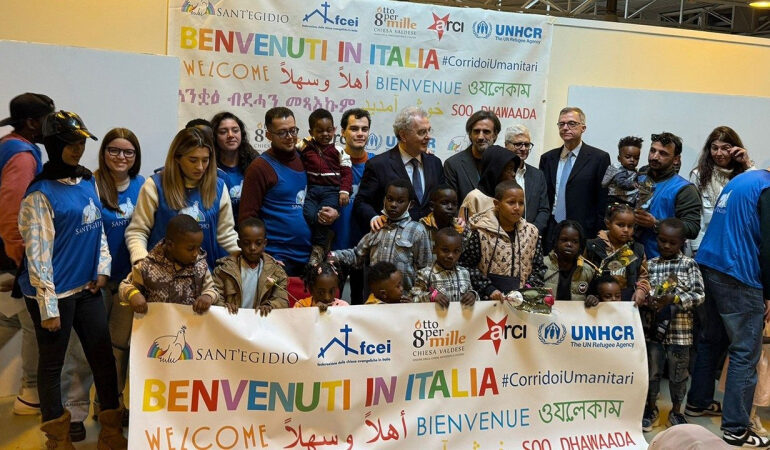

On Thursday, 122 refugees from Sudan, South Sudan, and Eritrea arrived at Fiumicino International Airport in Rome via humanitarian corridors, marking another step in Italy’s ongoing commitment to providing safe passage for people fleeing conflict and persecution. The group included 31 women and 62 minors, many of whom are survivors of trafficking, victims of violence, or patients with serious health conditions. Their arrival was facilitated through a coordinated effort by the Italian Ministry of the Interior, the Ministry of Foreign Affairs and International Cooperation, UNHCR, ARCI, and the Community of Sant’Egidio. Since the signing of the humanitarian corridor agreement in December 2023, the initiative has safely relocated 659 people from Libya, providing vulnerable populations with access to shelter, medical care, and opportunities for integration within Italian communities.
Humanitarian corridors are structured through a Memorandum of Understanding between the Community of Sant’Egidio, the Federation of Evangelical Churches in Italy, the Tavola Valdese, and the Italian Government, supported by self-funding and volunteer efforts from the participating organizations. These corridors operate by identifying potential beneficiaries, securing Humanitarian Visas with Limited Territorial Validity, and providing safe transportation to Italy. Upon arrival, refugees are hosted in accommodations managed by the Community of Sant’Egidio, ARCI, and the Reception and Integration System, receiving essential services such as Italian language courses, school registration for children, and support in finding employment. These measures aim to ensure that arrivals can transition safely into Italian society while preserving their dignity and autonomy, reflecting the humanitarian principles promoted by the Catholic Church and international organizations.
Filippo Ungaro, UNHCR spokesperson for Italy, emphasized that while this model has helped thousands, global resettlement remains insufficient. With approximately 2.8 million refugees worldwide and only 8% successfully resettled, initiatives like Italy’s humanitarian corridors offer a secure and ethical framework for other countries to emulate. The program demonstrates how collaborative partnerships between governments, international agencies, and faith-based organizations can address urgent humanitarian needs while fostering integration and social cohesion. By combining practical assistance with a commitment to human dignity, Italy’s corridors serve as a model of compassionate governance, aligning with Vatican principles of justice, charity, and the promotion of human fraternity.