

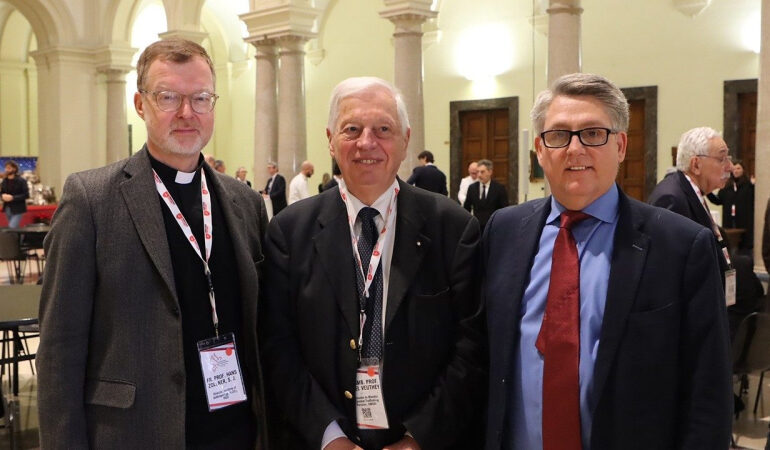

Anti-trafficking experts convened at the Pontifical Gregorian University to mark 25 years since the Palermo Protocol, emphasizing the urgent need for sustained and concrete action against the global trafficking of persons. Despite legal frameworks and international efforts, human trafficking remains widespread, with an estimated 50 million victims worldwide generating criminal profits exceeding 236 billion dollars annually. Church actors, including Cardinal Fabio Baggio and Fr. Hans Zollner, highlighted the critical role of religious institutions in raising awareness, supporting vulnerable communities, and providing both moral and practical resources. Speakers noted that religious sisters, local Church leaders, and faith-based organizations have taken a leadership role in combatting trafficking, demonstrating the Church’s unique capacity to combine advocacy, care, and ethical guidance while promoting justice and human dignity on the ground.
Experts at the conference underscored that progress remains insufficient, with recovery and prosecution rates far below what is required to curb the crime effectively. Kevin Hyland, a member of the Santa Marta Group, noted that only a tiny fraction of victims are rescued annually, and criminal networks continue to operate with near impunity. Modern challenges, such as globalization and technological tools like artificial intelligence, further complicate enforcement. Speakers emphasized the need for governments and international institutions to provide adequate funding, resources, and political support to faith-based and civil society organizations engaged in anti-trafficking work. Pope Leo XIV and Church leaders were cited in calling for deeds and concrete interventions, insisting that ethical action and vigilance must complement policy frameworks to protect vulnerable populations and uphold human rights globally.
The conference also highlighted the importance of community-level engagement and interdisciplinary collaboration. Mama Fatima Singateh, UN Special Rapporteur on the Sale and Sexual Exploitation of Children, emphasized the Church’s role in supporting grassroots initiatives, providing both financial and moral resources, and empowering local communities to prevent exploitation. Participants stressed that effective anti-trafficking efforts require sharing best practices, training, and capacity-building to respond to evolving threats. Speakers reinforced that advocacy, education, and direct intervention are essential complements to legal instruments. By combining research, community action, and ethical leadership, religious institutions demonstrate their ability to influence policy and protect the most vulnerable, reflecting the Church’s enduring commitment to justice, human dignity, and the defense of life in its most defenseless forms.