
How Pope Leo XIV Is Reframing the Papacy for a Fragmented World
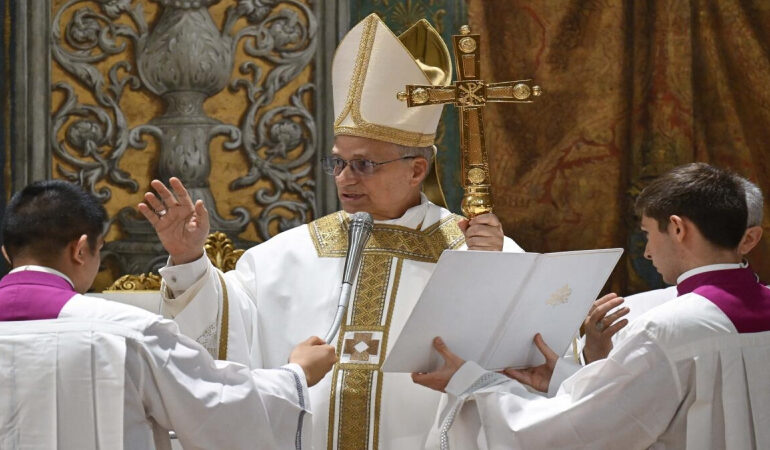

The election of Pope Leo XIV arrives at a time when global society is experiencing deep political, cultural, and social fragmentation. Trust in institutions has weakened, public discourse has become polarized, and moral authority is often questioned. In this environment, the papacy carries renewed importance as a symbol of stability and continuity rather than disruption.
From his earliest public messages, Pope Leo XIV has signaled a leadership style rooted in restraint and reflection. Rather than seeking immediate visibility through bold gestures, he appears focused on restoring confidence in the papal office itself. This approach reflects an understanding that the Church’s credibility today depends less on visibility and more on coherence, clarity, and moral consistency.
A Papacy Centered on Unity and Continuity
One of the defining features of Pope Leo XIV’s early pontificate is his emphasis on unity across a diverse global Church. Catholic communities today differ widely in cultural experience, political context, and social priorities. Pope Leo XIV has consistently framed the Church as a communion that draws strength from shared faith rather than uniform opinion.
By emphasizing continuity with long established teachings, he reinforces the idea that stability is not resistance to change but a foundation for discernment. This perspective presents the papacy as a guiding presence that does not fluctuate with every cultural shift. For many believers, this steady posture offers reassurance amid rapid global transformation.
The focus on unity also extends beyond internal Church life. Pope Leo XIV appears attentive to the broader fractures shaping societies worldwide. His approach suggests that the papacy can model dialogue and patience without sacrificing conviction, offering an alternative to the confrontational tone common in public life.
Moral Authority Expressed Through Humility
Pope Leo XIV’s leadership reflects a clear understanding that moral authority in the modern world must be grounded in humility. Rather than asserting authority through forceful language, he emphasizes listening, pastoral care, and moral coherence. This style strengthens credibility by aligning leadership with lived witness.
Humility, in this sense, does not weaken doctrine. Instead, it places moral teaching within a pastoral framework that invites engagement rather than defensiveness. Pope Leo XIV’s approach suggests that truth is best communicated through clarity and example rather than confrontation.
This posture also allows the papacy to speak to complex moral issues without appearing dismissive of human struggle. By acknowledging the realities people face, the Church’s moral voice remains firm while also compassionate, reinforcing its relevance in a fragmented moral landscape.
A Global Perspective Beyond Partisan Politics
Another notable aspect of Pope Leo XIV’s leadership is his careful separation of the papacy from partisan political alignment. In an era when religious institutions are often drawn into ideological conflict, he emphasizes the universal mission of the Church over local political interests.
By focusing on principles such as human dignity, peace, and solidarity, Pope Leo XIV preserves the Church’s ability to engage across borders and cultures. This approach strengthens the papacy’s role as a moral reference point rather than a political actor.
Such restraint enhances the Church’s diplomatic and pastoral effectiveness. It allows the papacy to address global concerns while maintaining independence from political cycles, reinforcing its long term moral credibility.
Communication Marked by Clarity and Restraint
Pope Leo XIV’s communication style reflects a preference for thoughtful clarity rather than constant commentary. His public statements are measured, deliberate, and focused on substance. This restraint helps distinguish the papal voice in a media environment dominated by immediacy and reaction.
By choosing precision over frequency, the papacy under Leo XIV reinforces the value of careful discernment. Silence, when appropriate, becomes part of responsible leadership rather than absence.
This communication style also broadens accessibility. Clear language without sensational framing allows messages to reach believers and observers alike, strengthening trust in the papacy’s voice and intention.
Conclusion
Pope Leo XIV is reshaping the papacy by emphasizing unity, humility, moral clarity, and restraint. In a world marked by division and uncertainty, his leadership presents the papal office as a steady moral presence rather than a reactive institution. By grounding authority in continuity and credibility, the papacy under Pope Leo XIV offers guidance that speaks not through spectacle, but through consistency and trust.