Burkina Faso Church Adapts as Violence Forces Communities to Move
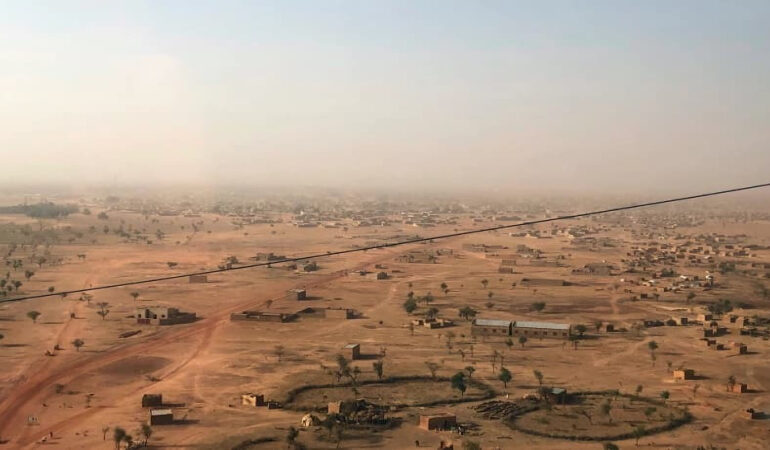

Catholic communities in Burkina Faso are being forced to redefine how they live their faith as insecurity spreads across the Sahel, according to a priest serving in the country’s northern regions. Large areas around towns such as Sebba and Gorgadji have seen churches fall silent after repeated threats made sustained pastoral presence impossible. Armed groups now control wide territories, limiting movement and dismantling visible community institutions, including churches, schools, and social centers. Clergy describe the situation not as isolated religious targeting but as part of a broader collapse of security that affects Muslims and Christians alike. The result has been mass displacement, with entire parishes abandoning buildings and gathering instead in safer areas or informal settings, reshaping what it means to be Church in an environment marked by fear and instability.
Priests working in the Diocese of Dori describe a sharp deterioration over the past decade, transforming sporadic violence into a prolonged humanitarian and pastoral crisis. Entire zones that were once accessible are now effectively closed, while civilians face kidnappings, banditry, and attacks on community leaders. Weak state presence, extreme poverty, environmental pressures, and porous borders have all contributed to the expansion of armed groups. Church leaders stress that religion itself is not the root of the conflict, noting that interfaith coexistence has historically been strong. Even amid displacement, Catholics and Muslims often share the same camps and hardships, reinforcing efforts to prevent religious polarization and maintain dialogue across faith lines.
In response, the Church has adopted flexible strategies to sustain faith and social support without fixed structures. Pastoral activity has shifted to safer towns, while lay leaders and catechists play a larger role in maintaining prayer life when Mass cannot be celebrated. Radio broadcasts, small gatherings, and humanitarian outreach through Church networks have become central tools. Clergy emphasize that faith continues in families and temporary shelters even when church buildings are abandoned. Looking ahead, Church leaders warn of long-term challenges including trauma, prolonged displacement, and radicalization driven by despair. Their focus remains on reconciliation, interfaith cooperation, and accompanying communities until conditions allow a return to stability.