Is the Global Catholic Church Becoming More Regionally Defined

The Catholic Church has long understood itself as universal, transcending borders, cultures, and political systems. Yet in recent years, questions have emerged about whether global Catholicism is becoming more regionally defined in its priorities, expressions, and concerns. Shifts in demographics, cultural context, and local challenges have led many observers to ask how unity is maintained amid growing diversity.
This question does not suggest fragmentation, but transformation. As Catholic populations grow rapidly in some regions while declining in others, the lived experience of faith increasingly reflects local realities. Polling data, pastoral discussions, and public debate point to a Church that remains united in belief while expressing itself through distinct regional perspectives.
Demographic Shifts Reshaping Catholic Life
One of the strongest drivers of regional definition is demographic change. Catholic population growth is now concentrated largely in Africa, Latin America, and parts of Asia. These regions bring different social conditions, cultural traditions, and pastoral priorities into the center of global Catholic life.
As demographics shift, so do the issues emphasized in Church discussions. Communities facing poverty, conflict, or rapid development naturally raise concerns that differ from those in more affluent or secularized societies. This does not alter doctrine, but it influences how faith is lived and articulated in daily life.
Regional Priorities and Pastoral Focus
Polling and opinion research suggest that Catholics in different regions prioritize different concerns. In some areas, social justice, education, and access to basic needs dominate Church engagement. In others, questions of secularism, identity, and moral teaching are more prominent.
These variations reflect context rather than division. The Church’s pastoral mission has always adapted to local circumstances. What appears as regional definition is often the natural outcome of applying shared teachings to distinct realities. The challenge lies in ensuring that adaptation strengthens rather than weakens unity.
Cultural Expression and Faith Practice
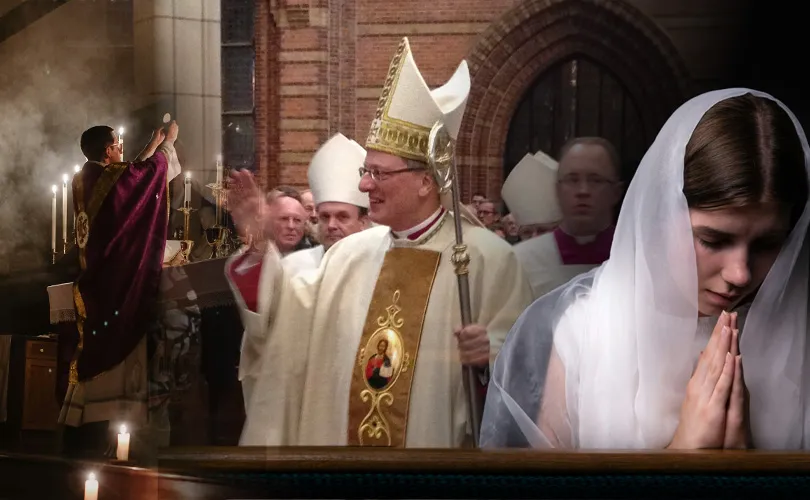
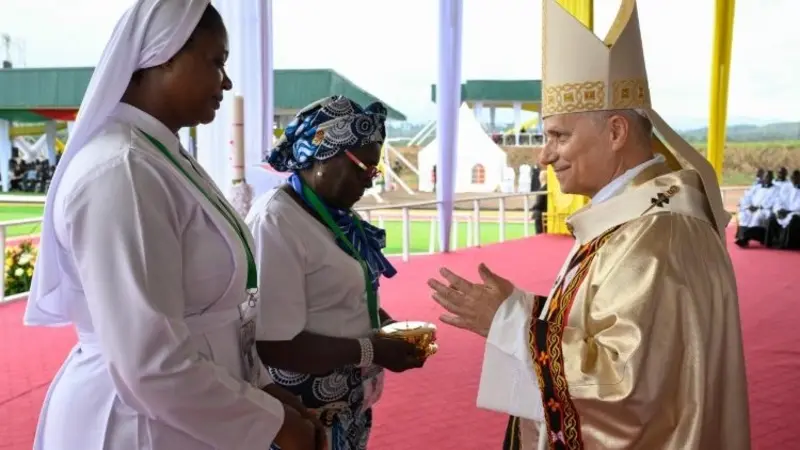
Cultural context plays a significant role in shaping how Catholic faith is expressed. Liturgy, devotional practices, and community life often reflect local customs and histories. Surveys indicate that many Catholics value this cultural expression as a source of vitality rather than inconsistency.
This diversity can raise questions about coherence, especially when practices differ visibly across regions. However, the Church has historically allowed cultural expression within the boundaries of shared belief. Regional identity, in this sense, becomes a way of embodying universality rather than replacing it.
Leadership and Representation
Regional definition is also reflected in leadership and representation within the Church. As global Catholicism becomes more demographically diverse, expectations grow for leadership that reflects this reality. Catholics increasingly notice whose voices are heard in global discussions and whose experiences shape decision making.
This awareness has influenced opinion about governance and inclusion. Greater regional representation is often seen as strengthening the Church’s credibility and responsiveness. It reinforces the idea that universality is expressed through participation rather than uniformity.
Unity Beyond Uniformity
A recurring theme in opinion surveys is the distinction between unity and uniformity. Many Catholics express comfort with regional differences as long as core beliefs and moral teachings remain shared. Unity is understood less as sameness and more as communion across difference.
This perspective challenges simplistic narratives of division. Regional definition does not necessarily imply fragmentation. Instead, it reflects a Church learning to live its universality through diverse voices, cultures, and experiences while remaining grounded in common faith.
Conclusion
The global Catholic Church is becoming more visibly shaped by regional realities, but this development does not signal a loss of unity. Demographic shifts, cultural expression, and local pastoral priorities naturally influence how faith is lived across the world. Rather than undermining universality, these regional expressions highlight the Church’s capacity to remain one in belief while diverse in practice, offering a more complete reflection of its global identity.