
What the Global South Is Teaching the Universal Church Right Now

The center of gravity in the Catholic Church has been shifting for decades. Today, a majority of Catholics live in regions often described as the Global South, including Africa, Latin America, and large parts of Asia. This demographic reality is not merely statistical. It is reshaping how faith is practiced, expressed, and understood across the universal Church.
Rather than receiving direction alone, these regions are actively teaching the wider Church. Their experiences of faith under social pressure, economic constraint, and cultural plurality are offering lessons in resilience, community, and lived belief. These lessons challenge long held assumptions rooted in older European frameworks.
Faith Lived as Community Rather Than Abstraction
One of the clearest contributions from the Global South is an emphasis on faith as a communal reality. In many regions, belief is not primarily expressed as private conviction but as shared life. Worship, service, and celebration are deeply integrated into daily routines.
This communal expression reminds the universal Church that faith thrives in relationship. Doctrine and teaching remain central, but they are embodied through community. In contexts where institutional support is limited, shared faith becomes a source of strength and identity.
Resilience in the Face of Social Pressure
Catholic communities in the Global South often practice faith amid instability. Political uncertainty, economic hardship, and social conflict are common realities. Yet the Church continues to grow in many of these environments.
This resilience offers an important lesson. Faith is sustained not by comfort or cultural dominance, but by conviction and mutual support. The universal Church is reminded that belief does not depend on favorable conditions, but on commitment shaped through challenge.
Worship That Integrates Culture Rather Than Replaces It
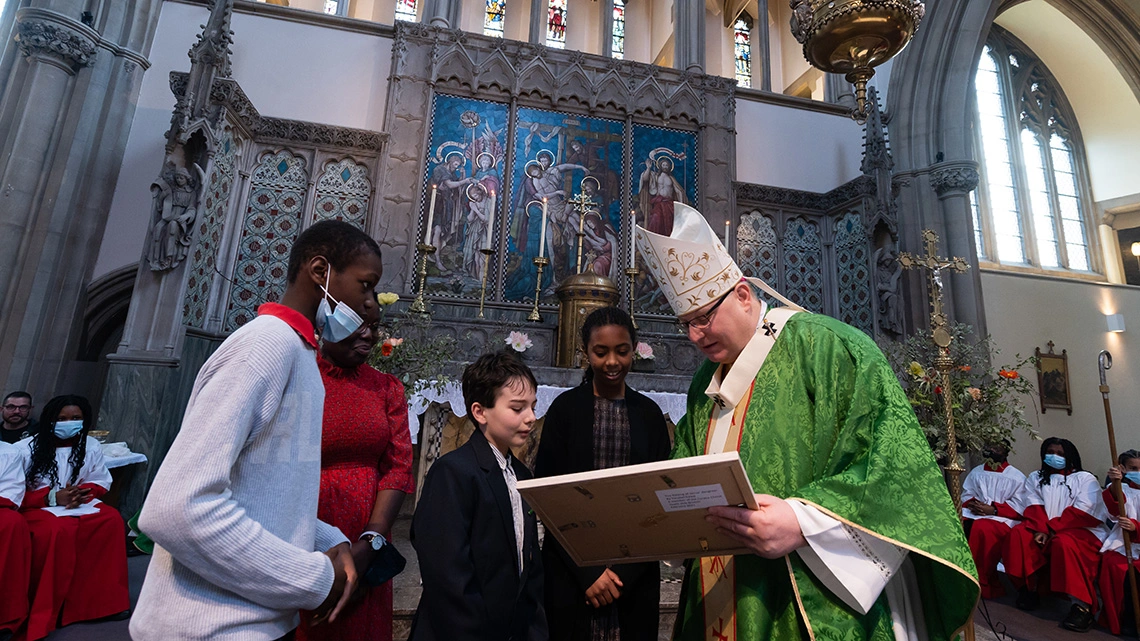
Another teaching emerging from the Global South is the integration of local culture into worship. Music, language, and communal expression reflect indigenous traditions while remaining connected to the universal liturgy.
This integration demonstrates that unity does not require uniformity. The Church can remain one while expressing faith through diverse cultural forms. These practices enrich the global Church by expanding how faith can be authentically lived and celebrated.
Evangelization Through Presence and Witness
In many Global South contexts, evangelization occurs less through formal programs and more through presence. The Church’s credibility often comes from proximity to daily struggle and consistent service.
This witness based approach offers a corrective to models overly focused on strategy. Faith spreads through relationships, care, and example. The universal Church is reminded that credibility grows when belief is visibly aligned with lived compassion.
A Different Relationship With Authority
Catholics in the Global South often approach Church authority through trust built on pastoral presence. Leaders are expected to be accessible and engaged with community realities. Authority is relational rather than distant.
This perspective challenges administrative models shaped by bureaucracy. It emphasizes leadership rooted in accompaniment. For the universal Church, this offers insight into how authority can remain credible in diverse cultural contexts.
Youthful Energy and Demographic Reality
The Global South is home to a younger Catholic population. Youth participation shapes parish life, social engagement, and future leadership. This demographic vitality contrasts with aging populations elsewhere.
This energy brings urgency to questions of formation, education, and responsibility. The universal Church is being reminded that its future depends on engaging young believers not as recipients, but as participants in mission and leadership.
Learning Without Idealizing
While the Global South offers vital lessons, it also faces its own challenges. Poverty, conflict, and institutional strain remain real. Learning must be grounded in realism rather than romanticism.
The exchange between regions strengthens the Church when it remains mutual. The Global South teaches resilience and community, while also benefiting from global solidarity and shared resources. This reciprocal relationship enriches the universal Church.
Conclusion
The Global South is teaching the universal Church that faith flourishes through community, resilience, and lived witness. Its experience challenges assumptions shaped by comfort and institutional security. By listening attentively, the Church is rediscovering that its vitality lies not in dominance or uniformity, but in faith practiced faithfully across diverse and demanding realities.