



What Pope Leo XIV’s Early Appointments Reveal About Vatican Priorities
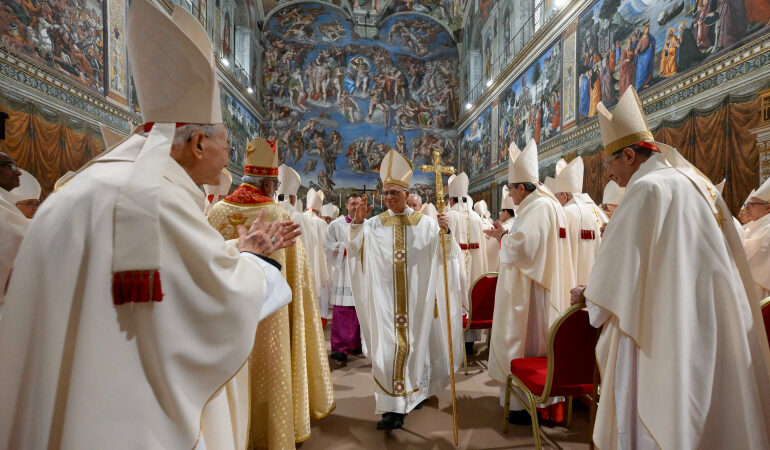

The early appointments of a new pope often offer the clearest insight into how he intends to govern. In the first months of his pontificate, Pope Leo XIV has made a series of measured personnel decisions that point less toward dramatic overhaul and more toward institutional alignment. These choices provide valuable clues about the priorities shaping the Vatican under his leadership.
Rather than focusing on visibility or symbolic balance, Pope Leo XIV’s appointments suggest an emphasis on experience, administrative competence, and continuity. At a time when the Church faces internal complexity and external scrutiny, these early signals indicate a papacy grounded in governance before ambition.
Appointments as Signals of Governance Philosophy
In the Vatican, appointments are rarely neutral. They reflect a pope’s understanding of authority, reform, and institutional culture. Pope Leo XIV’s early selections show a clear preference for figures with deep familiarity with Vatican processes and global Church realities. This suggests a leadership style that values institutional memory and procedural stability.
By choosing officials known for administrative discipline rather than ideological positioning, the pope reinforces the idea that effective governance begins with functionality. These appointments strengthen internal coordination across dicasteries and reduce the likelihood of policy fragmentation.
Such decisions also signal to bishops and Church officials worldwide that the current priority is coherence. Leadership continuity ensures that reforms already underway are implemented consistently rather than redirected prematurely.
Emphasis on Administrative Competence
A notable feature of the pope’s early appointments is their focus on administrative capability. Many appointees bring long experience within Church governance, diplomacy, or pastoral administration. This reflects an understanding that the Vatican’s credibility depends on its ability to manage complex responsibilities with professionalism.
Administrative competence is particularly significant in areas such as financial oversight, internal coordination, and global engagement. By reinforcing these functions with experienced leadership, Pope Leo XIV strengthens the institutional backbone of the Holy See.
This emphasis also suggests a pragmatic reading of the moment. The Church’s challenges are not only theological or pastoral but operational. Effective administration supports the Church’s mission by ensuring transparency, accountability, and consistency.
Continuity Over Disruption
While papal transitions often raise expectations of sweeping personnel changes, Pope Leo XIV has largely avoided abrupt disruption. His approach favors continuity, allowing existing leadership teams to function while gradually refining priorities. This reduces internal uncertainty and preserves institutional confidence.
Continuity also allows time for discernment. Rather than reshaping leadership structures quickly, the pope appears committed to understanding how current systems operate before introducing adjustments. This patient approach reflects respect for the complexity of Vatican governance.
For the global Church, this stability is reassuring. Sudden shifts at the Vatican level can create confusion across dioceses. A steady transition helps local churches remain focused on pastoral responsibilities rather than institutional speculation.
Reinforcing the Vatican’s Global Role
The Vatican’s influence extends beyond ecclesiastical matters into diplomacy, humanitarian action, and moral advocacy. Pope Leo XIV’s early appointments reflect awareness of this global role. By selecting leaders with international experience, he reinforces the Holy See’s capacity to engage credibly with diverse political and cultural contexts.
These choices suggest that the pope views the Vatican as a long-term global actor rather than a platform for short-term initiatives. Stability in leadership strengthens relationships with states, international organizations, and interfaith partners.
This approach also aligns with the Church’s self-understanding as a universal institution. Appointments that prioritize global awareness over regional emphasis help maintain balance within a worldwide communion.
Conclusion
Pope Leo XIV’s early appointments reveal a papacy focused on governance, continuity, and institutional strength. By prioritizing experience and administrative competence, he signals that stability is essential to the Church’s mission in a complex world. These decisions suggest a leadership style grounded in patience and coherence, setting the tone for a Vatican that values function as much as vision.