
What Recent Catholic Opinion Trends Reveal About Institutional Trust

Across the global Church, questions of trust have moved to the center of Catholic public life. While belief and practice continue in many forms, attitudes toward institutions have become more complex and nuanced. Recent opinion trends among Catholics point to neither wholesale rejection nor uncritical loyalty, but to a more cautious and discerning relationship with Church authority.
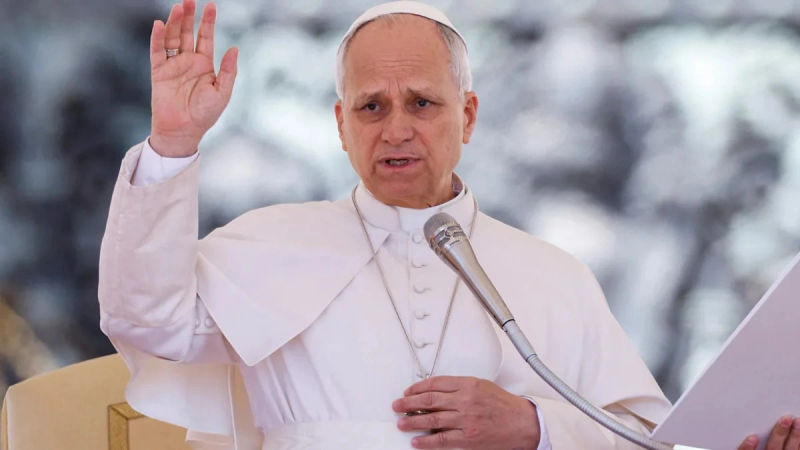
This shift is unfolding within a broader climate of institutional skepticism that affects governments, media, and civic bodies worldwide. Under the leadership of Pope Leo XIV, the Vatican appears attentive to these signals. Understanding what Catholic opinion trends reveal about trust is essential for grasping how the Church is positioning itself for the years ahead.
Trust Is Becoming Conditional Rather Than Assumed
One of the clearest insights from recent Catholic opinion trends is that institutional trust is no longer automatic. Many Catholics continue to value the Church’s spiritual role while expressing reservations about governance, decision-making, and transparency.
Trust increasingly depends on perceived integrity and consistency. Catholics are more likely to extend confidence when leadership demonstrates accountability and restraint. This conditional trust reflects maturity rather than disengagement, signaling that faith and institutional confidence are no longer treated as identical.
For Church leadership, this means that credibility must be sustained through action and clarity, not inherited by position alone.
Distinguishing Faith From Institutional Confidence
Opinion trends suggest a growing distinction between personal faith and trust in institutions. Many Catholics report strong spiritual identity while expressing ambivalence toward structures and administration.
This separation does not imply rejection of the Church, but a redefinition of how authority is understood. Faith is experienced as personal and communal, while institutions are evaluated through ethical and practical lenses.
Recognizing this distinction allows the Church to engage believers more honestly. It creates space to rebuild confidence without framing concern as disloyalty.
Transparency as a Trust Indicator
Transparency has emerged as a key factor shaping institutional trust. Catholics increasingly expect openness in governance, communication, and accountability. When information is perceived as incomplete or delayed, trust erodes more quickly.
Opinion trends indicate that clarity matters more than volume. Thoughtful explanations and consistent processes are valued over frequent statements. This aligns with the Vatican’s broader move toward deliberate communication.
Transparency, in this context, is not about constant disclosure but about reliable explanation. When Catholics understand how decisions are made, confidence improves even amid disagreement.
Generational Differences in Trust Patterns
Generational perspectives play a significant role in shaping trust. Younger Catholics often approach institutions with greater skepticism, shaped by broader social experiences of instability and information overload.
Older generations may retain stronger institutional loyalty but also express concern about continuity and leadership clarity. These differences highlight the need for communication that addresses varied expectations.
Understanding generational patterns helps the Church avoid one-size-fits-all responses. Trust is built differently across age groups, requiring tailored engagement rather than uniform messaging.
The Role of Leadership Tone
Opinion trends suggest that tone matters as much as policy. Calm, measured leadership fosters confidence more effectively than assertive or reactive postures. Catholics respond positively to leaders who demonstrate listening and restraint.
Under Pope Leo XIV, the Vatican’s tone has reflected awareness of this dynamic. Leadership style becomes a trust signal, shaping how messages are received regardless of content.
This reinforces the idea that trust is relational. It grows through consistent behavior over time rather than isolated actions.
Trust as a Long Term Process
Recent trends show that institutional trust is unlikely to be restored through single initiatives. It develops gradually through sustained credibility, transparency, and coherence.
Catholics appear willing to extend trust when they see alignment between values and practice. This requires patience from both leadership and the faithful.
The Church’s challenge is not to persuade quickly, but to demonstrate reliability over time. Trust becomes a process rather than an assumption.
Conclusion
Recent Catholic opinion trends reveal a Church navigating a more discerning relationship with institutional trust. Faith remains strong for many, but confidence in structures is increasingly conditional and reflective. By prioritizing transparency, measured leadership, and long-term credibility, the Church has an opportunity to rebuild trust in ways that align with the realities of modern belief.