




A Nebraska Town Faces Uncertainty as Work Disappears
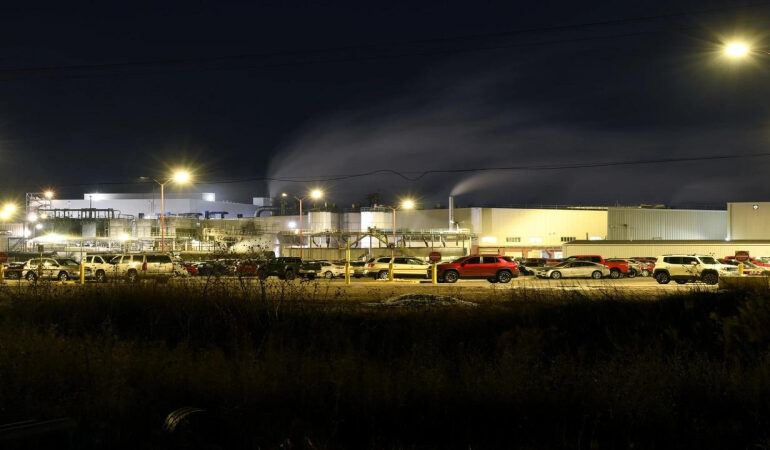

In Lexington, Nebraska, the approach of Christmas has been overshadowed by fear and uncertainty after the announcement that the town’s largest employer will shut down operations early next year. For decades, the beef processing plant run by Tyson Foods has shaped daily life in the community, providing work to thousands of families and anchoring the local economy. The closure places more than three thousand workers at risk of unemployment in a town of just over ten thousand people, triggering concern far beyond the factory gates. Families fear losing not only wages but the stability they built through years of labor, home ownership, and education for their children. Economists warn that the loss will ripple through schools, small businesses, and public services, threatening the survival of a town that had become a rare example of opportunity and upward mobility for immigrant and working class families in rural America.
The emotional weight of the decision has been visible inside churches and community halls, where families gather seeking reassurance and support. At St. Ann’s Catholic Church, parishioners have quietly shared their worries after Mass, aware that many may soon be forced to leave in search of work elsewhere. For parents, the fear is not limited to job loss but extends to the future of their children, whose education and sense of belonging now feel fragile. Lexington had grown into a diverse and tightly knit town, where multiple cultures lived side by side and children thrived in schools known for strong outcomes. With nearly half of students connected to the plant through a parent, educators and local leaders worry about declining enrollment and the erosion of services. What once symbolized the American promise of stability now feels suddenly reversible, leaving families unsure whether their community can endure.
The looming shutdown also raises broader ethical questions about corporate responsibility and the social cost of economic decisions. Local businesses, from restaurants to grocery stores, depend heavily on plant workers and now face closure themselves. Older employees with limited education or language skills fear they may never find comparable work again. State agencies have stepped in with job counseling and retraining assistance, but many acknowledge that rebuilding a local economy takes time few families can afford. Residents hope new investment may arrive, yet uncertainty dominates conversations. For many, the deepest loss is not the job itself but the possibility of losing home and community. As one long time resident expressed, Lexington is more than a workplace. It is where lives were rebuilt, roots were planted, and futures imagined. Whether the town can survive this shock remains an open and painful question.