Relief and Reflection After Nigerian Schoolchildren Freed
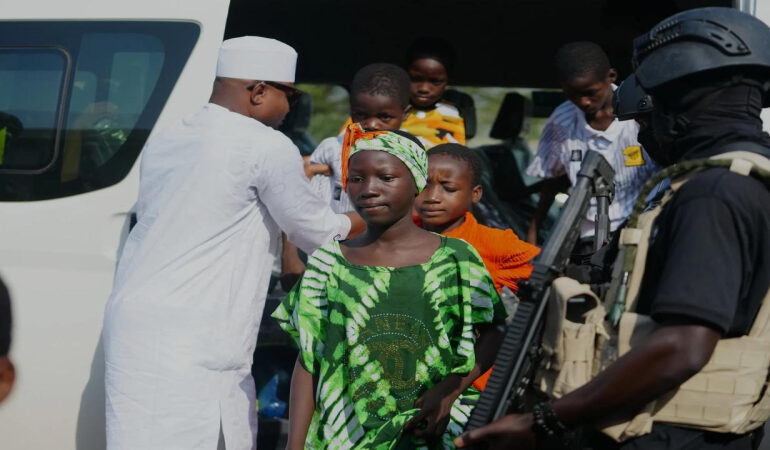

In Nigeria, scenes of relief and quiet emotion unfolded as 130 schoolchildren and teachers were reunited with authorities after being released from captivity following a mass abduction that shocked the nation. The group had been taken during a predawn raid on a Catholic school in the Papiri community of Niger state, an attack that deepened fears about the safety of children and educators in the country’s northern regions. When the freed students arrived for an official reception in Minna, some appeared visibly weakened, showing signs of malnutrition and trauma after weeks in captivity. Officials said arrangements were underway to return the children to their families ahead of Christmas, a moment many parents feared might never come. The release has been welcomed across the country as a moment of hope, even as it revives painful questions about insecurity and the repeated targeting of schools.
Authorities offered differing accounts of the number abducted, but confirmed that all those taken in the attack have now been freed, including teachers and staff. Most of the children were between the ages of ten and seventeen, according to school officials, and some have described being threatened with violence during the ordeal. The abduction is part of a wider pattern of school kidnappings that have come to define insecurity in parts of Nigeria, where armed groups routinely target vulnerable communities. While officials have not disclosed whether a ransom was paid, such payments are common in similar cases, reinforcing a cycle that places children at continued risk. The lack of clear accountability has left communities anxious, even in moments of celebration, aware that freedom for one group does not end the broader threat.
The students were taken from St. Mary’s Catholic School, a reminder that faith based institutions often serve some of the most exposed communities. Nigerian authorities have said they plan to work more closely with local leaders to strengthen protection in high risk areas, but many families remain unconvinced that lasting security has been achieved. For churches and civil society groups, the release is both a blessing and a call to renewed vigilance and solidarity. The children’s return has brought joy and gratitude, yet it also highlights the fragile reality facing young people whose education is repeatedly interrupted by violence. As families prepare for reunions, the wider society is left reflecting on the moral urgency of safeguarding children and ensuring that schools remain places of learning rather than fear.