Faith as Structure, Not Reaction The Vatican’s Theological Posture Today
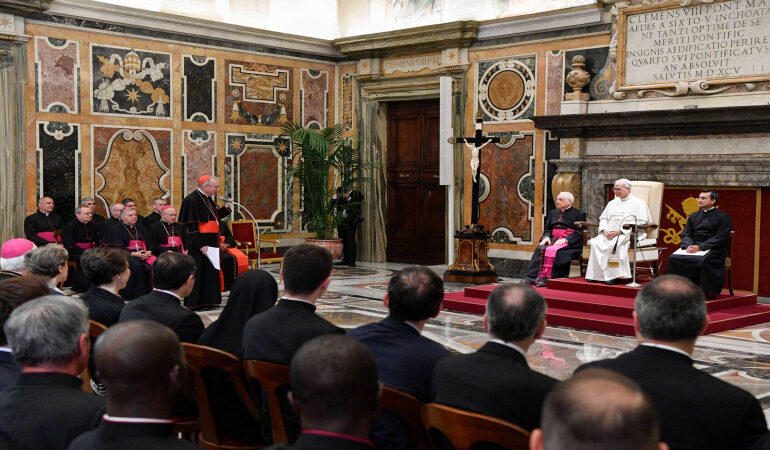

Theological authority in the modern world is often tested by speed. Public debate moves quickly, controversies escalate rapidly, and institutions are expected to respond in real time. Within this environment, the Vatican has increasingly articulated a theological posture that resists reaction and instead emphasizes structure. Faith, in this understanding, is not shaped by immediacy but grounded in enduring form, coherence, and continuity.
This posture reflects a deliberate choice. Rather than treating theology as commentary on unfolding events, the Vatican presents faith as a stable framework that precedes and interprets experience. By doing so, it positions theology as a source of orientation rather than response. This approach allows belief to remain intact amid noise while offering clarity that does not depend on constant intervention.
Theology as an Enduring Framework
The most important aspect of the Vatican’s current theological posture is the presentation of faith as an enduring framework. Theology is understood as a structured body of belief that forms conscience over time. It is not adjusted in reaction to each social or cultural shift.
This framework provides continuity across generations. By emphasizing structure, the Vatican ensures that faith remains intelligible and transferable. Believers are invited to enter a tradition that has internal coherence rather than navigate a system that changes with external pressures. Structure becomes a source of strength rather than limitation.
Resisting Reactive Theology
Reactive theology risks becoming fragmented. When belief is shaped primarily by events, it can lose internal consistency. The Vatican’s posture avoids this risk by maintaining distance from moment driven responses.
Restraint allows theology to retain depth. Instead of issuing frequent theological clarifications tied to public controversy, the Church emphasizes established teaching. This preserves clarity and prevents confusion between doctrine, pastoral guidance, and opinion. Theology remains a source of formation rather than reaction.
Faith Forming Conscience Before Commentary
Another defining element of this posture is the emphasis on forming conscience before offering commentary. The Vatican understands theology as formative rather than performative. Its purpose is to shape how believers think, discern, and act over time.
By focusing on formation, the Church equips individuals to interpret events responsibly without requiring constant institutional response. Faith functions as a lens through which reality is understood, not a tool used to comment on every development. This approach strengthens moral responsibility at the personal and communal level.
Structure Supporting Global Coherence
The global nature of the Church makes structural theology especially important. Believers live in vastly different political, cultural, and social contexts. Reactive theology risks privileging certain contexts over others.
By emphasizing structure, the Vatican maintains theological coherence across regions. Teaching remains consistent even as pastoral application varies. This balance allows faith to remain universal while respecting diversity. Structure ensures that theology does not fragment into localized interpretations driven by immediate circumstances.
Theological Authority Through Consistency
Authority in theology is closely linked to consistency. When teaching remains stable, it becomes a reliable reference point. The Vatican’s posture reflects confidence in the Church’s theological inheritance rather than anxiety about relevance.
Consistency does not prevent engagement with the world. Instead, it frames engagement within an established horizon of meaning. The Church can address contemporary questions without redefining its foundations. Authority is preserved by continuity rather than novelty.
Faith as Orientation, Not Intervention
Viewing faith as structure reframes the role of theology in public life. Rather than intervening in every debate, theology provides orientation. It offers principles that guide judgment rather than positions that seek immediate resolution.
This orientation allows the Church to remain present without being consumed by immediacy. Faith becomes a steady presence that informs action over time. This posture respects the complexity of modern life while preserving theological integrity.
Sustaining Theology Beyond the Moment
The Vatican’s emphasis on structure ensures that theology endures beyond specific moments. It resists the temptation to align belief too closely with temporary narratives. Instead, it preserves a body of teaching capable of sustaining meaning across eras.
This endurance is essential for a faith that claims universality. By avoiding reactive theology, the Church safeguards its ability to speak across time and culture. Structure allows theology to remain both living and stable.
Conclusion
The Vatican’s theological posture today presents faith as structure rather than reaction. By emphasizing continuity, formation, and coherence, the Church preserves theological clarity in a fast moving world. This approach ensures that faith remains an enduring framework that orients conscience rather than a reactive voice shaped by momentary pressures.