Custos Urges Pilgrims Back to the Holy Land
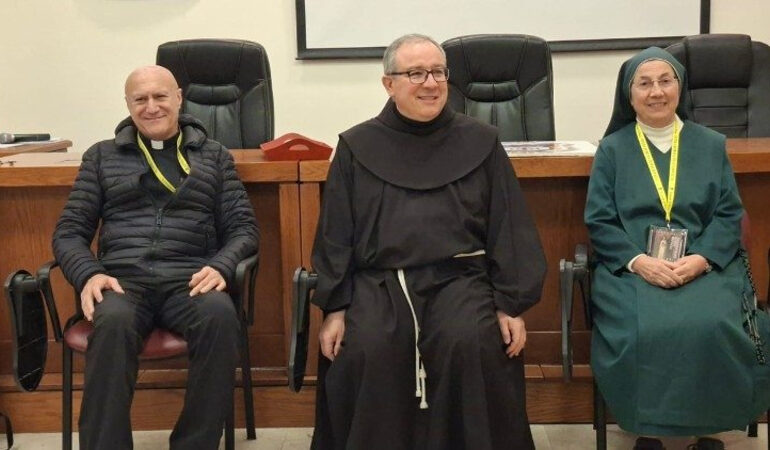

As the Jubilee year dedicated to hope draws to a close, the Custos of the Holy Land has renewed an appeal for Christians around the world to return as pilgrims to the places at the heart of their faith. Speaking in Jerusalem, Francesco Ielpo described pilgrimage not as religious tourism, but as an encounter with a living Church that continues to endure amid hardship. Addressing a group of visitors from Rome at the Franciscan headquarters in the Old City, he stressed that the physical presence of pilgrims helps overcome fear and isolation far more effectively than words alone. In a land deeply affected by conflict and uncertainty, the arrival of Christians from different countries offers encouragement to local communities and reminds them they have not been forgotten. Pilgrimage, he said, becomes a visible sign of solidarity and hope, strengthening both faith and the bonds between the global Church and those who live where Christianity was born.
Father Ielpo explained that pilgrimages play a crucial role in sustaining Christian life in the Holy Land, particularly through economic support that helps families remain rooted in their homeland. Local Christians, already a small minority, face increasing pressure to leave due to instability and lack of opportunity. Without the lifeline provided by pilgrim activity, the risk of further depopulation grows, threatening the continuity of Christian presence in Jerusalem and beyond. He noted that migration affects not only Christians but also Jewish families, underscoring the broader social impact of prolonged tension. Encouraging pilgrims to return is therefore not only a spiritual invitation but also a practical response to the challenges facing the region. Each visit contributes to livelihoods, supports institutions, and helps maintain a fragile but vital communal balance.
Despite the difficulties that followed October 7, 2023, Father Ielpo pointed to cautious signs of recovery that suggest hope is still possible. During the recent Christmas season, hotels in Bethlehem reached full occupancy, with strong demand continuing into the new year. Permissions allowing thousands of Palestinians to travel and visit Jerusalem also offered moments of renewed connection, often for the first time. Yet he acknowledged that the Holy Land has changed, and pilgrimages must change as well. Those who come now arrive with deeper questions and a desire for meaning shaped by faith rather than curiosity alone. Accompanying pilgrims, he said, requires sensitivity and balance, helping them avoid polarization while remaining attentive to injustice without assigning blame to entire peoples.
Looking ahead, the Custos emphasized that future pilgrimages should foster genuine encounter with local communities rather than focus solely on visiting sacred sites. Meeting the people who live and serve in the Holy Land allows pilgrims to recognize the seeds of goodness and reconciliation already present, even in dark times. He warned against the growth of antisemitism linked to political tensions and called for relationships rooted in respect and dialogue. Pilgrimage, he suggested, can become a path toward mutual understanding, where seeing less but meeting more opens space for trust and healing. In this way, returning to the Holy Land becomes an act of faith that nurtures hope, supports peace, and strengthens the living Christian presence at the heart of the Gospel story.