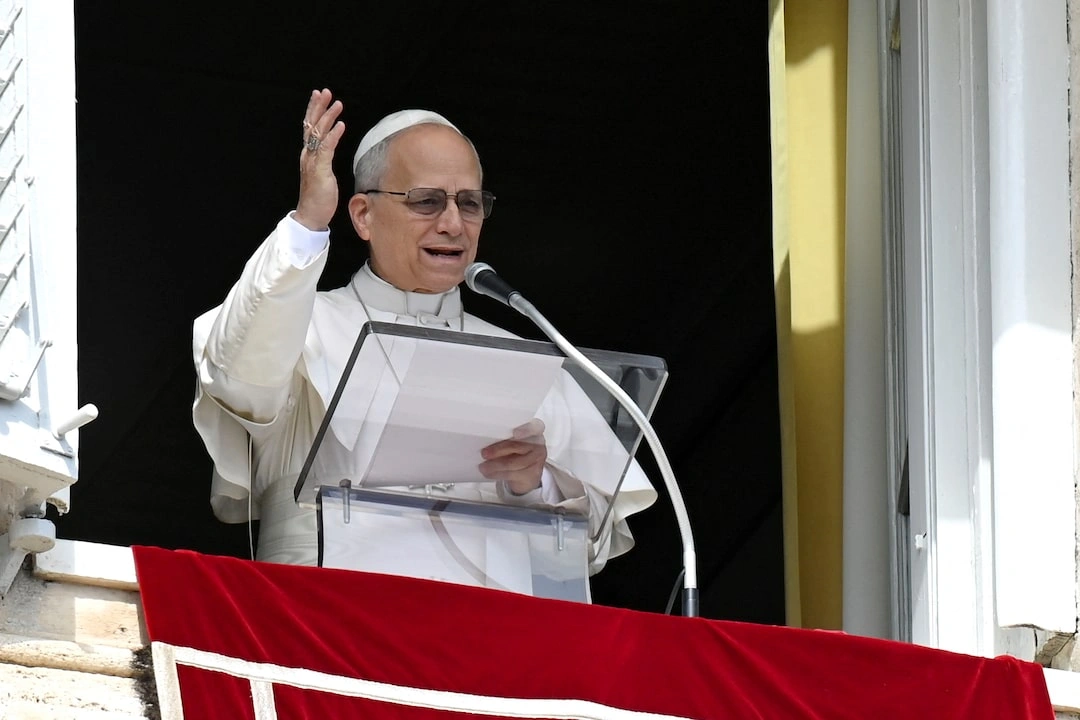
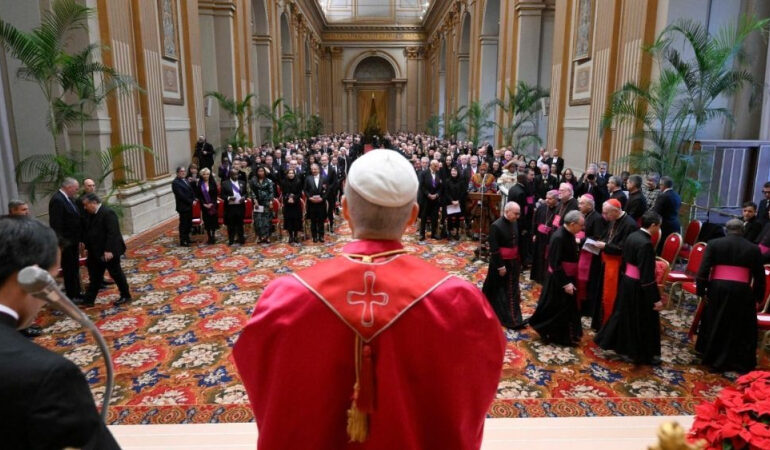

Pope Leo XIV has issued a wide ranging warning over the erosion of human rights and the steady return of war as a preferred instrument of international policy, cautioning that diplomacy rooted in dialogue is being replaced by power, deterrence, and force. Speaking to members of the Diplomatic Corps accredited to the Holy See during the traditional New Year exchange, the Pope framed the current moment as one of moral risk, where the foundations of international coexistence are under visible strain. He observed that principles established after the Second World War, particularly the rejection of territorial conquest through force, are no longer treated as binding norms. According to the Pope, this shift does not merely destabilize borders but undermines the rule of law itself, weakening the moral architecture meant to restrain conflict and protect the vulnerable in international life.
The address, one of the most significant moments in the Vatican’s diplomatic calendar, offered a moral reading of global affairs rather than a geopolitical one. For Pope Leo XIV, the encounter also marked an early articulation of how the Holy See understands diplomacy under his leadership. He presented it as a patient labor of encounter and responsibility, grounded in humility rather than dominance. Peace, he warned, is increasingly pursued as possession rather than a shared good, a distortion that history has shown leads to catastrophe. He pointed to the creation of the United Nations as a response to such failures, emphasizing its original purpose as a forum for multilateral cooperation, human rights protection, and restraint in the use of force.
Turning to the human cost of conflict, the Pope stressed that international humanitarian law cannot be treated as optional or conditional. He warned against attacks on civilians and essential infrastructure, stating that the protection of human dignity must outweigh strategic or national interests. He applied this moral framework to multiple global crises, including Ukraine, the Holy Land, Haiti, Venezuela, parts of Africa, and Asia, urging ceasefires, dialogue, and genuine political solutions. He reaffirmed support for humanitarian access and insisted that peace efforts must be measured not by advantage but by respect for life. The Pope also cautioned against a renewed arms race, highlighting nuclear risk and the growing ethical challenges posed by artificial intelligence in modern warfare.
Beyond armed conflict, Pope Leo XIV addressed broader threats to freedom, including the manipulation of language, shrinking space for genuine expression, and rising violations of conscience and religious liberty. He defended the rights of migrants and prisoners, calling for systems that recognize dignity rather than reduce individuals to problems or crimes. He reaffirmed opposition to the death penalty and warned that human rights lose coherence when detached from truth and reality. Despite the gravity of his assessment, the Pope pointed to examples of reconciliation and diplomatic progress as signs that peace remains possible, insisting that humility, truth, and the courage to forgive remain the only durable foundations for global coexistence.