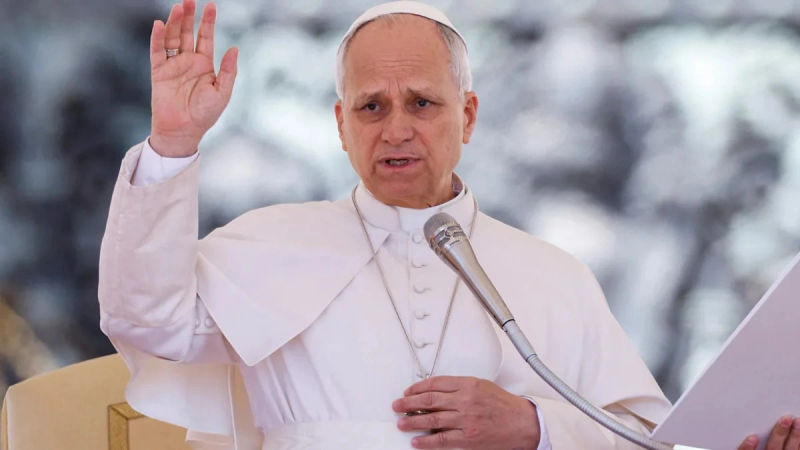
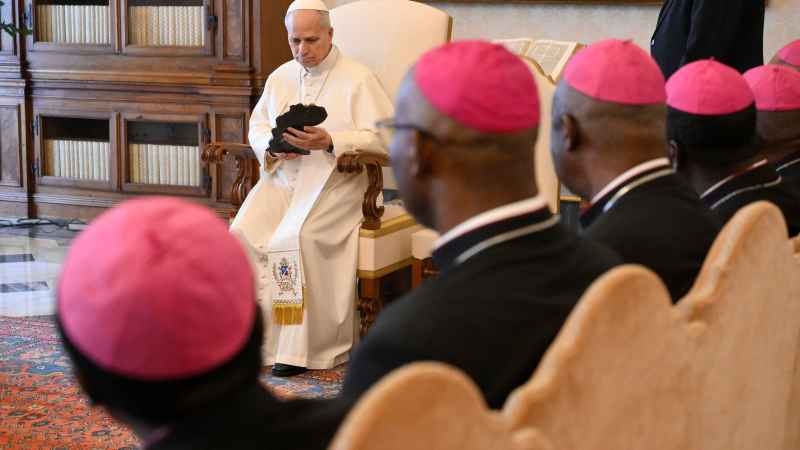

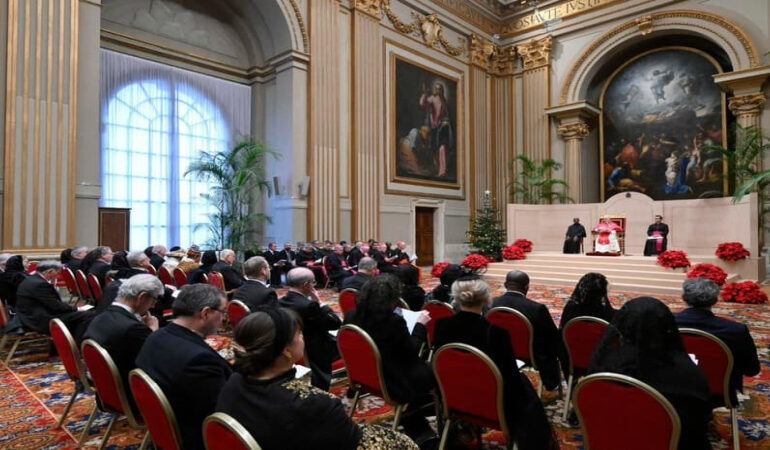

Pope Leo XIV has warned that families across the world are facing mounting pressures that threaten both social stability and the protection of human life, as he addressed diplomats accredited to the Holy See during the annual New Year audience at the Vatican. In his remarks, the Pope described the family as the primary place where love, responsibility, and service to life are learned, while cautioning that its role is increasingly underestimated within international systems. He observed that public policy and cultural trends are marginalizing the family’s social function at the very moment when many households are experiencing fragility, violence, and internal breakdown. According to the Pope, this combination of institutional neglect and lived hardship represents a serious challenge not only for believers but for societies seeking long term cohesion.
The Pope identified what he described as two parallel crises affecting families today. On one hand, he said, there is a growing tendency to treat the family as a secondary institution, disconnected from social development and demographic sustainability. On the other, many families are suffering under the weight of poverty, conflict, addiction, and domestic abuse, leaving individuals isolated and vulnerable. Pope Leo XIV stressed that these realities cannot be addressed through abstract rights alone, but require concrete support for parents, children, and especially women facing difficult circumstances. He emphasized that the vocation to love and to life, rooted in the union of a man and a woman, carries ethical responsibilities that extend beyond private belief into public concern.
Addressing the right to life directly, the Pope expressed deep concern about policies that promote abortion and related practices, particularly when public resources are used to facilitate them. He argued that such measures contradict the responsibility of societies to protect the most vulnerable and to support mothers rather than offering solutions that end life. He also spoke against surrogacy, warning that it reduces children to objects of transaction and exploits women by turning pregnancy into a service. Extending his reflections, the Pope included the elderly, the sick, and those who feel abandoned, urging states to invest in care, solidarity, and humane alternatives rather than approaches that normalize euthanasia or neglect.
The address placed the family within a broader reflection on human rights, with Pope Leo XIV warning of what he called a short circuit in contemporary rights discourse. He cautioned that when rights become detached from truth, nature, and reality, they risk undermining one another, creating space for coercion rather than freedom. The protection of life, he insisted, remains the foundation upon which all other rights depend. Without it, societies weaken their moral framework and expose themselves to deeper forms of injustice. The Pope concluded by urging diplomats to view family policy and the defense of life not as confessional issues, but as essential pillars for any society that seeks authentic progress and peace.