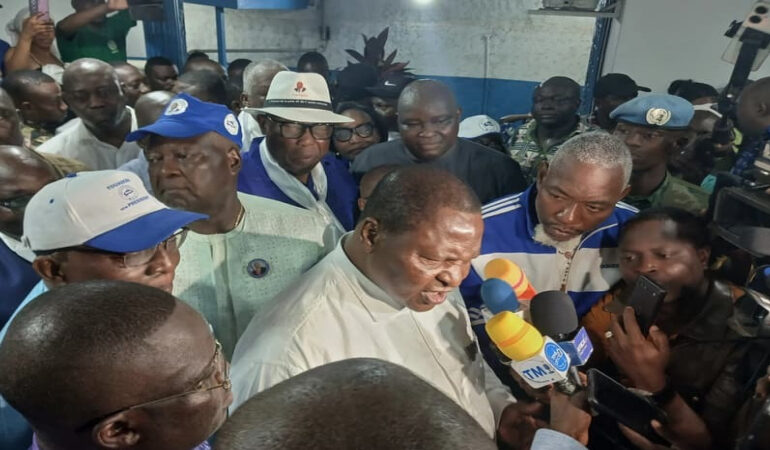

Following the re election of President Faustin Archange Touadéra in the Central African Republic, Cardinal Dieudonné Nzapalainga has issued a strong appeal against the belief that security and weapons alone can rebuild a fractured nation. Speaking after elections that delivered the president a third term amid opposition boycotts and allegations of irregularities, the Archbishop of Bangui framed the moment as one requiring unity rather than triumphalism. While acknowledging that the vote was conducted without large scale violence, the cardinal emphasized that political outcomes must be measured not only by percentages but by their capacity to restore dignity and inclusion across all regions. He described the people as the true winners of the process and warned against deepening divisions in a country still healing from years of armed conflict.
Reflecting on the security situation, the cardinal noted improvements compared to the peak of violence a decade ago, particularly in areas once controlled by rebel groups. At the same time, he cautioned against ignoring remaining pockets of insecurity and displacement, especially in border regions where communities continue to suffer instability. For him, peace cannot be reduced to military presence or external force. Instead, it must be understood as the freedom for families to live, work, travel, and access basic services without fear. He stressed that lasting stability depends on restoring trust and addressing grievances that drive young people toward armed groups, often fueled by marginalization and lack of opportunity.
Cardinal Nzapalainga’s most pointed message was directed at those who believe power can be secured through violence. He insisted that the nation will not be built with weapons, but through dialogue, negotiation, and shared responsibility. Drawing from his pastoral experience during the country’s darkest years, he argued that solutions cannot be imported or imposed, but must emerge from the culture, values, and collective will of the Central African people themselves. Dialogue, he said, is not a sign of weakness but the only path capable of transforming fear into coexistence and conflict into consensus, especially for the sake of future generations.
The cardinal also addressed the role of the international community, warning against approaches that prioritize security while neglecting education, justice, health care, and reconciliation. He called for a balanced and complementary engagement where military, humanitarian, religious, and civic efforts work together rather than in isolation. Using the image of a symphony, he described a vision of nation building in which every actor contributes to harmony rather than discord. His remarks positioned the Church not as a political force but as a moral voice calling the country to preserve its shared heritage and to choose dialogue over destruction at a critical juncture in its history.