
US Church Voices Warn of Moral Crisis After Minneapolis Shooting

Catholic leaders and commentators in the United States are raising grave concerns about what they describe as a deepening moral crisis following the fatal shooting of a woman by a federal immigration officer in Minneapolis. The incident has prompted renewed scrutiny of the use of state power, particularly in the context of immigration enforcement, and has intensified debate about the ethical direction of public life. While official investigations are ongoing, the broader reaction has focused less on legal procedure and more on what many see as a troubling normalization of lethal force. The event has become a symbol of wider anxieties about how violence, authority, and human dignity are increasingly understood in contemporary society.
Commentary emerging from Catholic circles frames the moment as one of moral dislocation rather than isolated tragedy. Observers argue that repeated incidents involving state violence have reshaped public expectations, allowing outrage to fade quickly into justification or resignation. According to this view, society has grown accustomed to explanations that prioritize security and control while sidelining restraint and accountability. The killing in Minneapolis is being cited as another sign that the ethical language once used to defend the sanctity of life is losing its place in public discourse. For many believers, the concern is not only political but spiritual, centered on a perceived erosion of conscience and shared moral reference points.
From a Christian perspective, the response has emphasized that social order cannot be sustained by fear or coercion without serious moral cost. Church based reflections stress that human dignity is not conditional on status, legality, or perceived threat, and that the use of lethal force represents a failure rather than a solution. The shooting has intensified criticism of narratives that portray violence as inevitable or necessary for public safety. Catholic voices have also warned that when conscience is treated as an obstacle to governance, societies risk drifting toward resignation and moral fatigue, conditions in which injustice can persist with limited resistance.
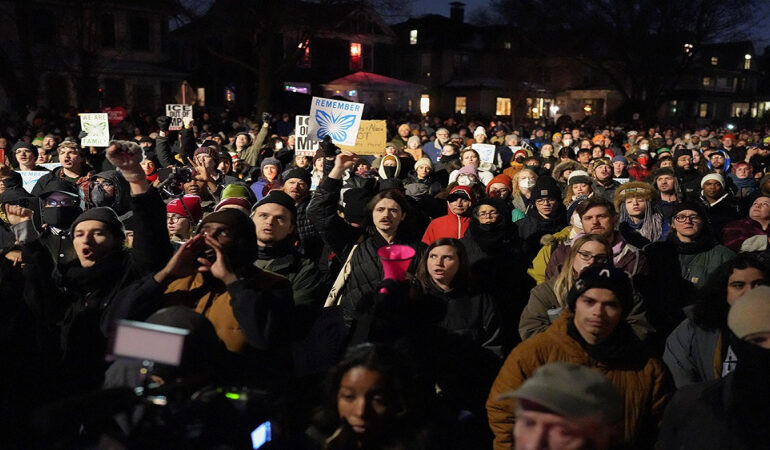
Calls for nonviolent witness and moral renewal have emerged as a central theme in the reaction. Rather than focusing solely on political outcomes or institutional reform, church commentators are urging a recovery of ethical responsibility at both personal and communal levels. This includes refusing indifference, maintaining public presence, and insisting that accountability remains possible even in polarized environments. Vigils and public prayer gatherings following the shooting have reflected this approach, combining mourning with a visible refusal to accept violence as routine. For many within the Church, the Minneapolis case has become a moment of reckoning, challenging communities to decide whether dignity and restraint will continue to shape public life or yield further to fear and force.