
Faith and Anger Converge as Manila Procession Voices Corruption Fury
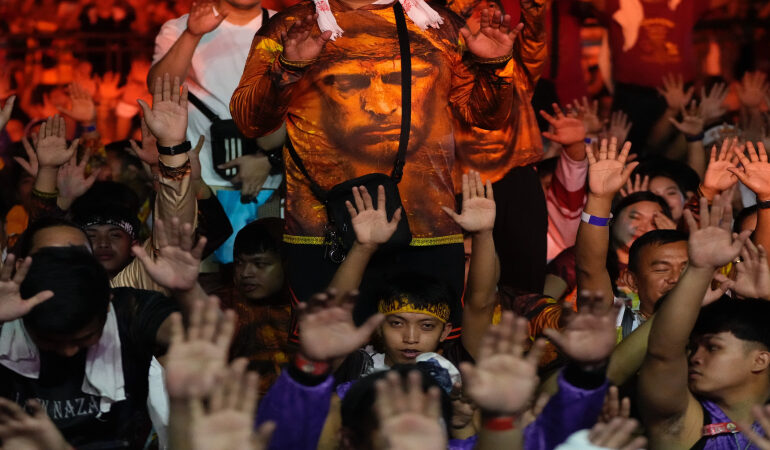

A massive religious procession in Manila on Friday became a platform for public anger as hundreds of thousands of Filipino Catholics combined devotion with calls for accountability amid a widening corruption scandal. The annual Feast of Jesus Nazareno drew vast crowds who filled the capital’s streets from before dawn, many walking barefoot as an act of penance and prayer. While the event has long been a centerpiece of popular Catholic piety in the Philippines, this year’s procession unfolded against a backdrop of political frustration, with worshippers openly voicing demands for justice over allegations that lawmakers siphoned public funds meant for flood control projects. The chants and prayers reflected a moment where faith and civic outrage moved side by side.
The procession followed a midnight Mass attended by tens of thousands at a major public park before the life size image of Jesus Nazareno was placed on an open carriage and carried through the city’s narrow streets. Authorities deployed a large security presence, imposing strict controls along the route as crowds surged forward to touch the ropes and cloths believed to bring healing and blessing. Medical teams treated hundreds of devotees for minor injuries as the day progressed, highlighting both the intensity and physical cost of the devotion. Despite the logistical challenges, the procession retained its powerful emotional charge, amplified this year by the anger directed at political leaders accused of corruption.
As the carriage moved through the city, groups of devotees repeatedly chanted calls for the imprisonment of officials implicated in the scandal, transforming the procession into a form of moral protest. The controversy centers on allegations that billions of pesos were diverted through substandard or nonexistent flood control projects, a particularly sensitive issue in a country frequently hit by deadly floods. Many participants linked their faith directly to the demand for justice, arguing that corruption deepens the suffering of the poor and undermines the common good. For them, prayer was not an escape from politics but a means of confronting it.
Church leaders echoed these concerns during liturgical celebrations linked to the feast. In his homily before the procession, a bishop criticized officials who have refused to step down despite being named in investigations, urging them to act with humility and mercy toward the people they serve. Individual devotees expressed similar sentiments, saying their prayers were offered not only for personal intentions but for the moral renewal of the nation. The gathering illustrated how popular Catholic devotion in the Philippines often absorbs social realities, turning religious ritual into a space where public conscience is voiced. In the streets of Manila, faith once again became a mirror of national life.