
How Catholic Doctrine Shapes Social Responsibility Without Becoming Political
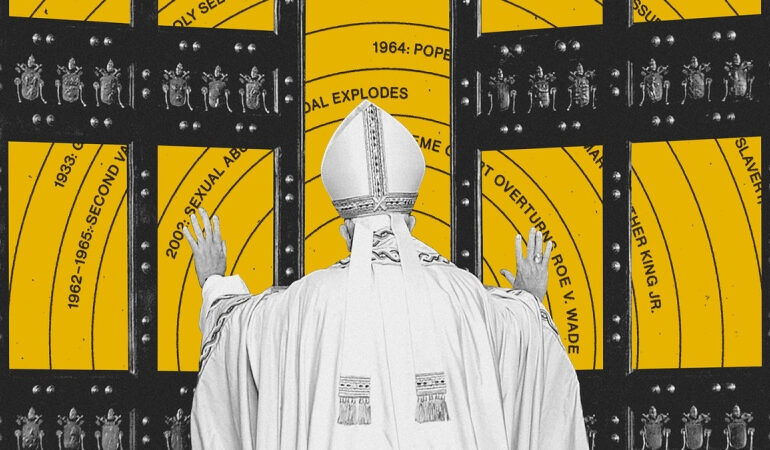

Catholic doctrine has long influenced how believers understand their responsibilities toward society. Rooted in theological principles rather than political agendas, Church teaching offers a moral framework that guides social behavior while deliberately avoiding alignment with partisan movements. This balance has allowed Catholic thought to remain influential across cultures and historical periods.
In today’s polarized environment, this distinction has become more important than ever. Many Catholics seek clarity on how to live out their faith in public life without turning doctrine into a political tool. The Church’s approach to social responsibility offers insight into how moral guidance can shape society without becoming ideological.
Doctrine as a Moral Framework, Not a Political Program
At the core of Catholic doctrine is the belief that faith should inform conscience rather than dictate policy. Teachings on human dignity, the value of life, and care for the vulnerable are presented as moral truths that transcend political systems. The Church does not prescribe specific laws or economic models, instead offering principles meant to guide ethical decision making.
This framework allows Catholics to engage with social issues while respecting legitimate differences in political opinion. Doctrine sets boundaries for moral reflection but leaves room for prudential judgment. This distinction helps prevent faith from being reduced to a political identity.
By emphasizing universal moral principles, Catholic teaching remains applicable in democracies, monarchies, and developing societies alike. Its authority rests on moral reasoning rather than legislative power, reinforcing its independence from political structures.
Social Responsibility Rooted in Human Dignity
Catholic doctrine places human dignity at the center of social responsibility. Every person is viewed as possessing inherent worth, regardless of economic status, nationality, or social role. This belief motivates charitable action, community service, and advocacy for the marginalized without requiring political affiliation.
Parishes and Catholic organizations often express this responsibility through direct service rather than public campaigns. Feeding the poor, caring for the sick, and supporting families are seen as moral obligations flowing from faith. These actions demonstrate how doctrine translates into social engagement without political messaging.
This approach helps preserve credibility. When social responsibility is expressed through service rather than slogans, it reinforces the Church’s role as a moral witness rather than a political actor.
Why the Church Avoids Partisan Alignment
The Church’s reluctance to align with political movements is rooted in both theology and history. Doctrine teaches that no political system fully embodies the moral law. Aligning too closely with any party risks compromising spiritual authority and alienating believers who hold differing views.
Historical experience has reinforced this caution. When religious institutions become identified with political power, their moral voice often weakens. Catholic teaching seeks to influence society by shaping conscience rather than controlling outcomes.
This restraint allows the Church to critique injustice wherever it appears. By remaining outside partisan structures, doctrine can challenge policies across the political spectrum while maintaining consistency with moral principles.
Modern Challenges to Doctrinal Neutrality
Maintaining this balance has become more difficult in a media driven culture. Social issues are often framed in binary political terms, making nuanced moral positions harder to communicate. Catholics may feel pressure to translate doctrine into political activism.
Surveys and pastoral observations suggest that confusion arises when doctrine is presented without adequate explanation. When teachings are reduced to sound bites, they can appear partisan even when they are not. This underscores the importance of careful catechesis and clear language.
The Church continues to emphasize formation over mobilization. By educating believers in moral reasoning, doctrine equips them to participate in society thoughtfully rather than reactively.
Conclusion
Catholic doctrine shapes social responsibility by offering moral principles that guide action without dictating politics. Its focus on human dignity, conscience, and service allows believers to engage society while preserving spiritual independence. In an age of polarization, this approach remains one of the Church’s most enduring strengths.