From Conclave to Continuity: How the 2025 Papal Transition Is Being Interpreted Historically
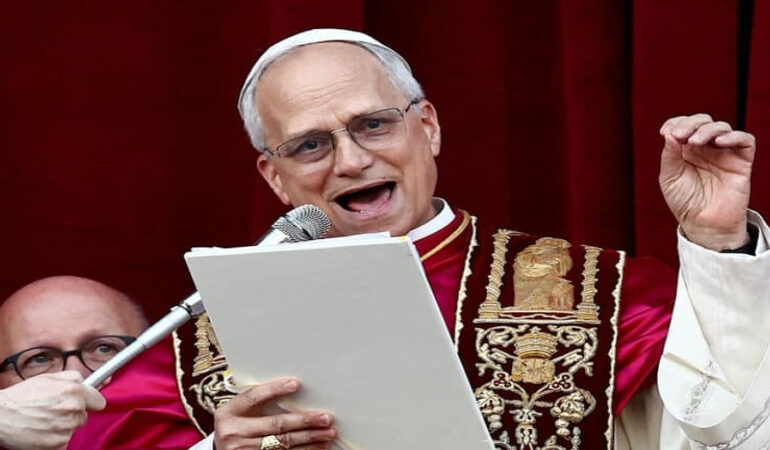

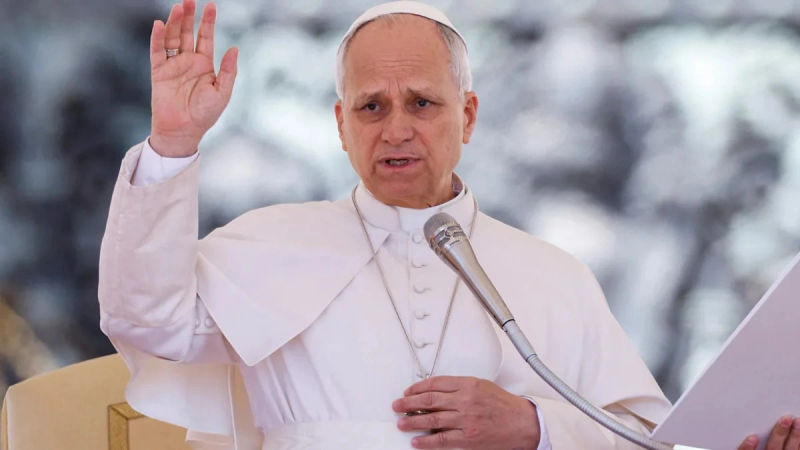
The papal transition of 2025 is already being viewed by historians as a moment defined less by rupture and more by deliberate continuity. While conclaves often capture public attention through symbolism and anticipation, the long view of Church history tends to focus on what follows rather than the spectacle itself. In this case, the transition has reinforced the Vatican’s preference for institutional steadiness during periods of global uncertainty.
Rather than marking a dramatic turning point, the elevation of Pope Leo XIV is being interpreted as part of a longer historical pattern in which the Church prioritizes stability over sudden change. Scholars note that such transitions often reveal more about the Church’s internal rhythms than about short term headlines. The events of 2025 fit squarely within that tradition.
Papal Transitions as Instruments of Stability
Historically, conclaves have served as mechanisms to preserve continuity during moments of leadership change. While every pope brings a personal style, the process itself is designed to minimize disruption. The 2025 conclave reflected this function clearly, emphasizing consensus and institutional memory.
Historians point out that many pivotal papal transitions appeared understated at the time but proved significant in hindsight. The selection of a pope aligned with administrative competence and doctrinal continuity often signals a Church seeking consolidation rather than expansion. This approach has been especially common during periods of geopolitical and cultural flux.
Viewed in this light, the 2025 transition aligns with earlier moments when the Vatican favored governance experience and internal cohesion. Continuity has often been the Church’s response to external volatility.
The Conclave’s Message Beyond the Ceremony
The symbolism of the conclave remains powerful, but historians stress that its deeper message lies in what it communicates internally. The voting patterns and outcome of the 2025 conclave suggested a shared priority among cardinals to reinforce institutional reliability. This was not a moment for experimentation but for reassurance.
The emphasis on continuity also reflects lessons drawn from past transitions that coincided with rapid social change. In such periods, the Church has often chosen leaders perceived as steady custodians of tradition. The 2025 conclave fits this historical precedent.
From a long term perspective, the ceremony itself fades while its implications endure. The real significance emerges in how governance, diplomacy, and doctrine are carried forward after the transition.
How Historians Frame the 2025 Transition
Church historians tend to resist immediate judgments, preferring to situate papal transitions within decades rather than years. Early interpretations of the 2025 transition emphasize its role in reinforcing existing institutional trajectories. It is seen as a moment of consolidation rather than redirection.
Comparisons are already being drawn to past transitions where continuity proved essential for maintaining unity. In several cases, historians note that stability allowed the Church to weather external pressures without internal fragmentation. The current transition appears to follow this model.
Importantly, historians caution against interpreting continuity as stagnation. In the Church’s historical experience, gradual adaptation has often occurred within stable leadership frameworks. Change, when it comes, tends to be incremental and deliberate.
Continuity as a Historical Strategy
Across centuries, continuity has functioned as one of the Vatican’s most consistent strategies. Papal transitions that emphasize order and predictability often strengthen institutional legitimacy over time. The 2025 transition is increasingly understood as part of this broader historical logic.
This strategy reflects an awareness of the Church’s global scope. With Catholics spread across diverse cultures and political systems, abrupt shifts can create uncertainty. Continuity helps preserve unity across this diversity.
Historians also note that transitions focused on governance often precede periods of quieter reform. Stability creates the conditions for measured adjustments that may only become visible years later.
Conclusion
From a historical perspective, the 2025 papal transition stands as an affirmation of continuity rather than disruption. Interpreted within the Church’s long narrative, it reflects a deliberate choice to reinforce stability during uncertain times. As history unfolds, this transition is likely to be remembered not for dramatic change but for its role in sustaining institutional coherence.