Pope Leo Receives Venezuelan Peace Laureate at Vatican
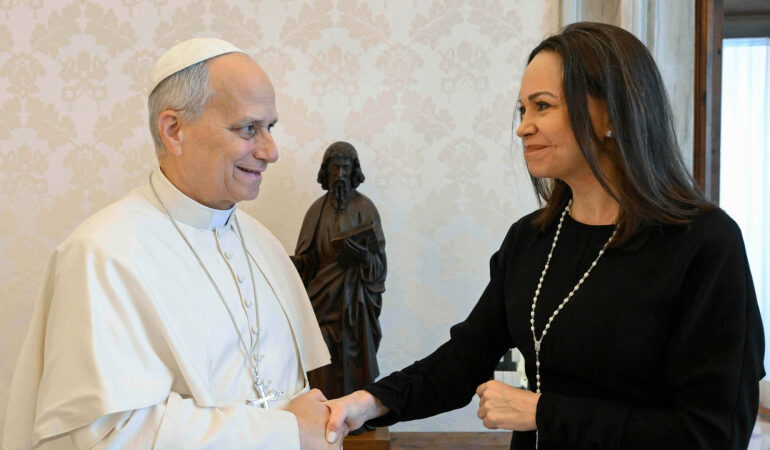

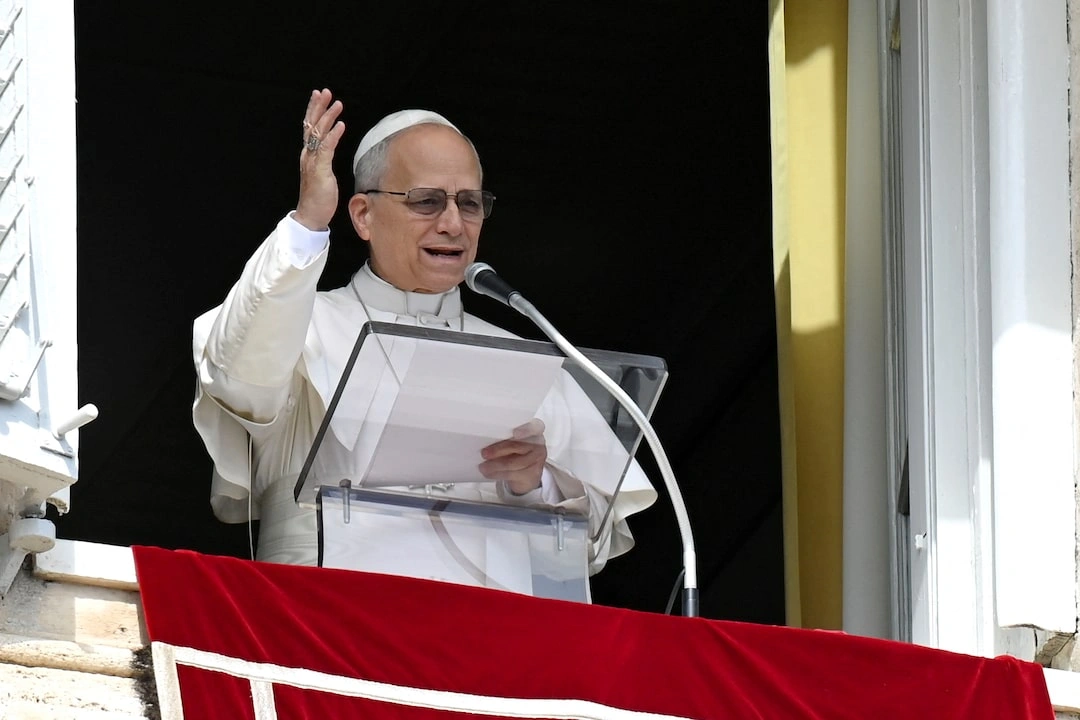
At the Vatican’s Apostolic Palace, Pope Leo XIV held a private meeting with Maria Corina Machado, the Venezuelan opposition figure and recent Nobel Peace Prize recipient. The encounter took place at the close of a morning dedicated to diplomatic and pastoral audiences, reflecting continued Vatican attention to developments in Venezuela. Machado, a former member of the National Assembly and a long standing critic of authoritarian governance, has become a central international voice following months of political upheaval in her country. Her presence at the Apostolic Palace underscored the Holy See’s practice of maintaining dialogue with figures involved in peace building and democratic transition efforts. The meeting unfolded in a context of heightened global concern over Venezuela’s future, as political, humanitarian, and institutional uncertainties continue to affect millions of citizens both inside the country and across the region.
The Vatican audience followed closely after the January 3 capture of Nicolás Maduro and his wife Cilia Flores during a United States military operation in Caracas. Maduro, now detained in New York on charges related to narcotics trafficking and terrorism, had dominated Venezuelan political life for years. In the aftermath, the country entered an interim phase under temporary governance led by Delcy Rodríguez, while international actors began supporting a managed political transition. Reports of the release of several political prisoners have added to cautious expectations of change. Machado, who was forced into exile after sustained pressure from state authorities, had traveled to Oslo in December to receive her Nobel Prize. Her visit to the Vatican formed part of a broader diplomatic itinerary expected to include meetings with Western leaders.
Throughout recent public interventions, Pope Leo has spoken repeatedly about Venezuela, emphasizing concern for civilian suffering and institutional breakdown. During his Angelus address following the violence surrounding Maduro’s capture, he expressed alarm at the loss of life and appealed for restraint, justice, and peace. The Pope stressed that the welfare of the Venezuelan people must remain paramount, calling for respect for national sovereignty alongside the protection of fundamental human and civil rights. His remarks framed the crisis not only as a political emergency but as a moral challenge requiring cooperation, dialogue, and care for the poorest communities affected by economic collapse. These themes have become consistent markers of the Holy See’s approach to Venezuela, combining humanitarian concern with a call for non violent solutions.
The Pontiff reiterated these appeals days later in his address to diplomats accredited to the Holy See, urging efforts to rebuild Venezuelan society on justice, truth, freedom, and fraternity. He emphasized the importance of respecting the popular will and ensuring stability rooted in concord rather than retaliation. The meeting with Machado took place against this backdrop of sustained Vatican engagement, signaling continuity in the Church’s diplomatic posture toward Latin America. While the Holy See avoids alignment with specific political actors, its openness to dialogue with figures associated with peace advocacy and democratic principles remains a defining feature. The audience highlighted the Vatican’s role as a moral interlocutor during periods of international transition and uncertainty.