Leo XIV Frames Global Order Through Augustinian Lens
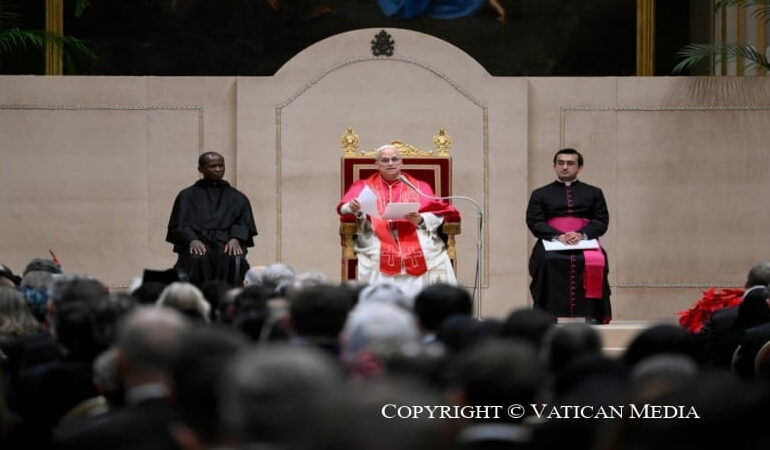

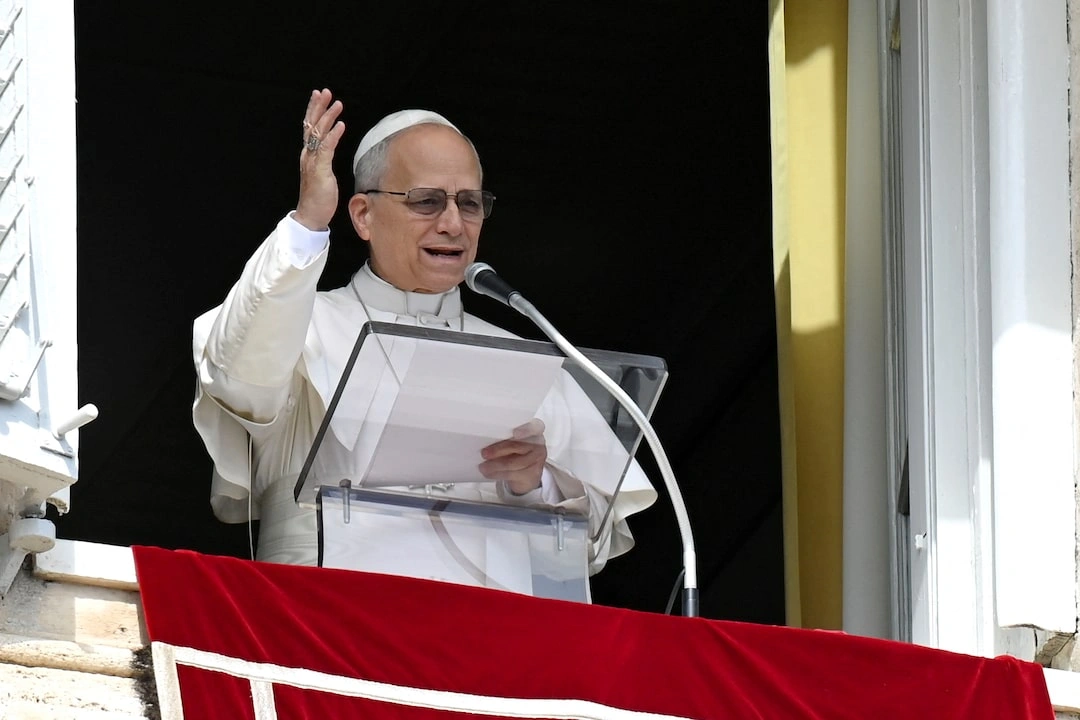
Pope Leo XIV’s first address to the diplomatic corps accredited to the Holy See offered a dense and philosophically grounded reading of global affairs, anchoring international peace in moral and spiritual order. Speaking at the Vatican in early January, the Pope warned that societies focused solely on immediate material interests undermine what Saint Augustine defined as the tranquility of order, a condition essential for peace within nations and within the human soul. Delivered largely in English, an unprecedented choice for a papal address of this kind, the speech signaled an awareness of contemporary diplomatic realities while remaining rooted in classical Christian thought. Leo XIV presented peace not as the absence of conflict alone, but as the fruit of rightly ordered relationships between states, communities, and persons. His remarks positioned moral clarity and interior coherence as prerequisites for stable political life in an era marked by fragmentation and strategic uncertainty.
Drawing heavily on the thought of Saint Augustine, the Pope framed modern geopolitics through the lens of history, warning against false narratives, exaggerated nationalism, and distorted concepts of leadership. He recalled that Augustine wrote amid the decline of Roman authority, during a time of migration, institutional strain, and cultural upheaval that bears notable resemblance to the present moment. Leo XIV emphasized that Augustine’s reflections were not political programs, but enduring insights into justice, coexistence, and the limits of power. By invoking The City of God, he suggested that civilizations falter when they mistake permanence for destiny. The Pope’s message encouraged diplomats to look beyond short term advantage and toward the ethical foundations that sustain societies over time, insisting that peace requires truthfulness about history and humility in the exercise of authority.
The address also confronted contemporary policy debates with moral directness. Leo XIV criticized public spending that prioritizes what he described as the suppression of life rather than the support of families, remarks that coincided with renewed political debate in the United States over healthcare and abortion funding. Without naming specific governments, the Pope situated these issues within a broader critique of political systems detached from human dignity. His intervention underscored a consistent theme throughout the speech: that political legitimacy erodes when it becomes disconnected from moral responsibility. Rather than aligning the Holy See with any bloc or ideology, Leo XIV presented the Church as a moral interlocutor, tasked with reminding global leaders that peace is inseparable from the protection of life, the care of the vulnerable, and the pursuit of the common good.
Leo XIV’s emphasis on Augustine also illuminated his own intellectual and spiritual formation as a member of the Order of Saint Augustine. From his first appearance as Pope, he has described himself as a son of Augustine, a claim that now finds clear expression in his approach to diplomacy and history. By referencing eras of civilizational transition, migratory pressure, and declining certainties, the Pope suggested that the present age represents not merely a series of crises but a deeper transformation. His address framed the role of diplomacy as accompaniment through change rather than management of decline. In doing so, Leo XIV set a tone for his pontificate that blends historical awareness with moral realism, positioning the Holy See as a voice calling nations to order their ambitions toward peace grounded in truth.