Faith Networks Reemerge in Minneapolis After ICE Shooting
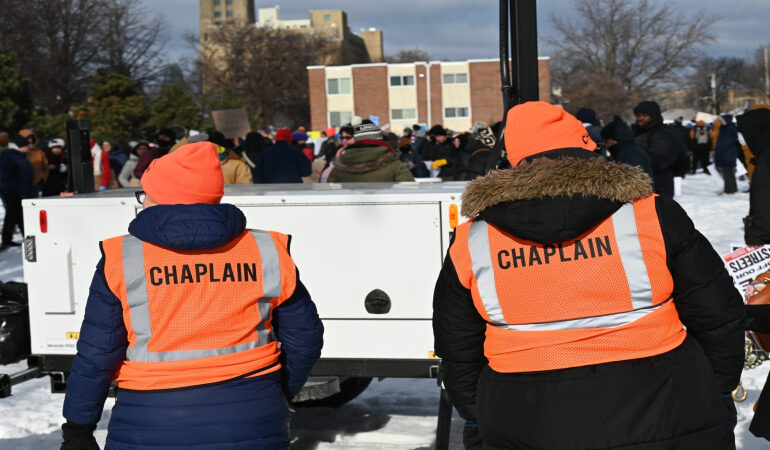

Faith based networks that first took shape in Minneapolis during the protests following the killing of George Floyd have reactivated in response to the fatal shooting of Renee Good by an officer of U.S. Immigration and Customs Enforcement. Tens of thousands gathered in Powderhorn Park to protest the federal presence in the city, where clergy and lay leaders identifying themselves as movement chaplains offered spiritual support, prayer, and de escalation amid rising tension. Many of these faith leaders were central figures during the 2020 protests and have now returned to public witness, saying the scale of grief and anger following Good’s death required renewed pastoral presence. The gathering reflected a broader mobilization of religious communities across the city who see the shooting as part of a pattern of force and fear tied to immigration enforcement under the administration of Donald Trump.
Religious expression was visible throughout the demonstrations, blending protest with prayer and ritual. Indigenous leaders opened the rally with ceremony, while Christian, Muslim, and interfaith voices spoke against what they described as the militarization of immigration enforcement. Signs invoking Scripture, Marian imagery, and calls to welcome the stranger were carried alongside demands for ICE to leave the city. Clergy from Lutheran, United Church of Christ, Catholic, and Muslim communities said their participation was motivated by conscience and concern for vulnerable neighbors. Minneapolis, long shaped by strong faith communities, once again became a focal point for religious resistance grounded in hospitality, nonviolence, and public lament, echoing patterns first seen after the murder of George Floyd.
Beyond public protest, faith groups have taken on practical roles as legal observers and community protectors. Clergy and volunteers patrol neighborhoods to monitor enforcement actions, document encounters, and alert residents. Renee Good herself had reportedly been serving as a legal observer at the time of her death, a role now taken up by dozens more despite reported threats of arrest and intimidation by federal agents. Religious leaders say their presence is meant to reduce harm and assert moral accountability rather than provoke confrontation. For many, the risk is outweighed by a belief that silence would constitute complicity. The revival of these networks has been fueled by shared memories of 2020 and by existing relationships that allow rapid coordination across congregations and traditions.
Vigils and gatherings have continued beyond the main protest, including interfaith prayer events at the Minnesota State Capitol. Faith leaders say these spaces allow collective grieving while sustaining long term organizing. Pastors and imams described fear spreading through immigrant and minority communities, including declining attendance at mosques and churches as families avoid public spaces. Yet they also spoke of resilience, pointing to mutual aid, shared meals, and constant presence in the streets. Drawing on biblical imagery, some leaders described the movement as a collection of small acts of courage capable of growing into something larger. In Minneapolis, faith rooted activism has once again become a stabilizing force amid crisis, linking spiritual conviction with demands for justice and belonging.