


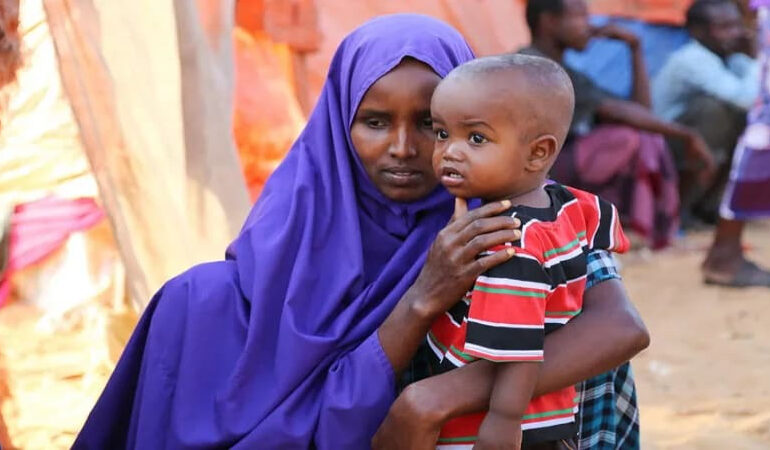

A prolonged humanitarian emergency in Somalia is approaching a critical threshold as food insecurity deepens and essential aid resources diminish. Worsening drought conditions combined with decades of conflict and institutional fragility have left millions exposed to hunger, displacement, and malnutrition. Recent assessments indicate that more than four million people are already affected by acute food shortages, with the situation deteriorating rapidly as successive rainy seasons fail. Humanitarian workers describe a convergence of climate stress and political instability that has stripped communities of recovery time, pushing families into survival mode. Wells are drying, livestock losses are mounting, and household food reserves are nearly exhausted. As needs escalate, the margin for preventing a large scale humanitarian collapse continues to narrow, particularly in rural regions where access to assistance is already limited.
Aid organizations working on the ground warn that the crisis has been sharply aggravated by reductions in international support. According to Caritas Somalia, the suspension of key donor funding has weakened the overall humanitarian response at a moment of peak vulnerability. Even agencies not directly financed by affected funding streams face indirect consequences as shared response plans remain severely underfunded. With fewer resources available, essential services such as food distribution, health care, nutrition programs, and water access are being scaled back or suspended. This contraction forces aid groups to make difficult choices that leave many families without assistance. Humanitarian coordinators caution that without immediate and flexible funding, current crisis levels could escalate into emergency conditions across entire regions in the coming months.
Children are among the most exposed to the consequences of the unfolding crisis. Rising malnutrition rates reflect the collapse of traditional livelihoods and the depletion of coping mechanisms. Families are selling remaining assets, reducing daily meals, or abandoning their homes in search of assistance, often ending up in overcrowded camps with minimal services. Projections suggest that some areas may soon reach emergency hunger thresholds, where mortality risks increase significantly. While corruption and diversion of aid remain challenges in certain contexts, humanitarian actors stress that broad funding suspensions risk punishing vulnerable communities rather than addressing isolated abuses. In environments shaped by armed groups and fragmented authority, overly rigid approaches can undermine life saving operations and accelerate human suffering.
Faith based organizations argue that long term stability depends on combining emergency relief with resilience building. Drawing on deep community ties, Caritas emphasizes local participation, transparency, and sustained engagement even amid insecurity. Its approach prioritizes dignity and accountability while seeking to strengthen local food production, water management, and nutrition education. Advocates warn that humanitarian response alone is insufficient without parallel investment in development and peace building, particularly in a country repeatedly pushed back into crisis by climatic shocks and political fragmentation. As funding gaps widen and drought conditions persist, Somalia stands at a crossroads where delayed action could transform chronic hardship into a catastrophic humanitarian collapse affecting an entire generation.