
Pope Leo XIV and the Return of Quiet Moral Authority
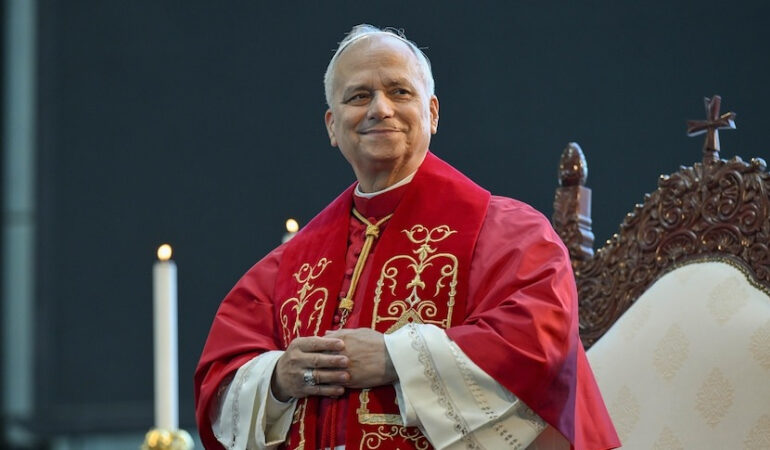

In an age defined by constant commentary, rapid reaction, and public spectacle, leadership is often measured by visibility and volume. Against this backdrop, the early papacy of Pope Leo XIV has drawn attention for a different reason. His authority has emerged not through frequent declarations or dramatic gestures, but through restraint, tone, and deliberate silence.
This style marks a noticeable shift in how moral leadership is exercised on the global stage. Rather than competing with political voices or cultural movements, Pope Leo XIV has positioned the papacy as a steady moral presence. His approach reflects a belief that authority rooted in conscience and consistency can speak more powerfully than constant intervention.
Leadership Through Restraint
Pope Leo XIV’s leadership is characterized by careful speech and measured action. He avoids immediate responses to every global controversy, choosing instead to intervene selectively. This restraint is not withdrawal. It is a deliberate strategy that preserves the weight of papal teaching by preventing it from being diluted through overuse.
In this model, moral authority is strengthened by discipline. When the Pope speaks, it is clear that his words are not reactive or partisan. They are framed within the Church’s long moral tradition rather than current political cycles. This has reinforced the perception of the papacy as a source of stability rather than agitation.
Such restraint also reflects confidence in the Church’s teachings. There is no urgency to redefine doctrine or chase relevance. The message is that truth does not require constant amplification to remain valid.
Silence as a Form of Moral Communication
Silence has become one of the defining features of Pope Leo XIV’s public presence. In moments when many expect immediate comment, his decision to wait signals seriousness rather than indecision. Silence allows space for reflection, prayer, and discernment before moral judgment is expressed.
This approach contrasts sharply with modern leadership norms, where silence is often interpreted as weakness. Within the Church’s moral framework, however, silence can serve as a form of communication. It indicates that not every issue requires instant resolution and that moral clarity often emerges through patience.
By resisting the pressure to comment on every development, Pope Leo XIV reinforces the idea that the papacy exists beyond the rhythm of news cycles. Its authority is rooted in continuity rather than immediacy.
Authority Without Ideology
Another defining aspect of Pope Leo XIV’s leadership is his distance from ideological alignment. He consistently avoids language that places the Church within political camps or cultural battles. This does not mean avoiding moral judgment. It means refusing to reduce moral teaching to slogans or partisan positions.
His statements emphasize principles such as dignity, responsibility, and solidarity without attaching them to specific political movements. This preserves the Church’s ability to speak across divisions rather than reinforcing them. Moral authority, in this sense, depends on credibility rather than popularity.
By maintaining this posture, Pope Leo XIV strengthens the Church’s role as a moral reference point rather than an ideological actor. This allows Catholic teaching to challenge all sides without becoming captive to any.
The Global Impact of Quiet Leadership
The effects of this leadership style extend beyond the Vatican. In a polarized world, quiet authority offers an alternative model of influence. It demonstrates that leadership can shape conscience without dominating discourse. For many observers, this approach restores a sense of gravity to the papal office.
Quiet moral authority also invites deeper engagement. Rather than provoking immediate reaction, it encourages listening and reflection. This aligns with the Church’s understanding of moral formation as a gradual process rather than a momentary response.
Over time, this method may prove more durable than louder forms of leadership. It builds trust through consistency and coherence rather than through constant visibility.
Conclusion
Pope Leo XIV’s papacy reflects a return to quiet moral authority grounded in restraint, patience, and clarity of purpose. By speaking carefully and acting deliberately, he reinforces the credibility of the Church’s moral voice in a distracted world. In an era that equates leadership with noise, his example suggests that silence, when chosen wisely, can speak with lasting power.