

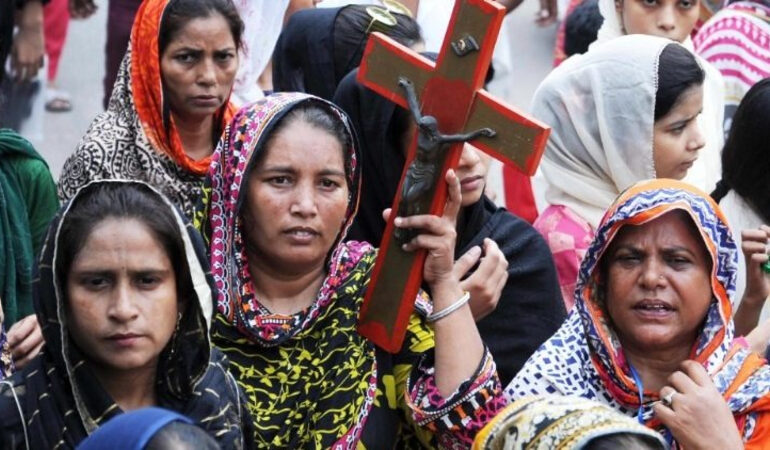

Open Doors has reported a sharp rise in the number of Christians exposed to persecution worldwide, describing 2026 as a year marked by expanding violence and discrimination. According to its latest global assessment, 388 million Christians now live under conditions where faith carries serious risk, an increase of eight million from the previous year. The findings point to a pattern in which religious identity intersects with political fragility, social instability, and armed conflict. Particularly striking is the scale of vulnerability among women and children, who account for a significant share of those affected. The report outlines how persecution takes many forms, ranging from overt violence to legal and social restrictions that erode daily life. Rather than isolated incidents, the data suggests a sustained pressure on Christian communities that has intensified across multiple regions, reinforcing concerns that religious freedom is deteriorating in environments where state protection is weak or absent.
The report identifies an increase in the number of countries classified as facing extreme levels of anti Christian persecution, reflecting a broader geographic spread of hostility. Longstanding flashpoints remain, while others have worsened as political authority fragments or armed groups expand influence. In parts of the Middle East, prolonged instability has accelerated the decline of historic Christian populations, with displacement and fear reshaping entire communities. The report notes that violence is often accompanied by systemic discrimination, limiting access to employment, education, and public life. Arrests and kidnappings remain persistent threats, while abuses targeting women and minors have risen, indicating a shift toward more coercive forms of pressure. These dynamics, the report suggests, contribute to a climate where survival often depends on silence or flight, further reducing the public presence of Christian communities.
Sub Saharan Africa emerges as a central concern, where fragile governance and armed movements have combined to create sustained insecurity. Nigeria stands out as the epicenter of lethal violence, accounting for the majority of reported killings of Christians worldwide. Attacks in rural regions have targeted villages, markets, and places of worship, reinforcing patterns of displacement and fear. The report emphasizes that while religion is a factor, economic stress, competition over land, and political weakness also play decisive roles. This convergence has made religious identity a marker of vulnerability in areas where state authority is contested. As Christianity continues to grow demographically across Africa, the report warns that its expansion is occurring alongside increasing exposure to violence, creating a paradox in which the faith’s future is both dynamic and deeply threatened.
The presentation of the findings in Europe underscored that religious persecution is not a distant issue but a global human rights concern. Testimonies from affected regions highlighted the daily reality behind statistics, where communities weigh the cost of remaining visible against the risks of erasure. The report frames the rise in persecution as a warning about the consequences of unresolved conflict and selective protection of rights. While some indicators show declines in specific forms of attack, the overall trend points toward intensifying pressure rather than relief. The findings raise questions about international responsibility, particularly in regions where early warning signs have long been visible. As the number of affected individuals continues to grow, the report calls attention to the need for sustained engagement that addresses both security and the deeper structural conditions enabling persecution.