


Frei Gilson emerged in 2025 as the most watched streamer in Brazil, surpassing gaming personalities and sports broadcasters in total viewing hours, an outcome that signals a wider shift in how religious voices engage public space. Streaming data shows his content accumulated more than 150 million hours of watch time, placing prayer and catechesis at the center of Brazil’s digital attention economy. His audience growth has not followed typical influencer patterns driven by branding or entertainment value. Instead, his broadcasts revolve around early morning prayer, Scripture, and spiritual discipline, drawing viewers into sustained participation rather than passive consumption. The scale of engagement reflects a demand for structured spiritual presence in an environment often dominated by distraction. His rise has positioned religious practice not at the margins of digital culture but within its most competitive and visible platforms.
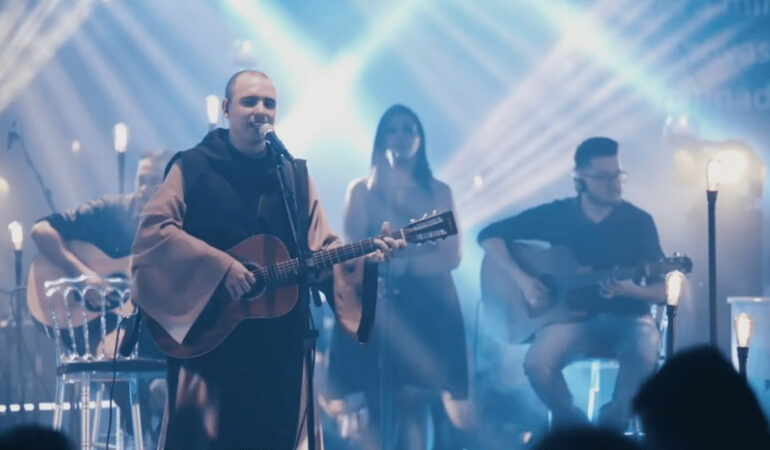
Unlike media trained clergy or celebrity pastors, the friar’s presentation remains deliberately restrained. He appears consistently in his Carmelite habit, avoids stylistic adaptation to online trends, and maintains a preaching style rooted firmly in Catholic doctrine. Viewers are drawn less by novelty than by continuity, particularly his invitation to pray the rosary at dawn, a practice that has attracted hundreds of thousands daily. Over time, this rhythm has formed a virtual congregation that treats digital space as a place of discipline rather than convenience. Observers within the Brazilian Church note that the appeal lies in clarity rather than accessibility. His message does not soften moral teaching or seek broad consensus, instead calling listeners toward conversion, self examination, and sacramental life. This approach has resonated with audiences seeking coherence in a fragmented media landscape.
Church leaders in Brazil have noted tangible pastoral effects emerging from this digital reach. Bishops and parish priests report increased participation in confession and renewed interest in catechesis among viewers who encounter the friar’s content regularly. His broadcasts often function as a point of re entry for individuals distant from parish life, offering a familiar voice that reconnects them with institutional faith. The influence extends beyond prayer streams into longer form interviews and collaborations with Catholic media platforms, where theological consistency remains central. Commentators emphasize that his success challenges assumptions about online evangelization requiring brevity or entertainment. Instead, long format content grounded in Scripture and Church teaching has proven capable of sustaining attention at scale, even among younger audiences accustomed to rapid consumption.
The phenomenon has also prompted broader reflection within the Church on digital responsibility and formation. While many parishes adopted livestreaming during the pandemic, few developed sustained strategies for online pastoral presence. The friar’s model suggests that credibility online mirrors credibility offline, built through consistency, patience, and doctrinal clarity rather than algorithms alone. His prominence illustrates how digital platforms can amplify traditional practices without diluting them, provided the message remains coherent. As religious expression increasingly intersects with mass media metrics, his rise highlights a tension between visibility and integrity. In navigating that space without adaptation to commercial logic, the friar has reshaped expectations of how faith can inhabit digital environments while remaining anchored in ecclesial identity.