Doctrine Without Noise: How the Vatican Is Re-Centering Catholic Teaching in 2026
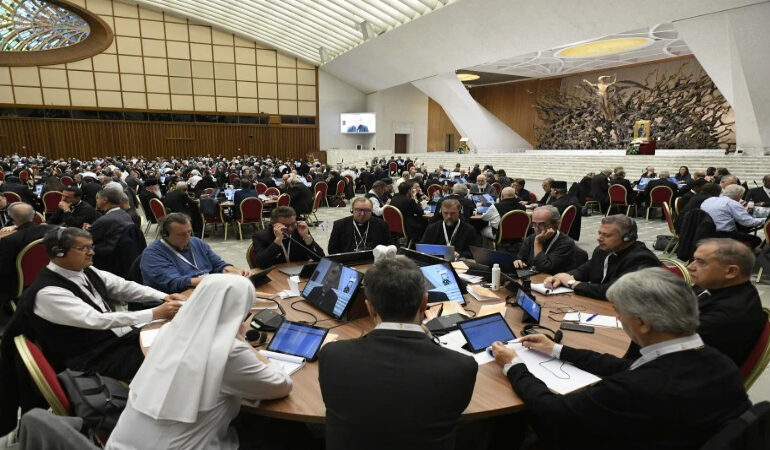

The year 2026 has marked a noticeable shift in how Catholic doctrine is communicated from the Vatican. After a period of heightened global attention and cultural tension, the Church’s teaching voice has become quieter but more deliberate. Rather than responding to every public controversy, the Vatican is emphasizing coherence, continuity, and clarity in its doctrinal expression. This approach reflects confidence in the substance of Catholic teaching rather than anxiety about public reception.
For many within the Church, this recalibration has brought a sense of stability. Clergy, theologians, and lay faithful are encountering doctrine presented less as a reaction to cultural pressure and more as a steady moral framework. The emphasis is not on novelty, but on depth, allowing teaching to form conscience over time instead of competing in ideological debate.
Re-centering Doctrine on Continuity and Clarity
At the heart of the Vatican’s doctrinal posture in 2026 is a renewed commitment to continuity. Teachings are being framed as part of an unbroken theological tradition rather than as adjustments driven by contemporary opinion. This continuity reassures believers that doctrine is not subject to constant revision based on external pressure.
Clarity has become equally central. Rather than expansive or ambiguous language, doctrinal communications emphasize precision and restraint. This allows teaching to be understood within its proper theological context, reducing confusion and misinterpretation. By prioritizing clarity, the Vatican reinforces doctrine as a guide for faith rather than a tool for debate.
This re-centering also reflects confidence. Doctrine does not need amplification through controversy to remain relevant. Its authority flows from consistency and coherence, qualities that endure beyond cultural cycles.
Resisting the Politicization of Faith Teaching
One of the defining features of the Vatican’s current doctrinal approach is its resistance to politicization. In polarized environments, religious teaching is often pulled into ideological frameworks that distort its purpose. The Vatican has responded by deliberately avoiding language that aligns doctrine with political narratives.
This restraint preserves the Church’s moral independence. By refusing to frame teaching as endorsement or opposition to political agendas, doctrine remains rooted in anthropology and moral theology. This protects its universality and prevents fragmentation within the global Church.
For clergy and educators, this approach offers space to teach without being drawn into partisan conflict. Doctrine is presented as formative rather than confrontational, enabling engagement across diverse cultural and political contexts.
Pastoral Clarity Without Doctrinal Dilution
Pastoral sensitivity has not come at the expense of doctrinal substance. The Vatican’s approach in 2026 demonstrates that clarity and compassion are not opposing forces. Teachings are articulated with awareness of lived experience while remaining faithful to theological foundations.
This balance is evident in how moral teachings are communicated. Rather than simplifying or obscuring doctrine, pastoral language seeks to illuminate meaning and purpose. The goal is understanding, not accommodation.
Such clarity supports formation. When doctrine is presented coherently, it strengthens the capacity of individuals and communities to engage moral questions thoughtfully. Pastoral application becomes an extension of teaching, not a replacement for it.
Doctrine as a Stabilizing Moral Framework
In a rapidly shifting cultural landscape, Catholic doctrine serves as a stabilizing reference point. Its consistency provides orientation amid uncertainty. The Vatican’s quieter doctrinal posture in 2026 reflects trust in this stabilizing role.
Rather than reacting to every social development, the Church allows doctrine to offer perspective over time. This long view resists urgency driven by headlines and preserves theological depth. Stability becomes a form of witness in itself.
For theologians and faith leaders, this reinforces doctrine as a resource for reflection rather than a mechanism for response. It invites deeper engagement with teaching as a living tradition capable of guiding conscience across generations.
Conclusion
By lowering the volume while strengthening coherence, the Vatican in 2026 is re-centering Catholic doctrine as a source of moral clarity rather than cultural reaction. Through continuity, restraint, and pastoral precision, Church teaching is presented as a stable framework for faith in a polarized world. Doctrine without noise proves that enduring truth speaks most clearly when it is consistent, confident, and grounded in tradition.