
Angelo Gugel, a longtime member of the Papal Household who served three successive pontiffs with discretion and quiet loyalty, has died in Rome at the age of 90. Gugel was widely known for his role as a Papal Chamber Assistant, a position that placed him in close proximity to the daily life of the Pope for decades. His service spanned the brief pontificate of Pope John Paul I, continued through nearly the entire reign of Pope John Paul II, and extended into the early period of Pope Benedict XVI. Vatican officials noted that Gugel died peacefully surrounded by family members, closing a life shaped by service carried out largely beyond public view. His passing marks the end of a generation of Vatican lay collaborators who worked at the heart of the Apostolic Palace during some of the most eventful years in modern Church history.
Born on April 27, 1935, in Miane in Italy’s Treviso province, Gugel came from a rural family background and spent two years in seminary formation before entering Vatican service. In 1955, he was recruited as a Vatican gendarme, later transferring to the Governorate of Vatican City State after a prolonged illness. His path into the Papal Household was shaped by personal trust rather than ambition, particularly through his connection with Albino Luciani, later Pope John Paul I, whom he had known during Luciani’s years as bishop of Vittorio Veneto. That relationship led to Gugel’s appointment as a close lay assistant, a role that would define the rest of his professional life. Married to Maria Luisa Dall’Arche, he was the father of four children and was known among colleagues for his reserved manner and unwavering sense of duty.
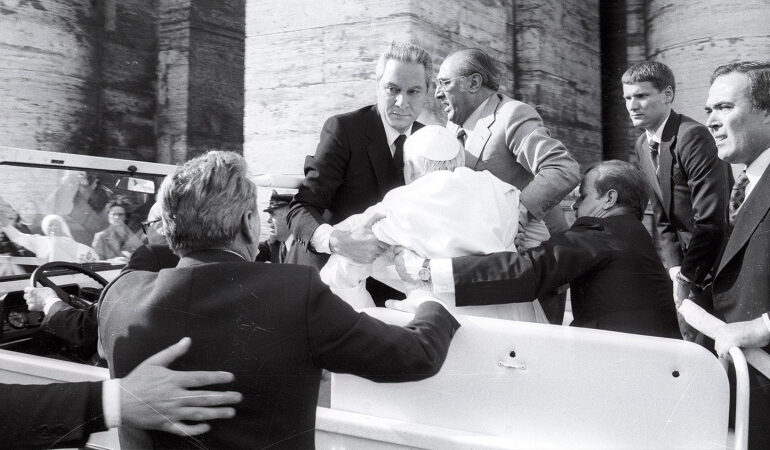
During the long pontificate of John Paul II, Gugel became a silent witness to historic moments that shaped the global Church. He stood beside the Polish Pope during the assassination attempt in St. Peter’s Square on May 13, 1981, later recalling the urgency and fear of the moments that followed as the wounded pontiff was rushed for medical care. Beyond crises, Gugel accompanied the Pope through years of pastoral activity and international travel, observing both public events and private routines. Despite his proximity to power and history, he maintained strict confidentiality, even within his own family, often learning of private papal outings through the press like any other citizen. Colleagues described him as impeccably dressed, calm under pressure, and deeply respectful of the spiritual dimension of his role.
Gugel continued his service into the early months of Benedict XVI’s pontificate before retiring in his seventies, leaving behind a reputation defined by loyalty rather than visibility. In rare reflections shared late in life, he spoke of faith lived through obedience, silence, and trust rather than words. His memories included moments of humor, hardship, and personal grace, including the Pope’s prayers during a critical moment in his family life. The death of Angelo Gugel has been received within Vatican circles as the loss of a figure who embodied the quiet continuity of the Papal Household, reminding many that the life of the Church is sustained not only by its leaders, but also by those who serve faithfully without seeking recognition.