


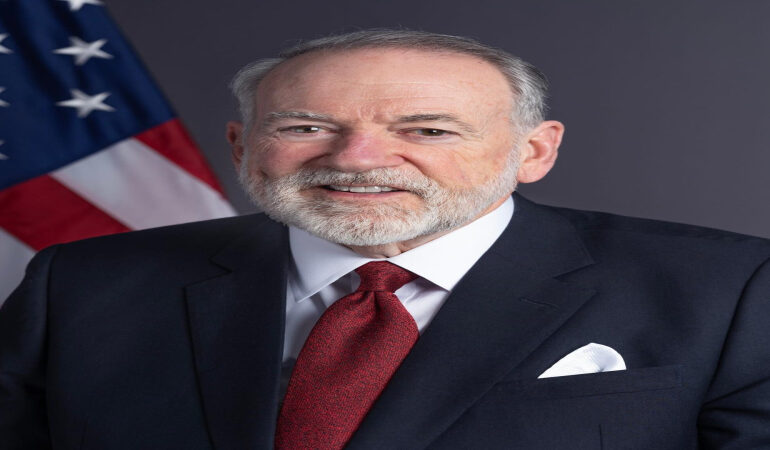

The United States ambassador to Israel has publicly responded to concerns raised by Christian leaders in the Holy Land, marking an unusual intersection of diplomacy and theology. In a statement shared through social media, Ambassador Mike Huckabee addressed a recent letter from the patriarchs and heads of Churches in Jerusalem who warned that Christian Zionism poses risks to Christian unity and pastoral life. Huckabee said he respects the historic Churches of the region but rejected the idea that any single group should claim to speak for Christians globally. His remarks drew attention because ambassadors typically avoid direct engagement in religious debates, particularly in a region where faith, politics, and identity are closely intertwined. The response has sparked discussion among observers about the boundaries between personal belief and official diplomatic posture, especially given the sensitivity of Christian presence in the Holy Land and the fragile balance among its religious communities.
In his statement, Huckabee offered a theological defense of Christian Zionism, describing it as a belief grounded in biblical interpretation rather than allegiance to specific government policies. He argued that supporting the right of the Jewish people to live in what he described as their historic homeland is compatible with Christian faith and should not be portrayed negatively. Huckabee suggested that the term Christian Zionism is often used dismissively toward evangelical communities and emphasized that millions of Christians worldwide share similar convictions. He framed his position as rooted in scripture rather than modern political alignment. This explicit articulation of personal belief has raised questions about how such views intersect with the responsibilities of representing a pluralistic government in a region marked by long standing religious and political tensions.
The patriarchs’ original letter expressed concern that certain ideologies are being promoted in ways that confuse believers and undermine pastoral authority. Representing Churches with centuries old roots in the Holy Land and largely Arab Christian communities, the leaders warned that outside influences risk interfering in the internal life of local Churches. They stressed that responsibility for Christian communal and spiritual matters in the region rests with them alone. Their statement also noted unease over what they described as official level engagement with individuals advancing these views. For Church leaders, the issue extends beyond theology to questions of protection, representation, and the survival of Christian communities already facing pressure from conflict, migration, and demographic decline.
The exchange highlights broader tensions over how Christianity is interpreted and expressed in geopolitical contexts. Observers note that Huckabee’s intervention blurs lines between personal conviction and diplomatic messaging, leaving open questions about whether his remarks reflect official policy or individual belief. At the same time, the patriarchs’ response underscores a desire to safeguard local Christian identity from external narratives that may not reflect lived realities on the ground. As conflicts in the region persist, the role of religious language in shaping political positions remains deeply contested. The episode illustrates how theological disagreements can quickly acquire diplomatic significance, particularly in a landscape where faith communities are inseparable from history, territory, and ongoing struggles for peace and security.