


Bishops Urge Solidarity and Dialogue for the Holy Land
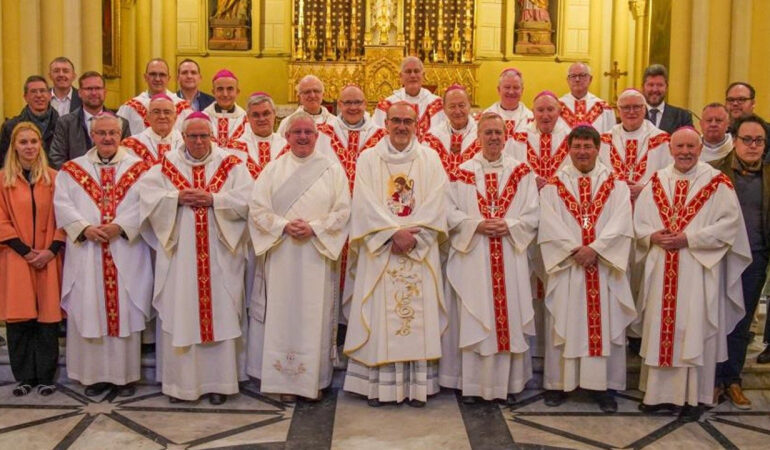

At the conclusion of their annual pilgrimage, the Holy Land Co-ordination released a statement appealing to the international community and to Christians worldwide to stand with the people of the Holy Land and to work for peace grounded in human dignity. Gathering bishops from Europe, North America, and southern Africa, the initiative sought to express pastoral closeness to local Christian communities while listening directly to the suffering of those affected by ongoing conflict. The bishops described their visit as an encounter with a land marked by trauma and fear, where violence and uncertainty continue to erode daily life. They urged recognition of the dignity of every person and called for genuine dialogue between communities, presenting peace not as an abstract aspiration but as a moral responsibility that demands sustained attention, prayer, and concrete action.
During their journey, the bishops met families and communities in the West Bank who described life under increasing restriction and insecurity. Accounts shared with the delegation spoke of expanding settlements, limited freedom of movement, and persistent intimidation that has left many feeling unseen and unheard. The bishops also visited Christian communities who described repeated attacks on property and livelihoods, including the destruction of olive trees and pressure that has driven many to consider emigration. These encounters, the statement noted, revealed not only material hardship but also deep psychological strain, as fear and uncertainty shape everyday existence. By bearing witness to these experiences, the bishops sought to amplify voices often absent from global discussions and to affirm that suffering endured in silence contradicts the universal principles of justice and solidarity central to Christian social teaching.
The statement also addressed the broader humanitarian and political context, describing Gaza as a catastrophic crisis and highlighting widespread demoralization across the region. The bishops expressed concern that voices within Israeli society advocating for human and civil rights are increasingly threatened, warning that the silencing of such perspectives undermines the prospects for reconciliation. They reaffirmed Israel’s right to exist in peace and security, while insisting that the same rights must be upheld for all people rooted in the land. Emphasizing international law and the universality of human rights, the bishops called on governments to renew meaningful engagement toward a two state solution. They encouraged Christians to respond not with indifference or despair, but with prayer, advocacy, and persistent commitment to peace over violence.
Throughout the pilgrimage, the bishops said they were deeply moved by the resilience of local Christians and by people of other faiths who continue to work for justice and coexistence despite immense personal cost. They pointed to encounters with families who have lost loved ones yet still speak of forgiveness as powerful testimonies to the possibility of reconciliation. The delegation also echoed the appeal of Cardinal Pierbattista Pizzaballa, encouraging pilgrims to visit the Holy Land as a sign of solidarity and hope. Concluding their journey, the bishops said they return home with renewed compassion for those who suffer and with inspiration drawn from individuals and communities who, through courage and faith, keep alive the hope that peace rooted in justice can still prevail.