


Sixty Years After Anathemas, Path of Catholic Orthodox Dialogue Endures
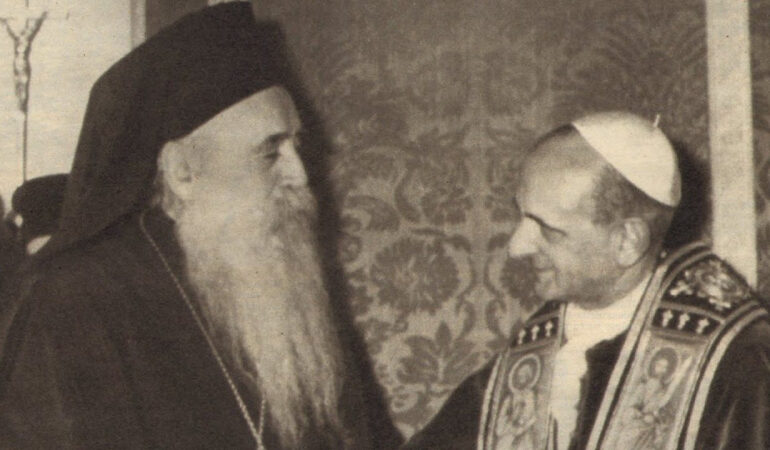

Sixty years after the 1965 Joint Declaration often described as the lifting of the anathemas, Catholic and Orthodox leaders continue to reflect on its meaning for Christian unity. At a conference in Rome marking the anniversary, theologians and church leaders revisited both the rupture traditionally associated with the year 1054 and the reconciliation gesture made nearly a millennium later by Pope Paul VI and Patriarch Athenagoras I. The declaration, signed simultaneously in Rome and Constantinople, expressed regret for past actions and committed the Churches to a renewed relationship rooted in charity and truth. While it did not restore full communion, speakers emphasized that it fundamentally reshaped relations by rejecting mutual condemnation and opening a sustained process of encounter that continues to influence Catholic Orthodox dialogue today.
Addressing the historical narrative of schism, participants noted that the events of 1054 are often misunderstood. According to scholars and Church authorities, what occurred was not a sweeping condemnation of entire Churches but limited excommunications directed at specific individuals. These actions, speakers explained, lacked the universal and definitive character later attributed to them, and even suffered from canonical irregularities. By contrast, the 1965 declaration was intentionally ecclesial in scope, seeking to heal memory and reaffirm bonds between two traditions that share apostolic faith and sacramental life. This shift marked the emergence of an understanding of the Catholic and Orthodox Churches as sister Churches, recognizing each other’s legitimacy while acknowledging unresolved theological and ecclesiological questions.
The conference featured reflections by Cardinal Kurt Koch and Metropolitan Job Getcha, who stressed that ecumenical progress depends on both theological clarity and spiritual conversion. They highlighted decades of dialogue that have narrowed differences on issues such as primacy and synodality, once central to division. Particular attention was given to gestures that carry symbolic and pastoral weight, including the choice by recent Popes to omit the filioque clause in ecumenical settings. Such decisions, speakers said, demonstrate a willingness to listen and to respect the sensitivities of the other tradition, reinforcing trust and signaling hope for deeper communion.
Despite significant institutional progress, the speakers cautioned that unity cannot remain confined to official commissions or hierarchical dialogue. True reconciliation, they argued, requires reception by clergy and laity alike, transforming ecumenism into a lived reality rather than an abstract goal. Sixty years on, the legacy of the 1965 declaration lies not in a completed journey but in a sustained commitment to walk together despite remaining differences. The anniversary served as a reminder that unity grows through patience, historical honesty, and shared prayer, and that the healing of memory remains essential for a credible Christian witness in a divided world.