


Saints and Statues Test the Boundaries of Church and State Law

A legal dispute unfolding in Massachusetts has reopened long running questions about how church state separation is interpreted in cases involving public religious symbols. The controversy centers on the city of Quincy, where plans to install statues of Saint Michael and Saint Florian on a new public safety building prompted a lawsuit from residents and advocacy groups. Opponents argue that displaying figures revered in Catholic tradition on a government building violates constitutional limits by conveying official religious endorsement. Supporters counter that such symbols reflect history, culture, and civic tradition rather than an establishment of religion. While the case is rooted in state constitutional law and unlikely to reach the US Supreme Court, it highlights continuing uncertainty in how courts assess religious imagery in public spaces.
The debate unfolds against the backdrop of decades of shifting legal doctrine. For much of American history, courts rarely intervened in disputes over religious symbols. That changed in the twentieth century, when judges began applying structured tests to determine whether government actions crossed constitutional lines. One influential framework required that public actions serve a secular purpose, avoid advancing religion, and prevent excessive entanglement between government and faith. Over time, critics argued that this approach proved ill suited to cases involving symbolic expression rather than regulation or funding. Courts often struggled to apply it consistently, producing fractured decisions and unpredictable outcomes that left communities uncertain about what the law permitted.
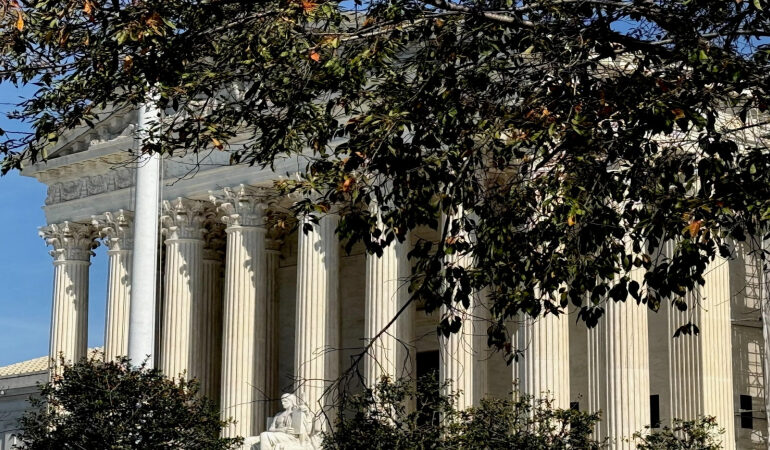
Recent Supreme Court rulings suggest a turn away from these earlier tests toward an approach grounded more explicitly in history and tradition. In cases such as American Legion v. American Humanist Association and Kennedy v. Bremerton School District, the Court declined to treat religious symbols or expressions as presumptively unconstitutional. Instead, the justices emphasized historical practice, warning against judicial efforts to police subtle perceptions of endorsement. This shift reflects a broader effort by the current Court to clarify establishment clause doctrine and limit it to situations resembling historical forms of state imposed religion, rather than symbolic references with religious origins.
The Quincy case illustrates how these debates continue at the state level, where courts are not bound to follow federal constitutional interpretation in every respect. The outcome may depend less on abstract theory than on how judges balance respect for religious diversity with restraint in constitutional adjudication. Legal scholars argue that not every contested public symbol presents a constitutional violation, and that democratic processes may often be better suited than litigation to address community concerns. As disputes over saints, monuments, and public expression persist, they underscore the ongoing challenge of interpreting church state separation in a pluralistic society where religious symbols remain embedded in civic life.