


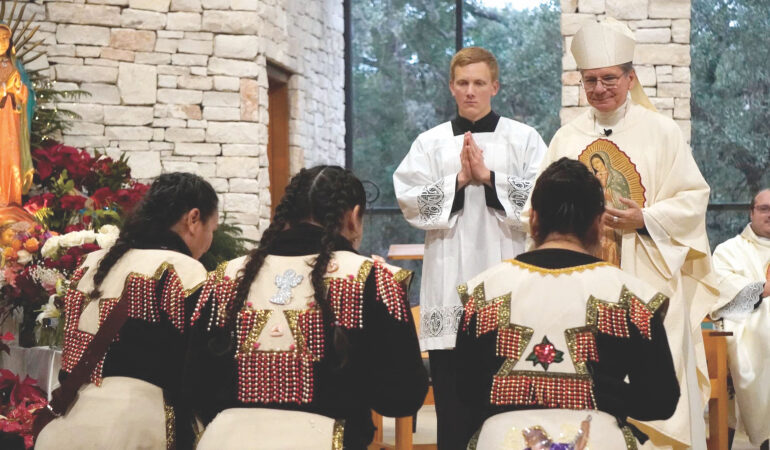

The Archbishop of San Antonio has spoken out against issuing a general dispensation from attending Mass for immigrants fearful of enforcement actions, insisting that the sacramental life of the Church must remain a source of strength rather than retreat. Drawing from his own experience of growing up under state repression in Mexico, Archbishop Gustavo García-Siller said fear should not separate people from worship or community. While acknowledging the anxiety many immigrants face, he emphasized that the Church’s mission is to accompany those who feel threatened, not to encourage withdrawal from spiritual life. He expressed hope that immigration authorities would focus on serious criminals rather than families and workers seeking stability. For the archbishop, participation in the Eucharist represents both faith and freedom, a sign that persecution must not dictate how believers live out their religious commitments within the wider community.
Reflecting on his childhood in Mexico during a period when the Church was heavily restricted by the state, Archbishop García-Siller described a system that limited religious expression and stripped clergy of basic civil rights. He recalled how Catholic education, religious dress, and even forms of address were prohibited, leaving lasting impressions of what institutional repression looks like in daily life. These memories, he said, shape his response to the current climate surrounding immigration in the United States. Comparing past experiences to present realities, he argued that policies which abruptly halt legal pathways to residency risk dehumanizing people who were already following lawful processes. While affirming the importance of borders and public safety, he warned that fear driven systems inevitably collapse and leave deep moral wounds, especially when innocent families are caught in their wake.
Rather than excusing Mass attendance, the archbishop said the Church would actively seek out those who feel unsafe, bringing pastoral care, catechesis, and the Eucharist directly into homes when needed. Beyond spiritual support, he pledged concrete assistance for those lacking food, medicine, clothing, or access to basic services. He also pointed to the broader mission of Catholic institutions, including charitable agencies, to serve those most affected by current policies. By appointing new leadership at Catholic Charities in San Antonio, he signaled a renewed commitment to creative responses for helping immigrants, the elderly, and the poor. For Archbishop García-Siller, the Church’s credibility lies in standing with the marginalized, giving voice to the voiceless, and refusing to allow fear or repression to sever the bond between faith, dignity, and human solidarity.