

Sarah Mullally Becomes First Woman to Lead Church of England
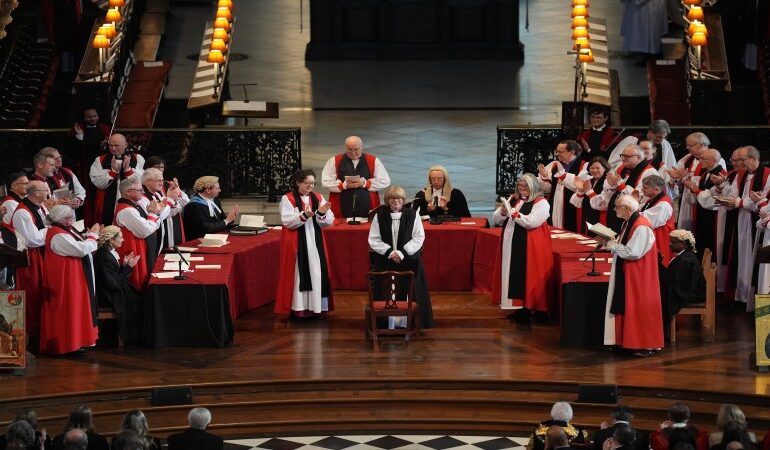

Sarah Mullally was formally confirmed as Archbishop of Canterbury on Wednesday following a ceremonial Confirmation of Election at St Paul’s Cathedral in London, becoming the first woman to serve as the spiritual leader of the Church of England. She entered the cathedral in the morning as Bishop of London and emerged hours later as Archbishop, marking a historic moment for Anglicanism. The legal ceremony, overseen by senior ecclesiastical and civil officials, concluded with applause as bishops publicly welcomed her into office. Although the Anglican Communion has no single governing authority, the Archbishop of Canterbury is widely regarded as its symbolic and spiritual figurehead, giving the appointment global resonance well beyond the Church of England.
Mullally’s confirmation reflects decades of institutional change within Anglicanism, which ordained its first women priests in 1994 and its first women bishops in 2015. A former nurse who later entered ordained ministry, she now assumes leadership of a church whose origins date to the sixteenth century separation from Rome. Observers noted that her appointment further distinguishes Anglican practice from Catholic teaching on ordained ministry. Commentators described the moment as both theological and social in significance, presenting it as a statement about the role of women in public and religious life within England and across much of the Anglican world.
At the same time, Mullally’s leadership begins amid internal tensions. Sections of the Anglican Communion remain divided over women in episcopal roles and questions related to sexuality and marriage. Conservative Anglican groups have voiced concern that her appointment could deepen existing fractures, particularly among churches in parts of Africa and the Global South. Critics have also cited her support for the blessing of same sex unions as a source of contention. During the ceremony, officials confirmed that no formal objections to her election had been lodged within the required timeframe, although a brief disruption by a protester was quickly addressed.
Mullally succeeds Justin Welby, who announced his resignation in late 2024 following criticism over the handling of abuse allegations connected to a church-affiliated institution. Her nomination followed a lengthy discernment process involving clergy and lay representatives and was formally approved by King Charles III in his role as supreme governor of the Church of England. The final step in her transition will take place on March 25 at Canterbury Cathedral, where she will be installed as Bishop of Canterbury, marking the beginning of her public ministry in a role that carries both national and international influence.