


Climate Change Intensifies Deadly Floods Across Southern Africa
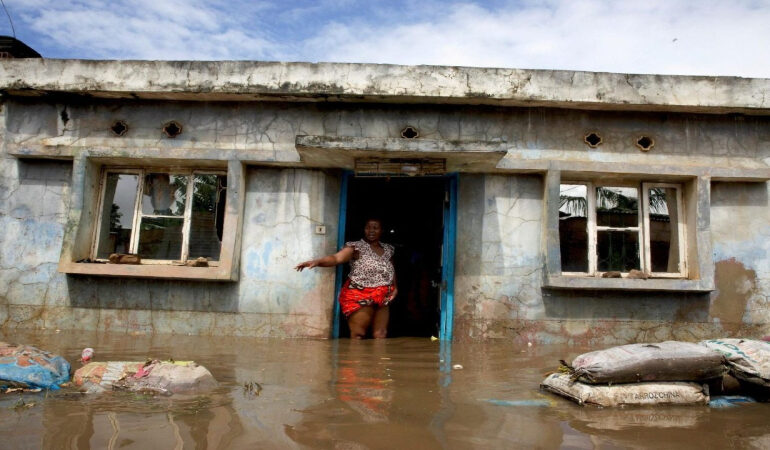

Severe flooding across parts of southern Africa has drawn renewed attention to the role of climate change in amplifying extreme weather events, as prolonged rainfall devastated communities in Mozambique, Eswatini, northeastern South Africa and Zimbabwe. Scientists examining the episode found that rainfall levels typically expected over an entire year fell within a span of just ten days, overwhelming river systems and infrastructure. The rains, which began in late December and intensified in early January, caused widespread destruction to homes, roads and bridges, leaving large areas inaccessible. Authorities reported significant displacement as floodwaters submerged residential districts and agricultural land, worsening humanitarian pressures in regions already facing economic vulnerability. The scale and speed of the inundations placed emergency services under strain, with local governments struggling to coordinate rescue and relief efforts amid damaged transport networks and continuing rainfall.
The extreme conditions were assessed by an international group of climate scientists who sought to determine whether human-driven climate change influenced the intensity of the rainfall. Their findings indicate that while floods are not uncommon in the region, the magnitude of the recent deluges was highly unusual. Researchers estimated that an event of this severity would historically occur roughly once every five decades, suggesting a sharp deviation from past climate patterns. Although scientists cautioned that it is difficult to isolate the exact contribution of climate change to a single weather event, the analysis pointed to a significant increase in rainfall intensity that cannot be explained by natural variability alone. The study concluded that warmer atmospheric conditions have likely enhanced the capacity of storm systems to release heavier and more sustained rainfall over a short period.
The human toll of the flooding has been severe. More than one hundred people have been reported dead, while hundreds of thousands have been forced to flee their homes since late December. In Mozambique, floodwaters engulfed residential buildings and public facilities, disrupting essential services and leaving families without shelter. In South Africa and Zimbabwe, washed out roads and collapsed bridges cut off entire communities, complicating rescue operations and delaying the delivery of aid. The situation was further aggravated by the presence of multiple international rivers flowing through Mozambique, which carried runoff from upstream rainfall and intensified flooding in downstream areas. Local authorities warned that continued rainfall could prolong displacement and increase the risk of waterborne disease in affected regions.
Scientists involved in the research stressed that the floods underscore broader structural challenges in understanding climate risks across Africa. Many climate models used to analyze extreme weather are developed outside the continent, limiting their ability to accurately reflect regional conditions. Researchers noted that this gap makes it harder to quantify the precise role of climate change in African weather events and to prepare for future extremes. They emphasized the need for stronger investment in locally developed climate data and modeling systems to improve forecasting and resilience planning. As climate driven weather patterns become more volatile, experts warned that vulnerable regions such as southern Africa face growing risks unless adaptation measures, infrastructure planning and international cooperation are significantly strengthened.