

Cardinal Ambongo Reaffirms Ecclesia in Africa as a Guide for Today
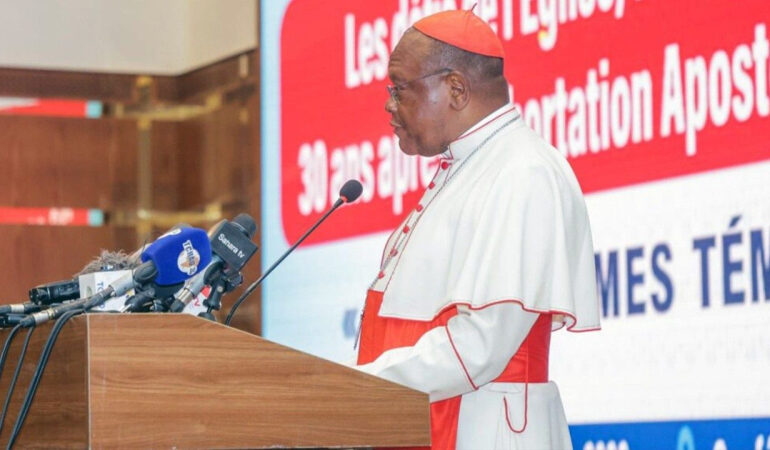

The enduring relevance of Ecclesia in Africa was emphasized by Fridolin Ambongo Besungu during the opening of the plenary assembly of the Association of Episcopal Conferences of Central Africa, currently taking place in N’Djamena, Chad. Addressing bishops gathered from across the Central African region, Cardinal Ambongo reflected on the continuing urgency of the apostolic exhortation issued more than three decades ago. He described the document as a foundational pastoral reference for a continent navigating the legacies of colonialism, political instability and social division. According to the Cardinal, the vision articulated in the exhortation remains deeply connected to the lived realities of African societies marked by resilience, faith and hope. He invited participants to approach the anniversary not as a commemoration of the past, but as an opportunity to assess the Church’s mission in light of present challenges.
Speaking in his role as president of the continental episcopal body, Cardinal Ambongo recalled that Ecclesia in Africa articulated a vision of the Church as the Family of God, rooted in communion, reconciliation, justice and peace. He noted that this vision continues to offer a unifying framework for pastoral action across diverse cultural and political contexts. Thirty years after its publication by John Paul II, the exhortation still calls the Church in Africa to be both faithful to the Gospel and attentive to concrete social realities. The Cardinal stressed that the document invites ongoing discernment, encouraging bishops to reflect honestly on what has borne fruit and what remains fragile or incomplete. Such reflection, he said, is necessary if the Church is to renew its commitment to the mission entrusted to it and respond credibly to the hopes and struggles of African peoples.
Cardinal Ambongo outlined several pastoral priorities that continue to shape the Church’s engagement in Central Africa, urging the bishops to integrate them more deeply into diocesan and regional life. Among these priorities, he emphasized the formation of men and women capable of promoting peace in societies affected by violence and division. He pointed to the responsibility of seminaries, Catholic universities and educational institutions to provide formation grounded in the Gospel and the Church’s social teaching, while also equipping future leaders with practical skills in dialogue and conflict resolution. He also highlighted the importance of synodal pastoral governance, calling for greater listening, shared responsibility and transparency within ecclesial structures so that decision making reflects a genuine sense of family and communion.
In addition to internal renewal, Cardinal Ambongo underscored the need for sustained prophetic engagement with society. He encouraged the Church in Central Africa to strengthen justice and peace initiatives, support victims of violence and foster civic responsibility. According to the Cardinal, such engagement enables the Church to contribute meaningfully to reconciliation and social cohesion without losing its spiritual identity. As the plenary assembly continues, he invited the bishops to consider how the Church can demonstrate, in concrete ways, that it is living authentically as the Family of God envisioned in Ecclesia in Africa. This witness, he concluded, remains essential for the transformation of the continent and for the credibility of the Church’s mission in the present time.