

From Assets to Accountability What Good Governance Now Means for the Holy See
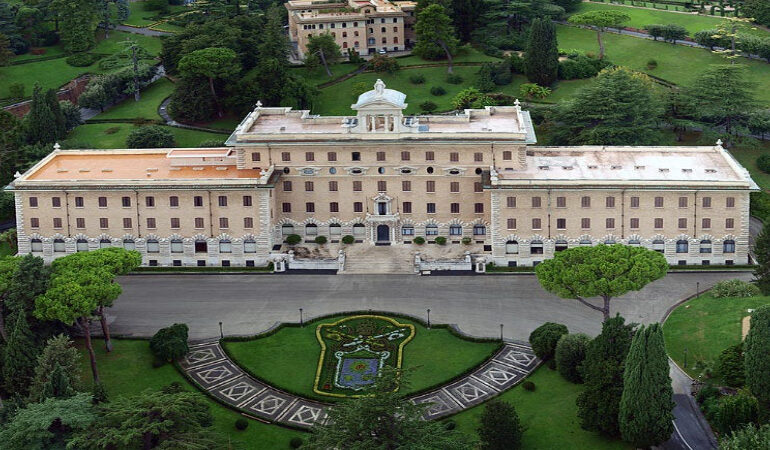

For generations, governance within the Holy See was understood primarily through continuity. Structures were designed to preserve stability, protect patrimony, and ensure institutional endurance. Assets were managed with discretion, and administrative culture favored trust over formal oversight. In a different global era, this model appeared sufficient.
Today, expectations surrounding governance have shifted decisively. Within the Vatican, good governance is no longer defined by what is owned or preserved, but by how responsibility is exercised. Accountability, clarity, and ethical administration have become central to how authority is understood and practiced.
This transition reflects more than procedural reform. It marks a cultural recalibration within the Holy See, where governance is increasingly viewed as a moral responsibility that serves mission rather than an internal function removed from pastoral life.
Accountability as a Measure of Institutional Integrity
Accountability now stands at the center of governance discussions within the Holy See. Clear lines of responsibility, defined competencies, and transparent processes are increasingly recognized as essential to institutional integrity. Authority without accountability risks confusion, inefficiency, and loss of trust.
Recent reforms emphasize that responsibility must be traceable. Decisions are expected to follow established procedures, and oversight bodies are tasked with ensuring compliance and coherence. This approach does not diminish authority. Instead, it strengthens it by anchoring leadership in clarity and shared norms.
Accountability also serves a preventive role. When structures are clear, errors can be identified early and corrected. Governance becomes a living process rather than a static system dependent on individual discretion alone.
Clarity of Roles Within a Complex Structure
The Holy See operates through a complex network of dicasteries, offices, and commissions. In the past, overlapping competencies sometimes blurred responsibility. Modern governance reform has sought to address this by clarifying roles and streamlining processes.
Clear mandates reduce institutional friction. When responsibilities are well defined, collaboration becomes more effective and decision making more consistent. This clarity supports both efficiency and fairness, ensuring that authority is exercised within appropriate bounds.
Such reforms also help cultivate a professional administrative culture aligned with ecclesial values. Competence, responsibility, and service are reinforced as guiding principles rather than personal influence or informal custom.
Ethical Administration Beyond Compliance
Good governance within the Holy See is not framed merely as regulatory compliance. Ethical administration is understood as an expression of moral responsibility. Governance decisions are evaluated not only by legality, but by their alignment with the Church’s mission and values.
This ethical dimension encourages restraint and discernment. Administrative authority is exercised with awareness of its impact on credibility and witness. Decisions regarding resources, appointments, and oversight carry moral weight because they reflect how the Church governs itself.
By grounding governance in ethics rather than efficiency alone, the Holy See affirms that administration is a form of service. Structures exist to support mission, not to assert control or preserve status.
Governance in Service of Mission
A defining feature of the evolving governance culture is its orientation toward mission. Administrative reform is increasingly framed as a way to support evangelization, charity, and pastoral effectiveness. Governance is no longer treated as separate from the Church’s spiritual purpose.
This perspective reshapes priorities. Processes are evaluated by how well they enable the Church to function transparently, responsibly, and sustainably. Governance becomes an instrument of trust rather than an internal safeguard.
By linking accountability to mission, the Holy See signals that good governance is not an external demand but an internal conviction. Authority exercised responsibly strengthens the Church’s capacity to serve a global community with integrity.
Conclusion
Good governance within the Holy See has moved from a focus on assets to a commitment to accountability. Through clarity of roles, ethical administration, and mission centered oversight, governance culture is being reshaped from within. This evolution reflects a deeper understanding that authority gains credibility when it is transparent, responsible, and oriented toward service.