

Zimbabwe Church and University Launch Psycho Spiritual Training Initiative
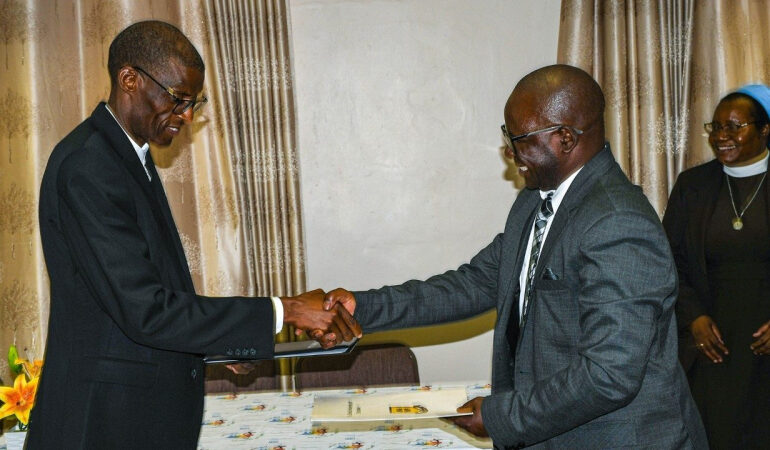

The Zimbabwe Catholic Bishops’ Conference has entered into a formal partnership with the Catholic University of Zimbabwe to strengthen safeguarding and holistic education through specialised psycho spiritual counselling training for teachers. The agreement was sealed in Harare with the signing of a Memorandum of Understanding that commits both institutions to addressing social, emotional, and spiritual challenges within the country’s education system. The initiative reflects growing concern within Church structures about the pressures facing educators and learners amid economic strain and social fragmentation. Church officials described the programme as a strategic response aimed at equipping teachers with tools to support student wellbeing while reinforcing ethical and spiritual formation. By integrating counselling skills into teacher training, the partnership seeks to promote environments where learning is grounded in safety, dignity, and emotional resilience, particularly in communities facing heightened vulnerability.
The agreement was signed by senior representatives of the Zimbabwe Catholic Bishops’ Conference and the Catholic University of Zimbabwe, underscoring institutional collaboration between pastoral leadership and higher education. Church officials noted that safeguarding remains a priority across Catholic schools and formation centres, with teachers playing a central role in identifying and responding to risks affecting children and young people. University leadership emphasised that modern educators are increasingly expected to serve as mentors and support figures beyond academic instruction. The programme is designed to respond to this expanded role by offering structured training that addresses emotional intelligence, moral responsibility, and spiritual accompaniment, reinforcing the Church’s commitment to forming educators capable of responding to complex social realities.
Those involved in the programme stressed that teacher wellbeing is an essential component of safeguarding efforts. Church education coordinators highlighted that many educators face emotional and psychological strain while supporting students dealing with trauma, instability, or family hardship. The training includes counselling support for teachers themselves, recognising that effective care for others requires personal healing and resilience. Programme leaders explained that participants will be guided to develop self-awareness, empathy, and practical counselling skills that can be applied in school settings. By addressing both professional capacity and personal formation, the initiative aims to foster educators who are emotionally grounded and better prepared to accompany students. Church representatives expressed hope that the programme will contribute to restoring trust, stability, and hope within school communities.
The training programme is being implemented through the university’s Faculty of Theology, Ethics, Religious Studies and Philosophy and combines academic instruction with community service. It also builds on existing outreach through a psycho spiritual social support centre operated by the university, which provides counselling services to students and nearby communities. Plans are underway to replicate similar centres within dioceses nationwide, beginning with a pilot project in the Archdiocese of Harare. Church leaders view the initiative as part of a broader healing mission that links education, pastoral care, and social responsibility. The partnership reflects an effort to align academic resources with Church safeguarding priorities, reinforcing a model of formation that addresses intellectual, emotional, and spiritual dimensions together.